

Quantifying Reserve Capacity Losses During Queue Overload
Queue overload converts reserve capacity into coordination friction, collapsing realized throughput as arrival rates exceed processing thresholds.

Queue overload converts reserve capacity into coordination friction, collapsing realized throughput as arrival rates exceed processing thresholds.

Foreign enterprise sales cycles diverge from domestic baselines due to unmapped statutory governance, requiring empirical measurement before quotas are set.

Reallocating development hours requires isolating unplanned operational demands onto a single rotating engineer to protect contiguous deep concentration blocks.

Dynamic buffer depletion modeling tracks net consumption rate gradients against ingress velocity to prevent memory exhaustion in multi-tenant message pipelines.

Cognitive friction overhead measures the capacity consumed when engineers must reconstruct undocumented system invariants inside working memory to execute code mutations.

Regional funnel baselines calibrate by recording local procurement timestamps over two complete buying cycles rather than importing domestic conversion rates.

Volumetric depletion rates track storage drain velocity as variable consumer batch ingestion alters linear queues into erratic step functions.

Post-founding attention friction converts into firm value only when multi-attribute internal drag is priced into cardinal external contracts.

Memory boundary calculation sets the physical queue limit by combining serialized payload size, runtime metadata wrappers, and arrival-drain differentials.

Operators establish baseline conversion in unworked territories by discounting historical priors, running small cold batches, and measuring live delta variance.

Tracking historical currency layers at transaction dates decouples unrealized intercompany profit eliminations from closing rate translation distortions.

System friction extracts compounding cognitive labor by scattering developer attention vectors across non-generative environmental triage and delayed queues.

Deterministic translation converts distributed event telemetry into statutory ledger balances through pure, idempotent functions evaluated over closed windows.

Active queue management purges stale payloads at the buffer head and propagates backpressure upstream to prevent heavy tail bursts from exhausting fixed relay memory.

Attention vector telemetry tracks the directional distribution of developer focus across codebases to expose architectural bottlenecks before tickets stall.

Managing unused channel capacity balances continuous capital expenditure against tail latency protection during abrupt, heavy-tailed data volume spikes.

Ordinal attention variance resolves by splitting intrinsic task complexity from interruption density using state-anchored pairwise comparisons.

Cognitive load vectors map internal working memory depletion against recorded project durations, separating mechanical completion time from structural task friction.

Static headroom calculation establishes fixed preallocated memory boundaries to prevent packet drop during volatile network relay spikes without allocation pauses.

Engineering focus operates as an ordinal vector where context switching penalties systematically reduce cardinal capacity across concurrent software builds.

Reconciliation requires converting local ordinal action metrics into cardinal cash balances via automated timing, currency, and capitalization adjustments.

Unspent enterprise potential is the volume integral of mirrored value gradients trapped where internal coordination friction halts operational execution.
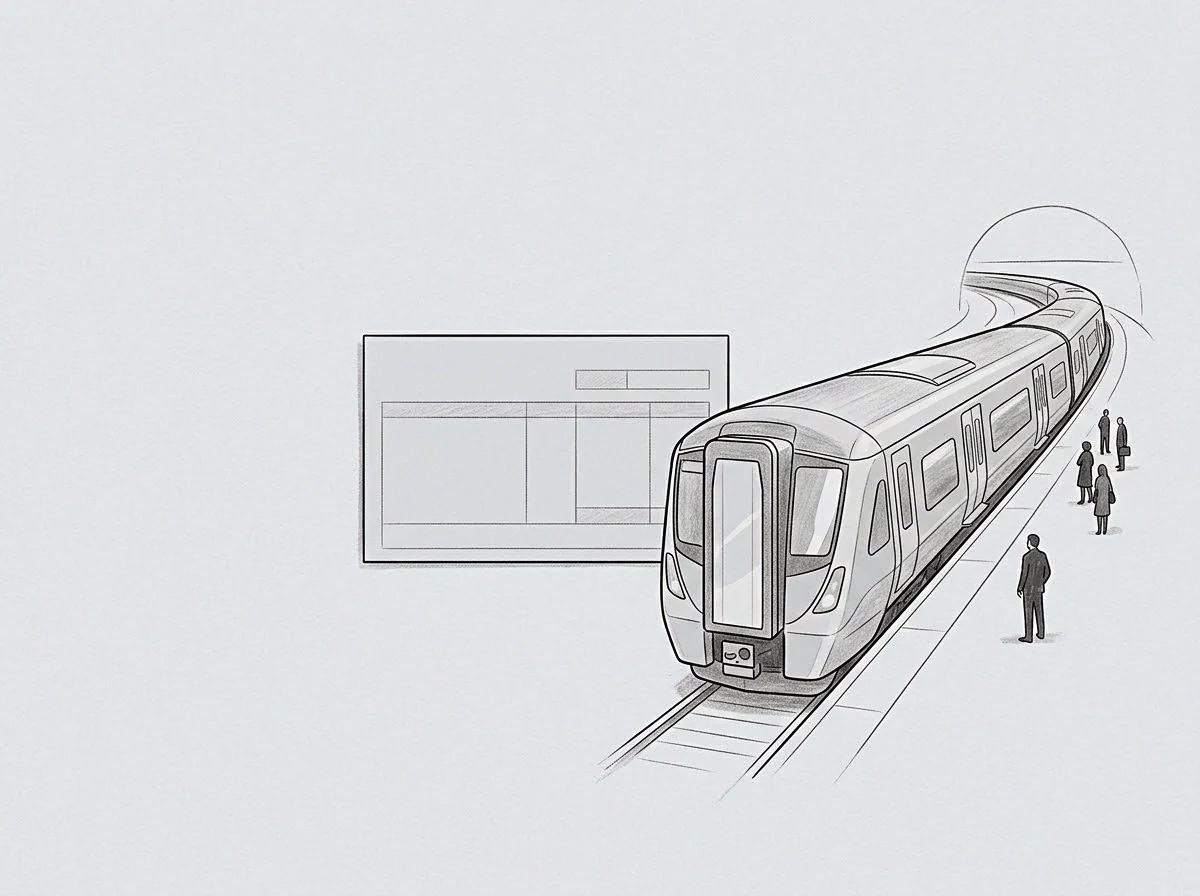
Capital allocation velocity calibrated against regional feedback loops prevents balance sheet depletion caused by stubborn localized margin erosion.

Parametric termination thresholds release suppliers from fixed contracts when client operational consumption crosses telemetry limits that destroy margins.

Structural friction vectors measure directional drag across enterprise handoffs where misaligned data structures and divided authority force repeated rework.

Autonomous regional telemetry windows evaluate local signal variance within dynamic temporal boundaries, preventing transient edge anomalies from corrupting aggregate metrics.

Isolating regional operating performance requires stripping enterprise customer attribution and central administrative subsidies from local unit metrics.
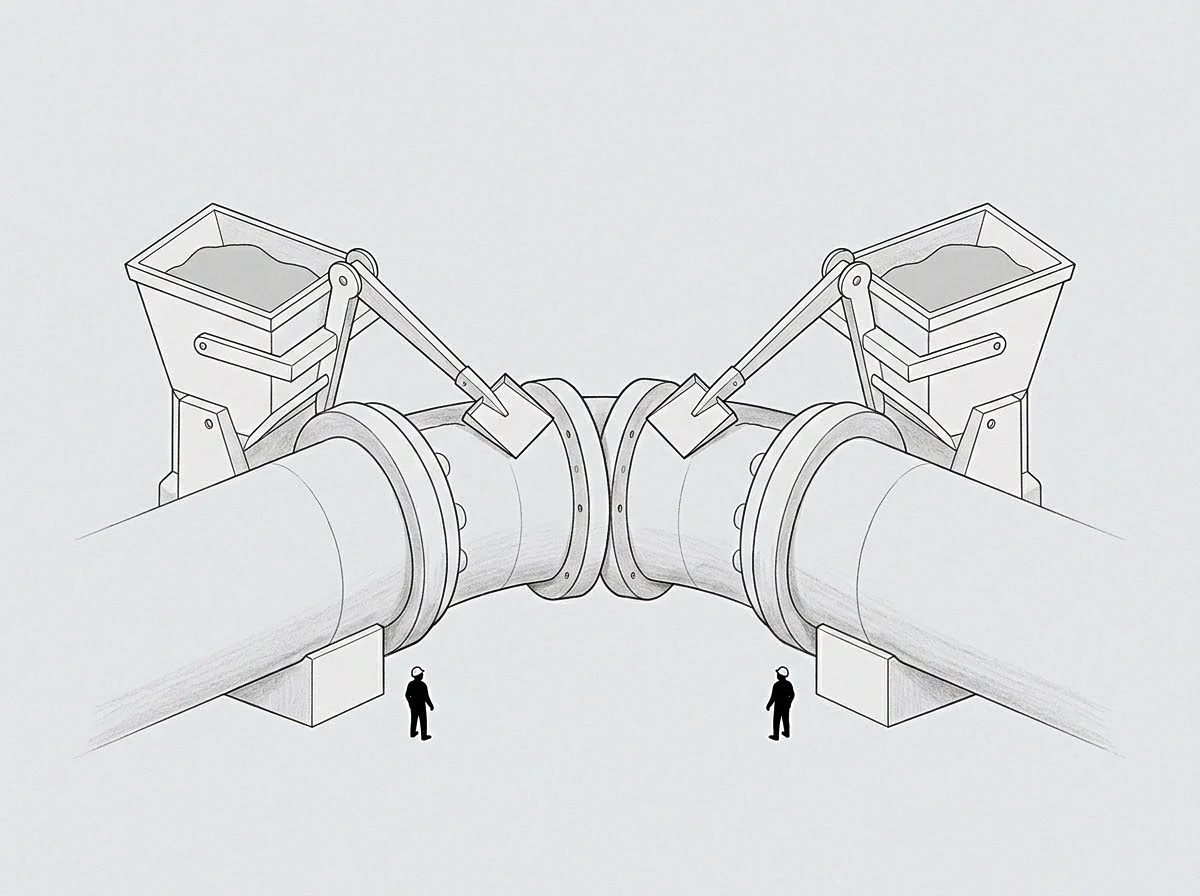
Enterprise capacity baselines are determined by measuring the velocity and absorption rate of internal capital throughput across operational conduits.

Decoupling isolates physical cycle measurements from corporate ledger adjustments by tracking process units against an immutable local throughput baseline.

Site-specific baselines separate local operational capacity from centralized media surges through holdout windows and invariant service constraints.
The terms are written where they belong. Each field holds three desks, and every entry a desk writes raises the terms it uses, each term given a meaning, a mechanism and the places it appears. The record on these pages stays first person and hand made; the fields grow the nomenclature.