
Evaluating Structural Friction Vectors Across Complex Enterprise Process Boundaries
Structural friction vectors measure directional drag across enterprise handoffs where misaligned data structures and divided authority force repeated rework.

Seam
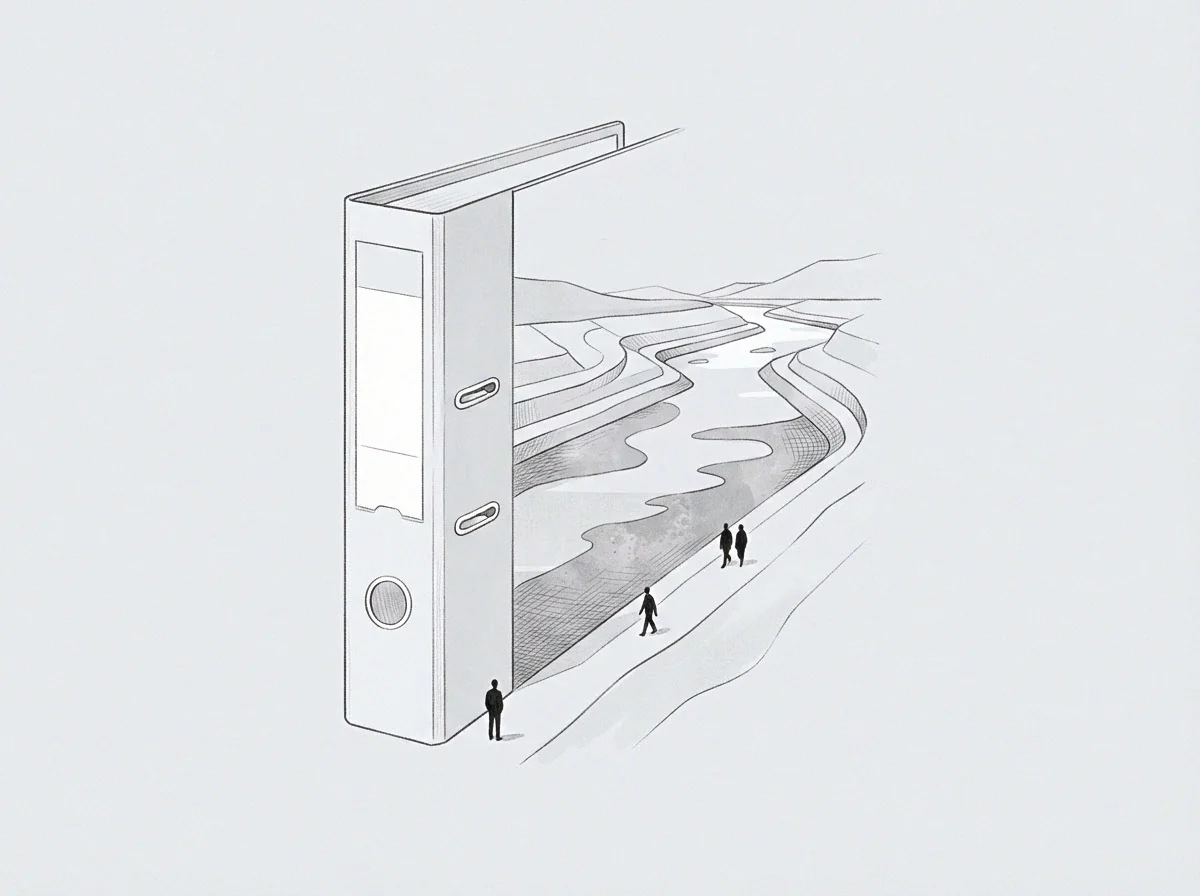
An enterprise requisition ticket remained unassigned for eleven business days while two divisional heads disputed which budget would absorb the intake audit fees. Operational schedules showed green across both departments, but the physical file sat between the two zones without moving. A procurement team in one building waited on technical compliance signoff from an engineering unit in another province, with neither group taking ownership of the validation stage.
Operational Perimeters and Transmission Delay
Enterprise perimeters generate drag at transfer points. Operational groups build internal taxonomies, metrics, and pacing habits that work inside their own boundaries but degrade across an organizational interface. Incompatible schedules compound the deceleration.
When work crosses from product to regulatory compliance, every undocumented dependency deflects the delivery trajectory. Handovers produce friction vectors composed of directional resistance and loss of momentum.
The purchase order sat on an empty desk for eleven business days without a status change.
Interactions across division lines show the limits of institutional agreements. If one team measures success by release frequency and the receiving team measures stability by incident prevention, handoff speed drops toward zero when an asset moves between them. The resulting stall creates a friction vector pointing backward toward the originating department, reflecting the torque exerted by conflicting mandates.
The handoff stalls because neither group holds authority to reconcile the mismatch.
The sending department maintains that completed work met every written specification and moved out on schedule.
Axis
Friction calculations in enterprise systems require directional coordinates rather than aggregate figures. Standard management reports treat drag as a scalar loss, compiling generalized waste tallies that hide where energy bleeds. A scalar reading notes that an intake process took eighteen days instead of four, but says nothing about the conflicting forces that stretched the timeline.
Projecting that friction onto defined axes brings the underlying mechanics into view.
Coordinate Systems for Cross-Boundary Resistance
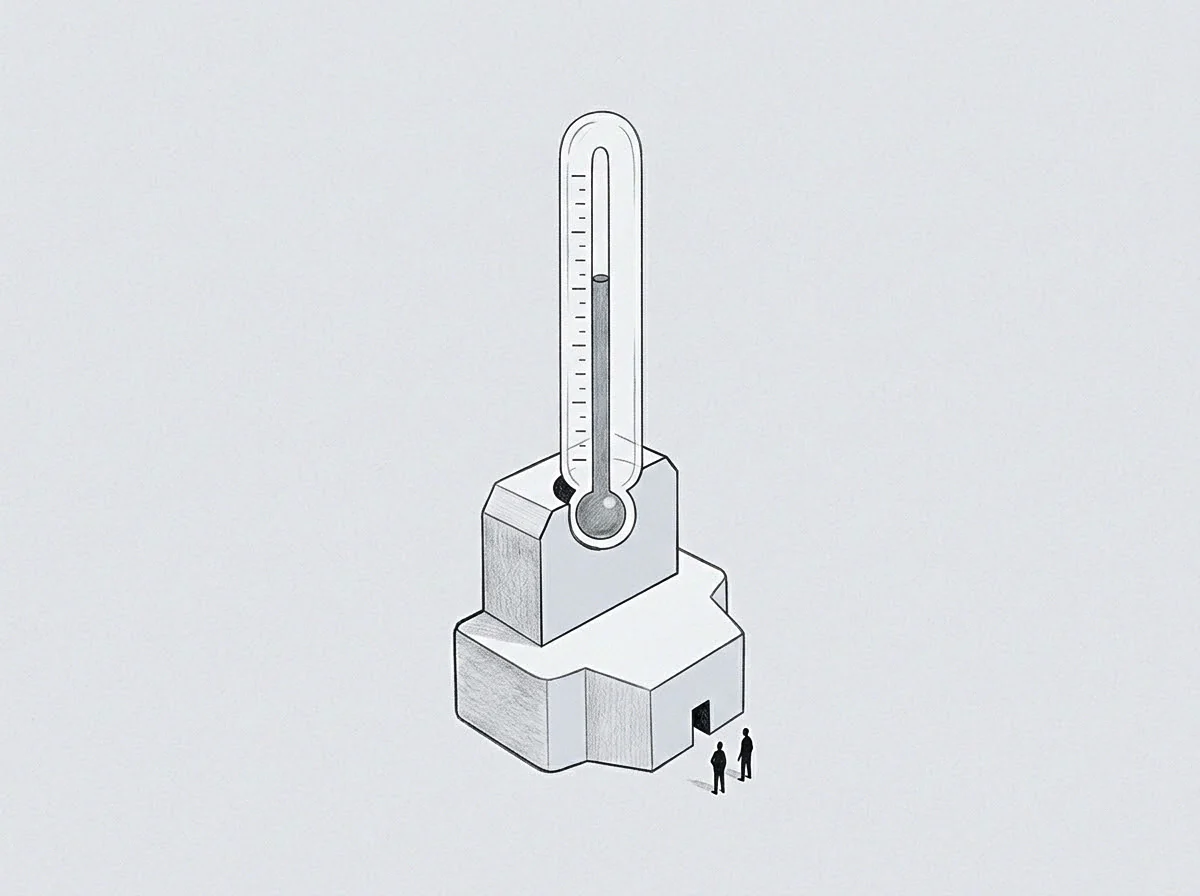
To measure transfer friction accurately, an operator establishes a three-dimensional coordinate frame along measurable operational axes:
- Semantic variance captures linguistic and structural differences between data models maintained by separate operational groups.
- Authority asymmetry tracks discrepancies in decision-making authority between the transferring entity and the receiving entity.
- Temporal desynchronization measures cycle mismatch between batch administrative units and continuous delivery teams.
- Incentive divergence isolates the distance between departmental quotas across a shared boundary.
When semantic variance is high, teams consume operational capacity translating vocabularies rather than executing tasks. If an engineering group exports specifications defined by functional utility while downstream procurement reads assets strictly through general ledger codes, every handoff requires manual conversion. That translation effort creates steady drag along the semantic axis, absorbing labor that never appears on departmental roadmaps.
Friction concentrates wherever authority terminates before execution concludes.
Authority asymmetry acts as an angular multiplier on this resistance. When an upstream team lacks the institutional standing to enforce acceptance criteria on a downstream reviewer, items sit in unacknowledged queues. The transfer stalls because validation authority rests with an agent who bears no operational penalty for delay.
Measuring directional pull along these distinct axes isolates the structural source of the stoppage, showing that enterprise waste is not random sluggishness but predictable movement along a gradient of conflicting pressures.
Local optimization creates systemic resistance whenever adjacent departments calibrate performance against isolated criteria.
Shear
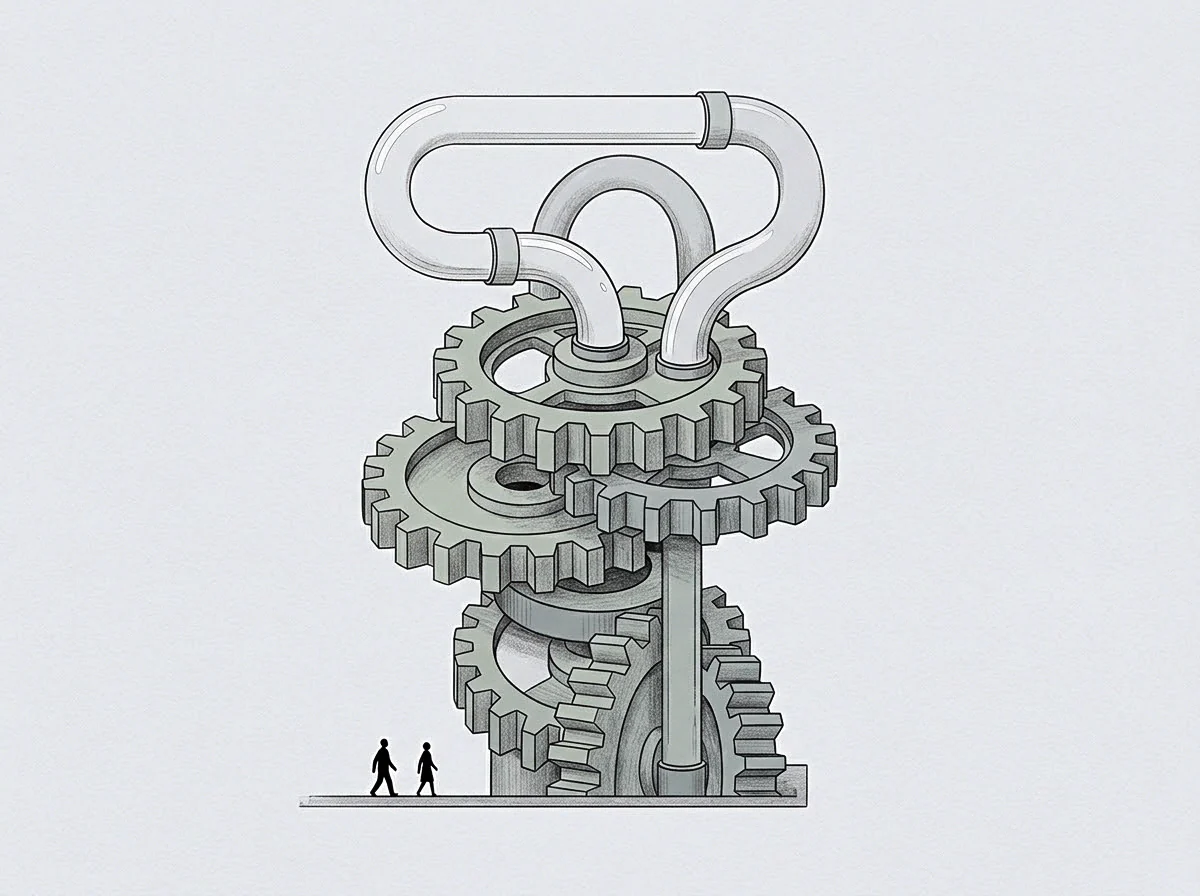
Lateral stresses accumulate along the joint plane when two enterprise units move at different speeds under a single corporate mandate. A technology division deploying changes hourly generates continuous lateral shear when interfacing with a legal unit operating on monthly review cycles. As pressure builds along this boundary, teams construct informal bypasses to avoid the slow interface.

What Determines Dissipation Across Operational Handoffs?
The dissipation of working momentum depends on the governance design of the interface. When an asset hits a boundary, forward velocity converts into bureaucratic paperwork and coordination overhead. The structure of the enterprise boundary determines the rate of this conversion under operational stress.
| Interface Topology | Dominant Friction Component | Velocity Loss Magnitude | Primary Energy Dissipation Mode |
|---|---|---|---|
| Software Interface Handshake | Data Contract Drift | Low to Moderate | Automated Schema Validation Failures |
| Inter-Departmental Functional Handoff | Authority Asymmetry | Substantial | Extended Queue Latency and Prioritization Reviews |
| Cross-Entity Vendor Boundary | Contractual Ambiguity | Severe | Audit Verification and Manual Invoicing Reconciliation |
| Parent-Subsidiary Reporting Seam | Semantic Divergence | Moderate to High | Recursive Ledger Adjustments and Metric Normalization |
Data contracts mitigate shear between technical systems by establishing explicit specifications, but human organizational boundaries rarely maintain equivalent standards. Teams rely on unwritten conventions that decay over time. As personnel rotate through roles, the informal protocols that once absorbed interfacial shear disappear.
Replacement staff attempt to execute transfers through literal readings of static policy manuals, causing the interface to stiffen and generating resistance against routine throughput.
When an operating unit rejects foreign data schemas at an organizational border, the processing latency increases as a quadratic function of payload ambiguity.
The resulting friction vectors bend execution pathways away from baseline efficiency. An engineering unit facing repeated administrative rejections from central security will alter its system architecture to minimize touchpoints. The rearchitected path reduces direct confrontation while increasing internal code complexity.
That workaround marks the exact location of the interface wall, leaving the enterprise with architectural debt incurred to bypass procedural shear.
A formal service-level definition that leaves remediation obligations unassigned causes transfer velocity to drop permanently across the interface.
Drift
Interface degradation occurs gradually through procedural additions that accumulate without coordinated oversight. A single operational failure at a boundary often triggers a compensatory oversight layer, such as an audit check inserted to catch an isolated discrepancy. Six months later, a second verification step is mandated to track compliance with the first.
Neither check is ever retired. The administrative boundary thickens through steady sedimentation, steadily draining systemic momentum.
Mechanisms of Hidden Queue Accumulation
When formal boundaries impose excessive resistance, operational units develop parallel channels. Staff send informal notifications through chat systems to prompt reviewers before submitting formal requests. These workarounds mask the real resistance of the formal process.
Leadership reads official cycle times and assumes the boundary functions acceptably, while the true friction vector remains hidden in unrecorded hours spent managing shadow channels.
Shadow channels present distinct structural failure modes when operating at elevated throughput:
- Relational dependency traps emerge when transactions succeed only through personal connections between specific staff.
- Asynchronous visibility failure occurs when operational progress moves through private chats while management dashboards display empty queues.
- Audit perimeter breaches multiply as workers distribute sensitive data through unapproved channels to avoid processing stops.
- Local convention fragmentation accelerates when decentralized teams create contradictory workaround templates for the same broken handoff.
Unofficial channels eventually collapse under increased volume. When key personnel leave, the interpersonal relationships that lubricated the broken boundary vanish overnight, and the full drag of the unaddressed friction vector reasserts itself. Incoming staff find themselves unable to move files across the perimeter.
The official system reclaims the workload, exposing an interface calcified by years of drift, and work backs up behind the formal boundary within hours of a departure.
A transfer protocol lacking assigned operational ownership leaves the processing vector pointed toward historical queues.
Restoring throughput across a drifted boundary carries a high operational cost. Management frequently attempts to solve stagnation by purchasing software licenses or demanding greater individual effort. These initiatives fail because they address internal departmental capacity rather than structural tension at the seam.
Resistance exists in the transition matrix between units; adding capacity to an upstream team merely crowds the boundary queue faster, increasing the severity of the terminal stall.
Does the organization possess the capacity to dismantle legacy compliance steps once their operational justification has expired?
Fault
Prolonged exposure to unmitigated friction degrades structural integrity across entire systems. When handoff friction reaches a threshold level, operational units abandon integration attempts altogether. Subdivisions begin operating as isolated fiefdoms, duplicating functional capabilities internally to avoid crossing external boundaries, such as a product division building its own compliance desk or a marketing group hiring dedicated software engineers.
This fracturing represents the ultimate failure mode driven by boundary drag.
Duplication and Systemic Attrition
Functional duplication offers deceptive local utility. To a divisional leader, funding an internal redundant team appears cheaper than enduring a six-week delay from a centralized counterpart. While the local calculation seems sound because the team regains control over delivery dates, the enterprise absorbs a compounding drain as redundant nodes proliferate across business units, fragmenting the structure into self-contained silos.
Capital efficiency plummets as each silo builds separate infrastructure, licenses duplicate software, and maintains isolated vendor relationships. The aggregate friction vector breaks the operating model: the company pays twice for identical capabilities while operating with blind spots created by disconnected data. Upstream decisions propagate without downstream visibility, generating strategic errors that surface during annual reconciliation cycles as the organization fractures under its administrative margins.
Reversing this fragmentation requires calculating the true cost of cross-boundary transfers. An operator measures the vector components: hours lost to idle queues, capacity consumed by translation tasks, and structural overhead from duplicate staff. Realigning these boundaries requires moving beyond localized metrics to establish joint responsibility for the interface itself.
Without direct measurement of friction vectors, governance interventions simply rearrange boundaries without diminishing drag.
Organizations that leave handoff friction unmeasured suffer systemic failure when market conditions demand rapid synchronization across disconnected functional divisions.