
Resolving Buffer Waste When Heavy Tail Traffic Spikes Overrun Fixed Relay Capacity Limits
Active queue management purges stale payloads at the buffer head and propagates backpressure upstream to prevent heavy tail bursts from exhausting fixed relay memory.
Tank
An operator monitors the memory allocation graph during a sudden load spike while telemetry reports zero dropped frames. Ingress channels deliver gigabits per second into static relay memory while the physical transceiver egress runs at absolute saturation. Packets sit in memory banks for three hundred milliseconds before reaching the wire.
Upstream senders see timed-out acknowledgments and issue redundant retransmissions into the same pipeline. Memory fills faster than transmitters can clear it, leaving hardware line utilization looking nominal while the application layer experiences catastrophic disconnects.
Stale Packets Across Fixed Memory
Hardware engineers provision static memory to prevent physical packet loss during transient microbursts. A heavy-tailed traffic distribution renders that sizing logic obsolete when arrival volumes exceed transceiver discharge speeds by orders of magnitude over extended durations. Queues end up holding dead bytes.
Ingress allocation consumes memory blocks for payload fragments whose client-side transport sockets have already closed, forcing downstream interfaces to transmit expired payloads that destination hosts immediately discard.
Relays accumulate obsolete byte volume behind fixed egress transceivers whenever queue residency time exceeds the transport layer retransmission timer.
Memory occupancy increases latency without preserving throughput. Ingress buffering absorbs the initial wavefront, yet holding packets past their useful lifespan converts dynamic memory into dead storage. When memory reaches complete saturation, the relay drops fresh arrivals indiscriminately.
Incoming connection handshakes and urgent synchronization flags vanish while old streaming segments drift slowly toward the wire.

Tail Latency Multiplication
A client connection operating under heavy tail distributions generates message sizes governed by power-law variances. Small control messages get trapped behind megabyte-sized payload chunks inside shared first-in first-out structures. Serialization delays cascade back into upstream routing stages, creating deep line pauses across the fabric.
Every millisecond of queue delay increases the likelihood of a connection reset. When the relay holds ten thousand frames in memory, round-trip times escalate beyond client timeouts, prompting parallel transport engines to multiply transmission rates in a mistaken effort to restore state. The relay bears the physical cost of retaining traffic the sender has already abandoned, wasting silicon, raising thermal load, and crowding out recoverable traffic at ingress.
Surge
Packet distributions across distributed interconnects diverge sharply from Poisson arrival assumptions. Traffic measurements show Pareto-distributed burst lengths where a small fraction of source endpoints produces the bulk of payload volume. High-volume bursts occupy buffer capacity for hundreds of milliseconds, pushing normal interactive traffic into prolonged tail latency states.
Heavy Tail Distribution And Buffer Bloat
Standard telemetry tools mask tail variance by reporting five-minute arithmetic means. An interface operating at sixty percent nominal throughput can spend forty milliseconds of every second in complete buffer exhaustion. Variance grows without an upper bound, making infinite queue-depth variance the mathematical consequence of heavy-tailed arrivals under standard drop-tail disciplines.
The system routes around immediate packet loss by inflating queue depth. Expanding memory pools merely trades frame drops for uncontrollable transit delay as unprocessed volume collects behind the choke point. The relay’s physical wall manifests as a fixed serialization rate, an immutable constant governed by transceiver clock frequency and PHY layer encoding limits.
When heavy-tail spikes strike fixed memory relays, specific failure states emerge across the fabric:
- Buffer Head-of-Line Blocking occurs when outsized bulk payloads monopolize queue memory, preventing low-latency control frames from reaching output transceivers.
- Retransmission Avalanche develops when expired packets linger in queues while senders inject duplicate frames across ingress channels.
- Credit Starvation propagates through upstream switches when pause frames halt intermediate conduits, turning a localized bottleneck into fabric-wide gridlock.
- Telemetry Invalidation distorts operational measurements when average delay metrics conceal severe degradation in ninety-ninth percentile response times.
A buffer sized to prevent all packet drops during heavy-tailed spikes guarantees maximum latency degradation during continuous high-load operations.
The Geometry Of Bursts
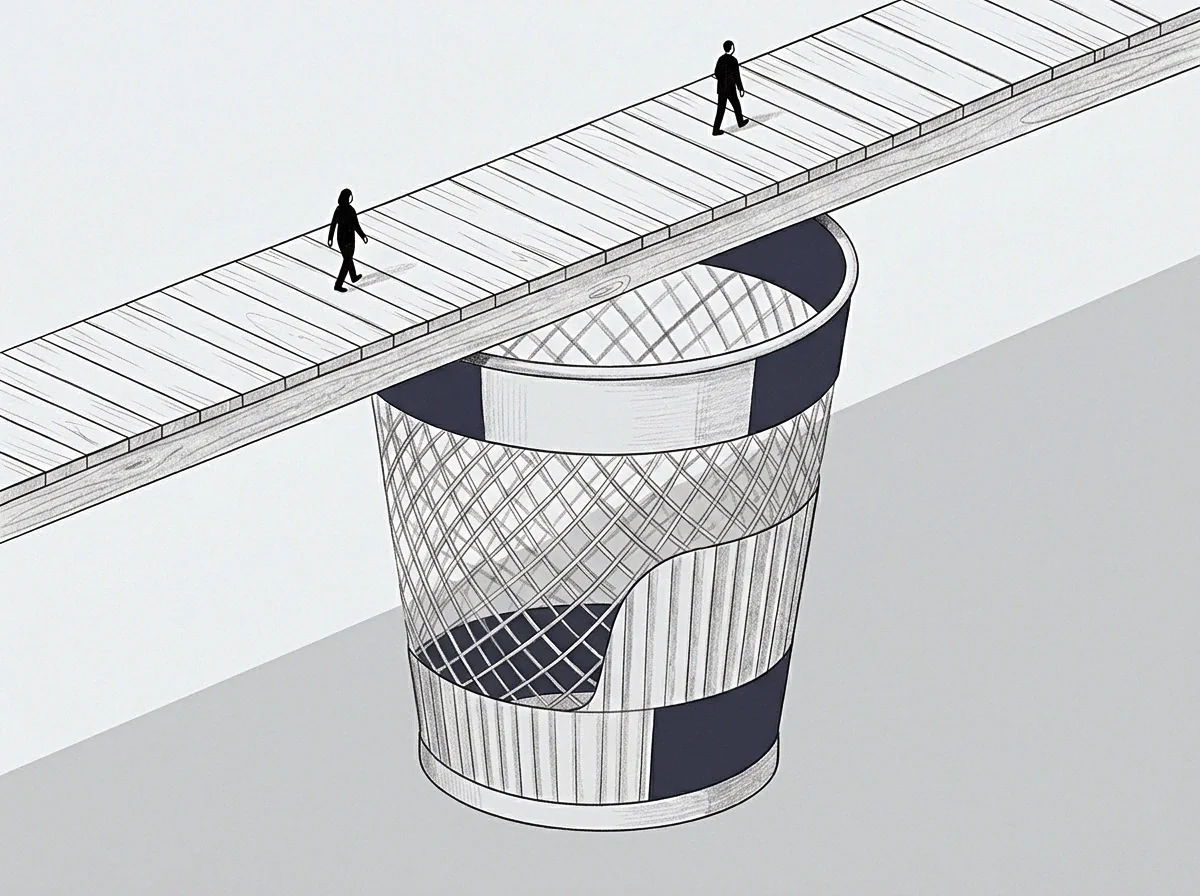
Bursts behave as physical wavefronts impacting a rigid boundary. An ingress conduit delivers data at forty gigabits per second into an egress port fixed at ten gigabits per second. The buffer acts as an accumulator, absorbing the thirty-gigabit differential until memory limits trigger catastrophic drops.
Arrival spikes follow power laws. The relay absorbs small spikes cleanly, but long-duration bursts exhaust all available headroom. Retransmission compounds the problem: senders interpret buffer-induced latency as packet loss and initiate aggressive recovery sequences that push arrival rates higher precisely when the relay needs to drain queues.
Under these persistent arrival dynamics, an operational fabric cannot easily distinguish between transient microbursts and sustained heavy-tail overflows before memory saturation occurs.
Triage
Queue management systems attempt to balance packet retention against packet delay through algorithmic discarding. When arrivals exhibit heavy-tailed distributions, standard drop-tail logic defaults to admitting every incoming frame until memory fills completely. The relay then executes tail-drop operations, severing incoming connections while transmitting zombie payloads from the head of the queue.
Mitigating this dynamic requires proactive triage policies that prune expired frames and keep residency shallow.
Evaluation Of Active Queue Control
Managing relay memory under heavy-tailed spikes demands clear criteria to evaluate queue management protocols. Systems must preserve throughput without allowing queue delay to exceed application timeouts. These comparative dynamics appear across distinct management disciplines operating under identical physical constraints.
| Discipline | Tail Latency Floor | Memory Waste Fraction | Relay Throughput Preservation | Recovery Duration |
|---|---|---|---|---|
| Drop-Tail Queuing | Full Buffer Serialization Time | High (35-60% Stale Payload) | Degraded by Redundant Retransmissions | Slow (Requires TCP Timeout Backoff) |
| Random Early Detection | Variable Below Buffer Limit | Moderate (15-30% Stale Payload) | Moderate (Early Drop Disrupts Window) | Medium (Oscillatory Window Dynamics) |
| Controlled Delay (CoDel) | Bounded by Target Setpoint | Low (Under 5% Stale Payload) | High (Sustains Drain Line Rate) | Rapid (Proportional Gradient Dropping) |
| Head-of-Line Drop with ECN | Near-Zero Buffer Delay | Negligible (Under 1% Stale Payload) | Optimal (Preserves Wire Serialization) | Immediate (Explicit Congestion Feedback) |
Drop-tail queuing fails because it treats all bytes as equally valuable regardless of queue residency. Random early detection introduces statistical dropping based on average queue lengths, but heavy-tailed spikes move faster than moving-average filters can adjust. Controlled delay models measure packet sojourn time through the memory buffer, dropping packets at the head of the queue when minimal delay targets are breached.
Dropping stale packets from the head of a queue recovers transmission bandwidth that drop-tail mechanisms surrender to expired data.
Disputed Threshold Models
System designers maintain conflicting stances regarding active queue thresholds. One side argues that dropping packets inside private relay memory undermines application reliability, advocating instead for deep hardware buffers capable of absorbing bursts lasting hundreds of milliseconds. This position assumes transport protocols will eventually throttle down as round-trip delays inflate.
Another perspective contends that preserving packet integrity at the expense of latency fails for interactive workloads, where late delivery is effectively packet loss. Stored payloads lose utility once client-side timeouts expire. Dropping unexpired packets at the ingress port signals backpressure instantly, forcing sender transport engines to curtail window growth before buffers overflow.
Buffering cannot generate bandwidth that the egress physical layer cannot supply.
Buffer depth must never exceed the product of egress bandwidth and the maximum permissible latency of the supported applications.
Drain
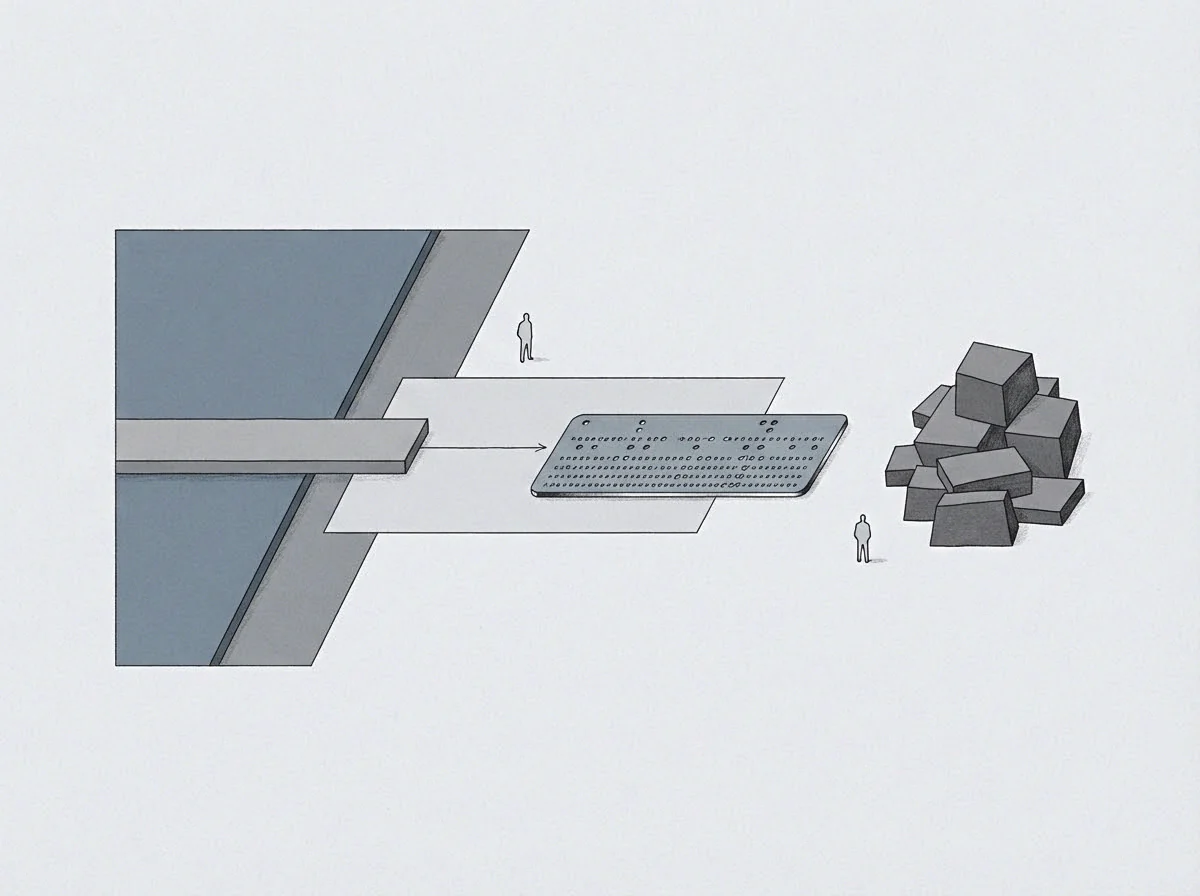
Resolving buffer waste requires altering the drainage geometry of the relay. Rather than allowing incoming bursts to pile up in deep static queues, the relay must actively shed stale volume while projecting backpressure upstream. Moving from passive retention to active drainage requires systematic interventions at both ingress and egress interfaces.

Upstream Admission And Backpressure Gradients
Ingress rate limiters establish the first defense by measuring arriving traffic against available egress capacity. When arrival rates diverge sharply from the service rate, the relay issues priority-based flow control frames or explicit congestion notifications directly to adjacent upstream switches. Halting traffic at the upstream sender prevents the local buffer from degenerating into a dead-letter repository.
Backpressure mechanisms create an ascending cost gradient for senders attempting to dump unbounded bursts onto fixed links. Upstream nodes throttle dispatch rates, spreading burst volume across multiple edge buffers rather than concentrating it in a single relay memory bank. This keeps internal queue residency low and preserves capacity to process urgent transit frames without delay.
Implementing an effective drainage regime requires specific operational adjustments across the routing engine:
- Sojourn Time Tagging records high-resolution ingress timestamps on every packet entering the relay memory structure.
- Proactive Head Truncation discards frames whose queue residency exceeds the configured latency ceiling before they reach output transceivers.
- Explicit Congestion Marking sets transport headers on surviving packets to alert receiving hosts that the bottleneck interface operates at saturation.
- Dynamic Buffer Resizing shrinks individual port queue allocations during high burst intervals to prevent memory starvation across adjacent channels.

Head Drop And Token Depletion
Head-of-line drop policies invert traditional queuing logic. When memory fills, the relay drops the oldest packet at the front of the queue rather than rejecting the fresh packet at the tail. Discarding the oldest packet clears immediate space, delivers current data to the transceiver, and ensures that when a packet finally crosses the wire, its transport sequence number matches the sender’s current state.
A relay that sheds stale head packets delivers current information to receivers while drop-tail relays consume bandwidth delivering historical waste.
Token depletion algorithms meter packet egress against link capacity. Transceivers draw tokens from a leaky bucket synchronized to line clocking. When bursts exhaust available tokens, subsequent packets encounter strict head-of-line dropping or immediate upstream pause assertion.
Ceiling
Every relay architecture eventually encounters the hard boundary of physical capacity. Software configuration and buffer tuning alter packet delivery timing, but they cannot create transceiver bandwidth where none exists. When heavy-tailed traffic persists across sustained operational windows, fixed relay capacity acts as a structural ceiling.

The Boundary Of Provisioned Relay Bandwidth
An operator managing fixed-capacity links must distinguish between absorbing microsecond jitter and accommodating structural traffic mismatches. Hardware buffers excel at smoothing arrival jitter caused by serialization offsets across upstream multiplexers, but they cannot balance continuous structural load differences.
Operating a fixed relay at ninety-five percent utilization under heavy-tailed distributions creates asymptotic latency spikes. Small fluctuations in arrival rates produce outsized queue delays that no queue discipline can resolve without dropping data. The system must treat packet loss as an active routing signal rather than an operational failure.

Operating Within Incompressible Variance
Accepting packet loss at the relay boundary preserves the health of the broader transport environment. Keeping buffers minimal gives senders immediate, low-latency loss signals that accurately reflect bottleneck congestion. Sender congestion windows shrink gracefully, stabilizing line rates near the physical capacity of the relay while memory waste drops near zero as packets move directly to the wire without lingering in stagnant queues.
The core strategy centers on sizing buffers to match the round-trip time between adjacent switches while delegating large-scale data retention to edge endpoints with massive memory architectures. Transit relays must stay lean, fast, and intolerant of queue bloat. Discarding packets early preserves the relay, protects transit latency, and forces senders to accommodate the physical limits of the conduit.
The explicit drop-precedence parameter in egress scheduling tables determines whether an arriving packet displaces an expired queue entry or incurs immediate ingress rejection.