
Systemic Reallocation of Development Hours During High Context Switching Periods
Reallocating development hours requires isolating unplanned operational demands onto a single rotating engineer to protect contiguous deep concentration blocks.
Drain
Attention Fragmentation Across Compressed Production Cycles
An engineer interrupted forty minutes into technical design spends twenty minutes rebuilding working memory. The calendar logs an uninterrupted hour, but the repository logs zero commits. When operational escalations ripple through an organization, schedules shatter into fifteen-minute fragments separated by administrative overhead.
Expecting forty available developer hours per week assumes focus is additive. Because cognitive work is nonlinear, three contiguous hours yield deep system architectural progress, while six thirty-minute blocks yield zero completed complex modules and leave three incomplete draft pull requests.
Context penalties compound with every distinct domain an engineer touches between morning and evening. Shifting from database query tuning to customer onboarding support, and subsequently to continuous integration failures, exacts a penalty at every boundary. Reloading abstractions, locating syntax states, and rediscovering edge conditions takes real time, and attention residue stays tethered to an unsolved ticket while the engineer types in a new branch.
The day ends with exhaustion without deployment.
Attention residue degrades analytic precision long after an engineer leaves an uncompleted support investigation.
The toll lands squarely on technical capacity. When unplanned interruptions exceed four daily events, engineers drift toward trivial tasks that require minimal context loading. Complex refactoring halts while systematic performance investigations get deferred in favor of cosmetic interface changes and configuration adjustments.
Technical debt expands silently while total logged hours remain stable.
When an operating organization misdiagnoses context fragmentation as developer fatigue, leadership adds oversight meetings. That response further subdivides the remaining unbroken blocks and stalls delivery across core infrastructure initiatives.

Gate
Structural Triage and Interruption Firewalls
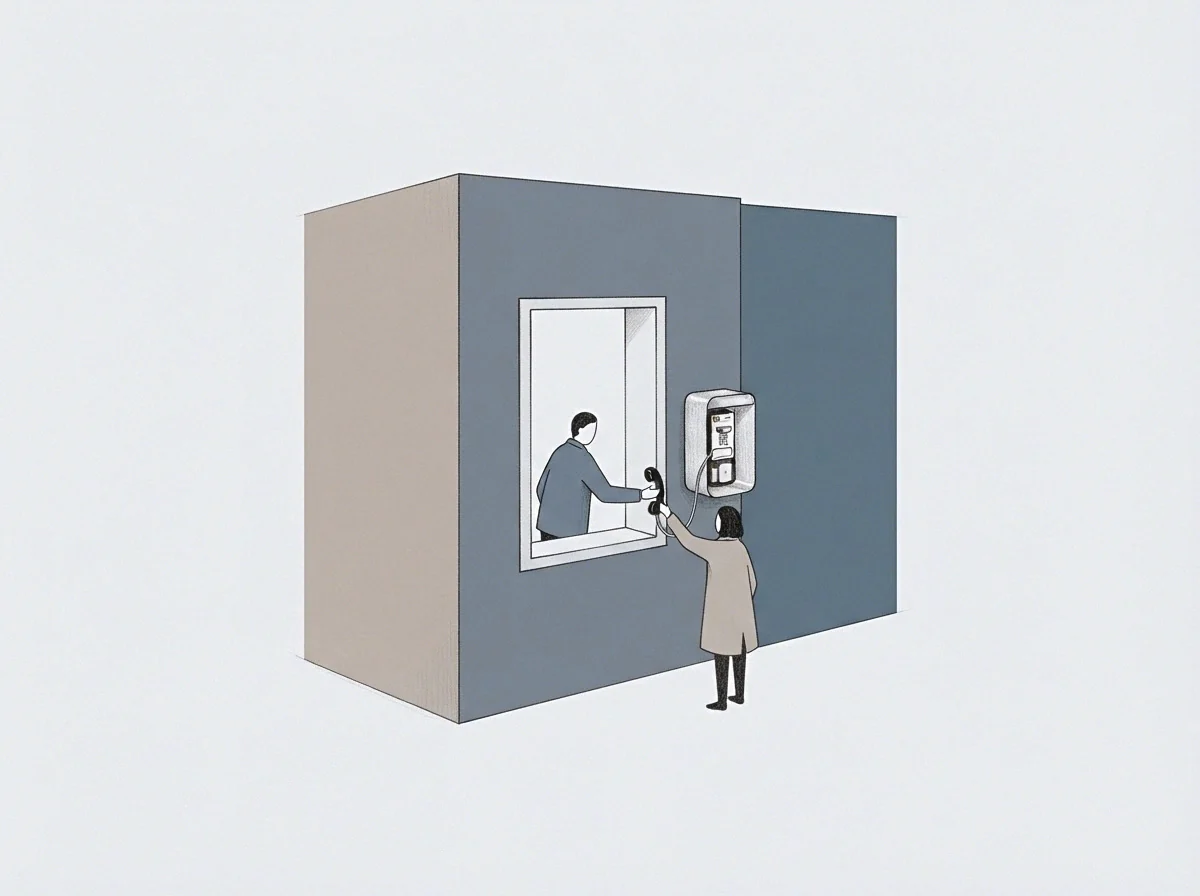
Protecting technical velocity during sustained business turbulence requires physical insulation between operational noise and core build teams. A single designated triage engineer absorbs every incoming client inquiry, infrastructure alarm, and partner request throughout a five-day rotation. The remaining engineering staff operates behind an administrative wall with notifications silenced, as communication channels route exclusively to the shield.
The triage rotation functions as a sacrificial circuit. The engineer on duty completes zero feature tickets during their shift and expects constant fragmentation. That person absorbs incoming volatility, documents system failure patterns, and patches hotfixes directly to production, while the rest of the bench retains unbroken blocks dedicated to core platform milestones.
- Rotational shielding isolates unexpected production queries onto one designated desk while preserving continuous deep focus blocks for the primary engineering unit.
- Asynchronous escalation queues convert reactive real-time demands into discrete review batches evaluated twice daily at fixed operational intervals.
- Explicit operational triage limits define strict failure thresholds that trigger cross-team redirection rather than ad-hoc developer context breaks.
By protecting deep focus through sequential rotation in the intake seat, teams prevent chronic operational burnout while securing systemic execution reliability across critical development streams.
A designated operational shield preserves development velocity by sacrificing one engineer schedule to protect four.
Protect the perimeter of deep production work until operational stability returns to baseline levels.
Margin

Cardinality Fallacy in Fragmented Calendars
Executive scorecards measure development time through cardinal units of identical hours. Forty scattered thirty-minute segments appear identical to five eight-hour blocks on an invoice. In execution, forty fragmented half-hours produce near-zero functional platform evolution.
The real capacity of an engineering staff follows an ordinal vector governed by unbroken concentration spans.
| Operating Arrangement | Context Recovery Penalty | Deep Architectural Yield | Operational Incident Mean Time |
|---|---|---|---|
| Unstructured Ad-Hoc Interruption | Exceeds 45 percent of active shift | Near-zero complex code delivery | Unpredictable between 2 and 18 hours |
| Dedicated Rotational Triage Shield | Confined to single designated staff | Sustained at 85 percent baseline | Stabilized below 45 minutes |
| Consolidated Half-Day Split Blocks | Approximates 20 percent of active shift | Moderate maintenance progress | Variable between 3 and 6 hours |
Splitting days into morning production work and afternoon operational coordination prevents deep state re-entry. Development momentum drops rapidly as technical talent begins treating daily working periods as administrative obligations, saving demanding engineering problems for irregular late-night sessions.
Where Does Recovered Development Attention Go?
When leadership systematically reallocates developer hours away from reactive interruptions, attention shifts toward architectural hardening and foundational technical debt reduction. Rather than reacting to isolated system alarms, developers spend preserved concentration windows redesigning flaky storage components, automating validation tests, and decoupling tangled service layers. The expenditure of energy moves from surface triage to root-cause mitigation.
True development capacity increases only when fragmented daily hours consolidate into multi-hour uninterrupted workspaces.
The team secures four contiguous morning hours of absolute calendar silence each day, converting volatile technical schedules into predictable software delivery pipelines.
Shift
Temporal Consolidation for Deep Technical Work
Reclaiming engineering momentum during high-friction operating phases requires altering working patterns rather than pleading for individual focus. Leadership establishes explicit temporal zones where all cross-functional communication pauses. No internal status inquiries occur between eight in the morning and noon.
Feature planning conversations, partner escalations, and executive syncs compress into afternoon clusters.
This intervention protects cognitive flow, letting engineers enter complex codebases with certainty that incoming messages will wait until the afternoon boundary. Bug discovery rates fall during deep blocks. Code review turnaround accelerates because engineers review pull requests during their designated afternoon administrative phase rather than interleaving reviews into complex algorithmic writing.
Unplanned business emergencies will inevitably test temporal boundaries. A major integration failure or client outage threatens to shatter the morning isolation zone. Organizational leadership faces the decision to breach established protection or let secondary operational consequences sit unresolved until the designated afternoon coordination block opens.
Whether leadership possesses the operational discipline to withstand temporary counterparty discomfort in order to protect core engineering infrastructure remains an open operational question across volatile market environments.