
Quantifying Cognitive Load Vectors Against Project Time Tracking Data
Cognitive load vectors map internal working memory depletion against recorded project durations, separating mechanical completion time from structural task friction.
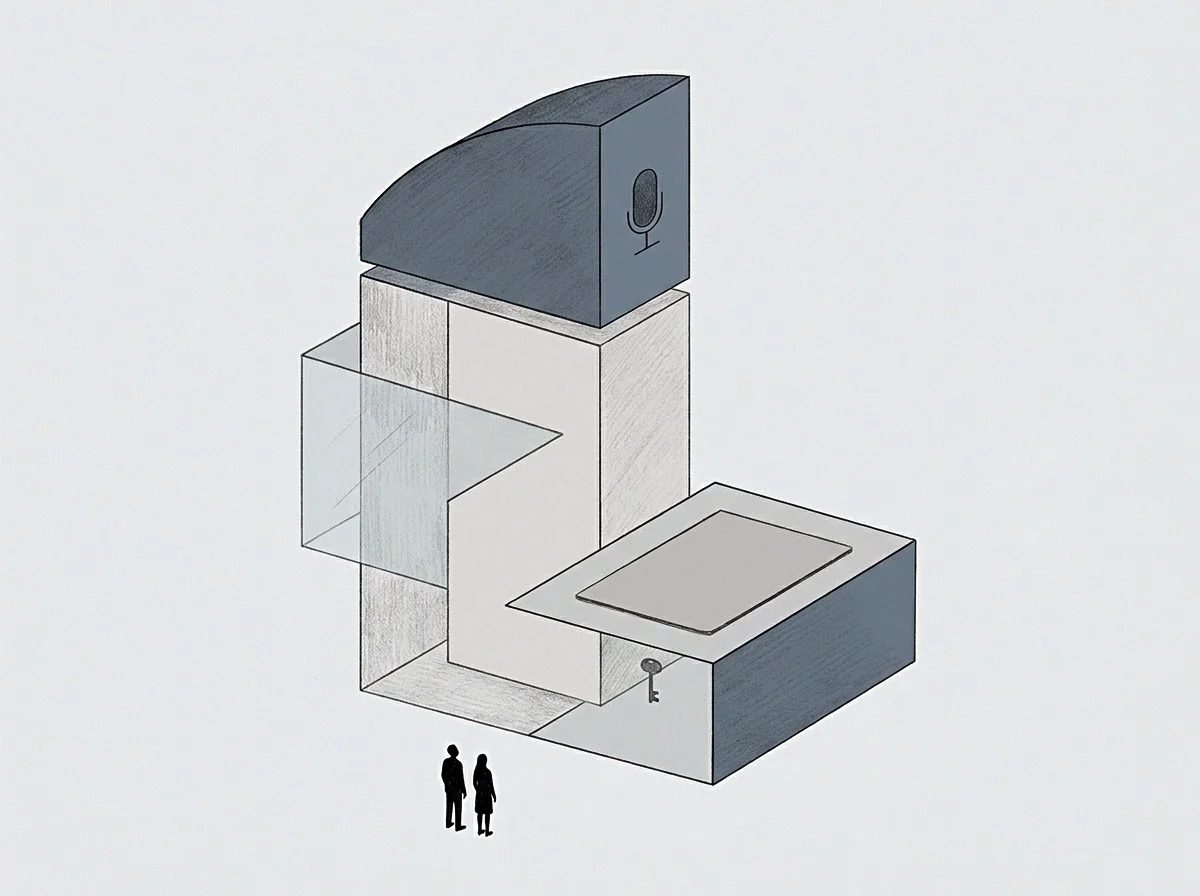
Stamp
A timesheet recorded thirty-eight billable hours for an engineer across four working days. The client received a standard billing export displaying clean four-hour blocks allocated to database schema updates and API routing. The client read those entries as steady progress along an uninterrupted track.
By five in the afternoon, the engineer sat staring at an empty code editor, unable to write a single query. While the log showed continuous capacity, internal processing capacity had run out twenty hours earlier. Elapsed duration measures physical presence; internal processing requirements measure the biological drain on working memory.
Recorded Intervals and Working Memory Extraction
Project tracking systems rely on linear time accrual. A clock logs sixty minutes regardless of whether an operator spends that hour executing routine scripts or resolving conflicting structural dependencies. Sweller established the biological boundaries of working memory: humans hold between two and four independent information elements in mind at once when working through unfamiliar material.
Faced with contradictory API specifications, an engineer must maintain multiple provisional hypotheses in active storage, which decays within seconds without constant rehearsal.
The operational penalty of that mental maintenance stays hidden in linear records. An enterprise timecard treats duration as a flat scalar. Cognitive burden, by contrast, behaves as an ordinal vector with separate directional components: working memory occupancy, task-switching friction, friction from ambiguous project constraints, and attention residue from fragmented communication.
A linear clock sees five sixty-minute segments scattered across eight hours as identical to a single five-hour block of deep focus, even though that distribution changes biological output entirely.
An operator facing twenty brief interruptions pays an attentional recovery penalty on every single one. Mark, Gonzalez, and Harris showed that returning to an interrupted conceptual task takes an average of twenty-three minutes. A project log recording seven hours of work across eight separate tickets can easily hide a true productive window of zero minutes.
The billable record reflects compliance with time tracking, not actual cognitive output.
Setting deliverable deadlines based strictly on historical hour logs guarantees a missed deadline whenever task complexity shifts from routine execution to structural synthesis.
Toll
Working memory drains through distinct channels during complex technical work. Sweller, van Merriënboer, and Paas identified three primary forms of cognitive load: intrinsic, extraneous, and germane. Intrinsic burden stems from the inherent complexity of the problem.
Extraneous burden comes from clumsy interfaces, vague mandates, and fragmented tools. Germane burden is the cognitive effort directed at constructing mental schemas and durable models.
Decomposing Extraneous Drag From Core Production
Standard timesheets collapse these three forms into a single total of hours worked, obscuring how effort was spent. When an engineer spends eight hours wrestling with broken deployment scripts and ambiguous directives, the log still records eight hours of progress on the feature. Management assumes productive development, while the engineer experiences total extraneous exhaustion without building any durable knowledge.
- Intrinsic structural difficulty reflects the irreducible logic required to solve the target computational problem within its defined architectural boundaries.
- Extraneous operational noise stems from fragmented specifications, conflicting team inputs, and broken deployment pipelines that consume active recall without producing project progress. This component drains reserves rapidly.
- Germane structural synthesis represents the intentional cognitive processing that converts immediate problem resolution into long-term organizational knowledge.
- Context switching drag measures the persistent cognitive residue left behind when an operator terminates an incomplete operational thread to answer an urgent query.
These load components do not offset each other evenly. Extraneous drag accelerates mental fatigue while cutting into germane output. Under heavy operational noise, an engineer loses the capacity for intrinsic problem-solving long before the workday ends.
A project system that fails to distinguish extraneous friction from intrinsic problem complexity produces burn rates that compound quietly until execution halts completely.
A record of thirty logged hours creates an expectation of thirty units of code output, ignoring the cognitive friction that delayed production.
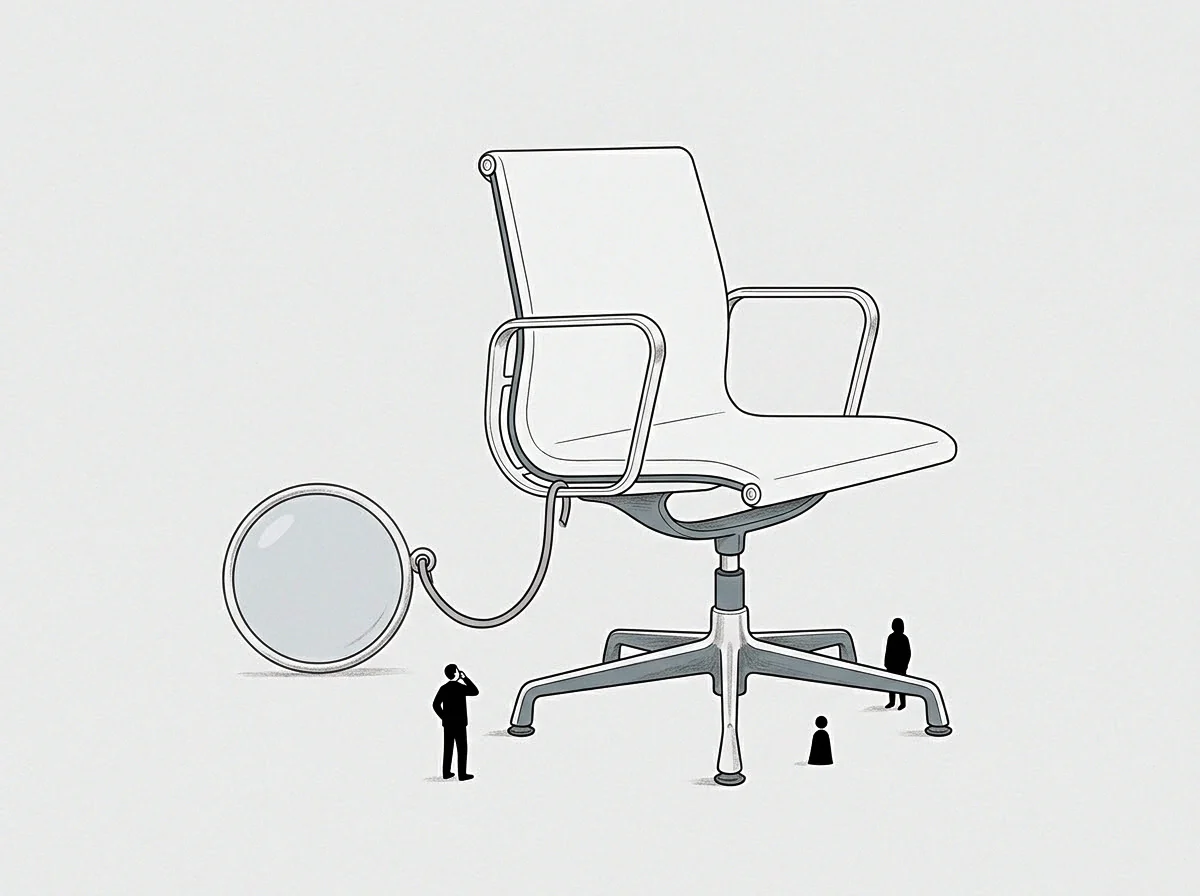
Desk
Workstations and digital interfaces shape the environment where work happens. Sitting before three monitors filled with constant notification feeds creates continuous sensory noise. Every alert demands immediate triage: ignore, defer, or respond.
Each micro-decision exacts an unrecorded cognitive tax.
How Does Context Fragmentation Distort Project Durations?
Herbert Simon showed that attention is the primary bottleneck in processing organizational information. As inputs multiply, available attention shrinks. An engineer tracking four project streams across seven task boards splinters working memory into small fragments.
The time log registers eight distinct forty-five-minute blocks charged to different accounts, looking perfectly balanced on paper.
That balance is an illusion. Working memory cannot be cleared instantly. Navon demonstrated that coordinating concurrent tasks causes cross-talk interference in central processing.
When an engineer shifts from system design to emergency bug fixes, structural details from the first task linger in working memory for up to forty minutes, degrading performance on the new task and increasing error rates.
| Execution Regime | Recorded Duration | Task Switches Per Day | Extraneous Drag Factor | Residual Cognitive Capacity |
|---|---|---|---|---|
| Deep Synthesis Block | 6.0 Hours | 2 to 4 | Minimal (Low friction) | High (Sustained retention) |
| Distributed Ticket Queue | 6.0 Hours | 14 to 20 | Severe (High noise) | Depleted (Severe fatigue) |
| Ad-Hoc Support Cycle | 6.0 Hours | 35 or more | Catastrophic (Pure fragmentation) | Exhausted (Complete burnout) |
The table illustrates why cardinal time tracking fails. All three operational regimes show the exact same billable total of six hours. Yet the third regime demands seven times as many task switches as the first.
Extraneous drag climbs exponentially with context switches, so by hour five of an ad-hoc support cycle, cognitive capacity is effectively depleted, producing code changes that introduce bugs.
Consider a standard scenario: two software engineers with five years of experience work on separate tracks within the same product division during a six-month sprint. Both log forty hours a week in the corporate tracker. Engineer A works on an isolated backend refactor with two scheduled syncs a week.
Engineer B handles live customer escalations while trying to build a payment gateway feature.
Engineer A logs forty hours and completes the refactor three days early with zero critical defects. Engineer B logs forty hours, delivers the gateway four weeks late, and introduces five security regressions that require emergency patches. Management blames the difference on personal technical ability.
That diagnosis is wrong. Engineer B absorbed four hundred context switches a month, forcing constant reconstruction of working memory and causing a continuous cognitive deficit that drained energy and mental capacity.
A team that measures only elapsed hours remains blind to the cognitive debt that accumulates between ticket status transitions.
Execution speed tracks undivided attention blocks rather than logged calendar hours.

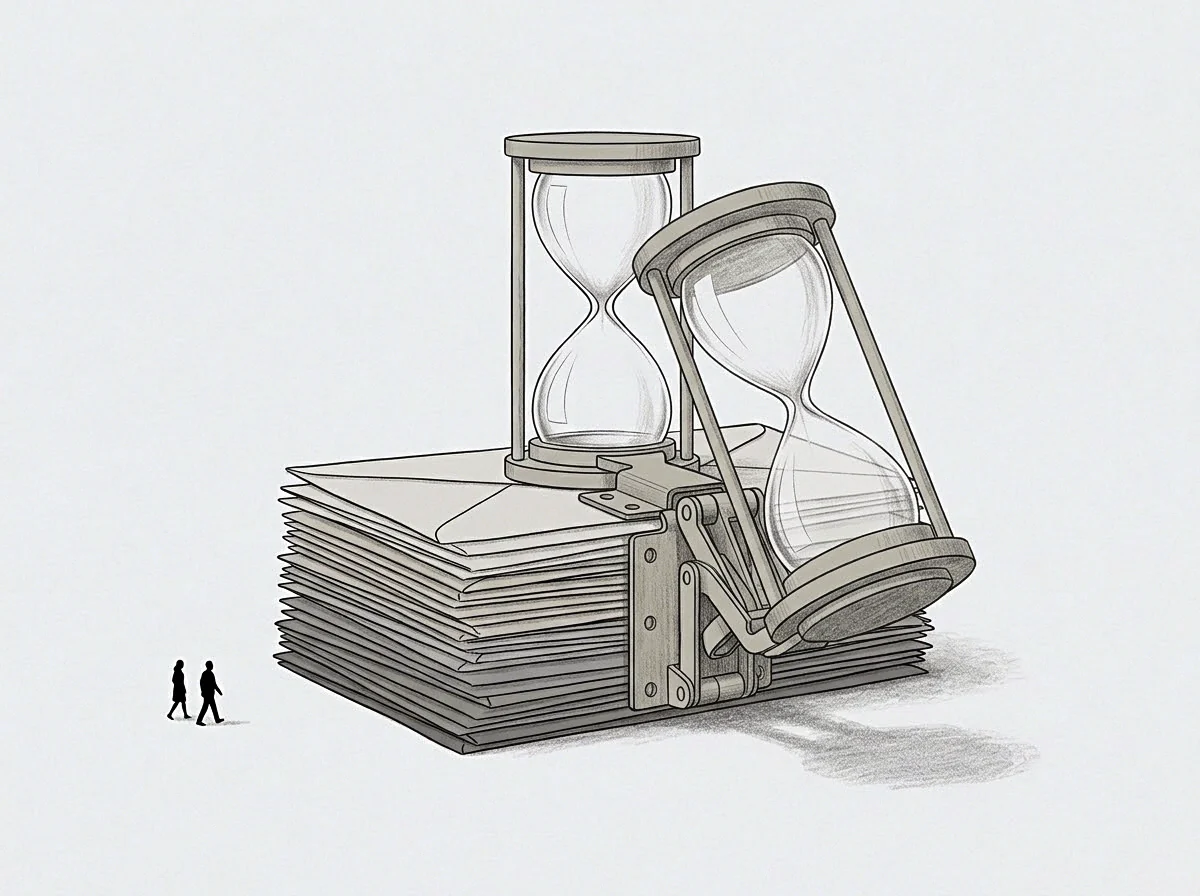
Split
Evaluating project work requires separating cardinal hours from ordinal cognitive load. Stevens established clear measurement definitions: ratio scales allow addition and averaging, while ordinal scales only allow ranking. Traditional time records sit on a ratio scale where sixty minutes is twice thirty, and zero means no time elapsed.
Cognitive load functions on an ordinal scale: an engineer can tell that Task X was more draining than Task Y, but claiming it required exactly 2.4 times more cognitive capacity is mathematically meaningless.

Decoupling Cardinal Duration From Ordinal Depletion
Forcing ordinal mental states into cardinal timesheets turns tracking data into fiction. Workers adjust entries to meet expectations. When a complex design task takes two hours of deep concentration followed by three hours of mental exhaustion, the engineer simply logs five continuous hours.
The system records five hours of steady work, masking the drop in actual working capacity.
- Baseline entry capture records the surface duration of an operational engagement without assessing mental friction. This step provides the cardinal baseline that counterparties demand for commercial accounting.
- Friction gradient divergence appears when the subjective mental effort required to maintain operational output decouples from elapsed time. The operator experiences rising exhaustion while logged units remain flat.
- Attention exhaustion threshold marks the point where working memory buffers refuse new information. Operating past this threshold introduces structural defects into the project codebase.
Industrial machinery wears down based on physical load and heat. Human cognition displays similar structural limits. Kahneman demonstrated that mental exertion directly correlates with autonomic arousal, pupil dilation, and glucose consumption in the prefrontal cortex.
That energy reserve is finite; once depleted, error rates increase predictably.
A fixed forty-hour workweek produces wildly divergent operational output depending on how many times working memory is reset.
Ignoring the distinction between elapsed time and mental depletion leads management to misjudge remaining team capacity, driving experienced engineers to sudden resignations that leave organizations paralyzed.
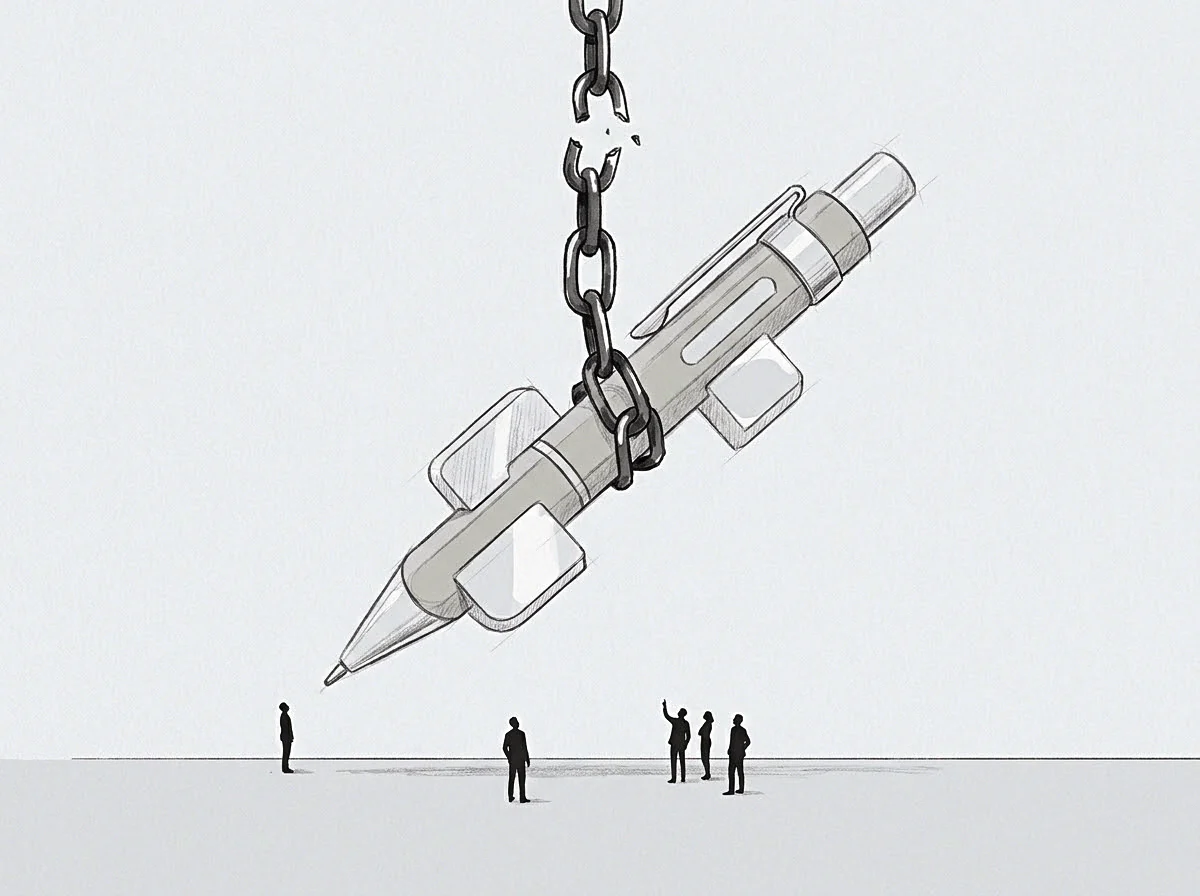
Transit
Commercial agreements require pricing, and pricing requires cardinal metrics. Clients cannot process invoices billing six units of severe friction and two units of minor frustration; they expect logged hours or fixed fees. The main challenge lies at this boundary: how to convert internal cognitive load into external time figures without hiding underlying operational drag.

Converting Internal Exhaustion Into External Commitments
This translation requires accounting for the recovery time complex work demands. When a task involves high extraneous load from ambiguous technical requirements, recovery time belongs in the estimate. Two hours of intense problem-solving often require two subsequent hours of light, routine execution before working memory resets to baseline.
Factoring that recovery time into estimates protects delivery schedules.
Committing to time estimates without accounting for cognitive recovery creates a predictable failure cycle. A team agrees to forty weekly hours of complex development. In practice, they deliver fifteen hours of focused engineering, spend fifteen hours in a recovery haze, and spend the remaining ten hours fixing mistakes caused by exhaustion.
Deliveries slip, and leadership blames poor discipline or time management.
An engineer leaves a desk at seven in the evening, having logged eight hours, unable to hold a coherent conversation at dinner.
Working memory reserves empty faster during ambiguous coordination than during difficult mathematical execution.
The central debate remains whether organizations can measure cognitive load using automated tools like keystroke tracking and focus monitoring, or whether mental strain is an internal experience that cannot be reduced to cardinal metrics.