

Measuring Latency Percentiles Under Bursty Network Workload Conditions
Percentile estimation under burst traffic requires decoupling arrival schedules from completion signals to prevent queue backpressure from hiding tail delay.
Percentile estimation under burst traffic requires decoupling arrival schedules from completion signals to prevent queue backpressure from hiding tail delay.

State-gated structural coupling aligns strategic recalibration cycles with operational throughput boundaries by gating strategic shifts through queue backpressure.

Unsynchronized redirection converts delivery hours into scrap work and switching waste whenever corporate strategy turns faster than operational propagation.

Systemic drag increases when strategic turn rate outpaces operational retooling, turning directional change into structural heat rather than forward movement.

Dynamic yield adjustment coordinates threshold relaxation along interdependent axes to preserve core system state during compound high-volume disruptions.

Deformation rates measure potential basin decay along anisotropic vectors where heavy tailed shocks accelerate state transitions beyond classical diffusion limits.
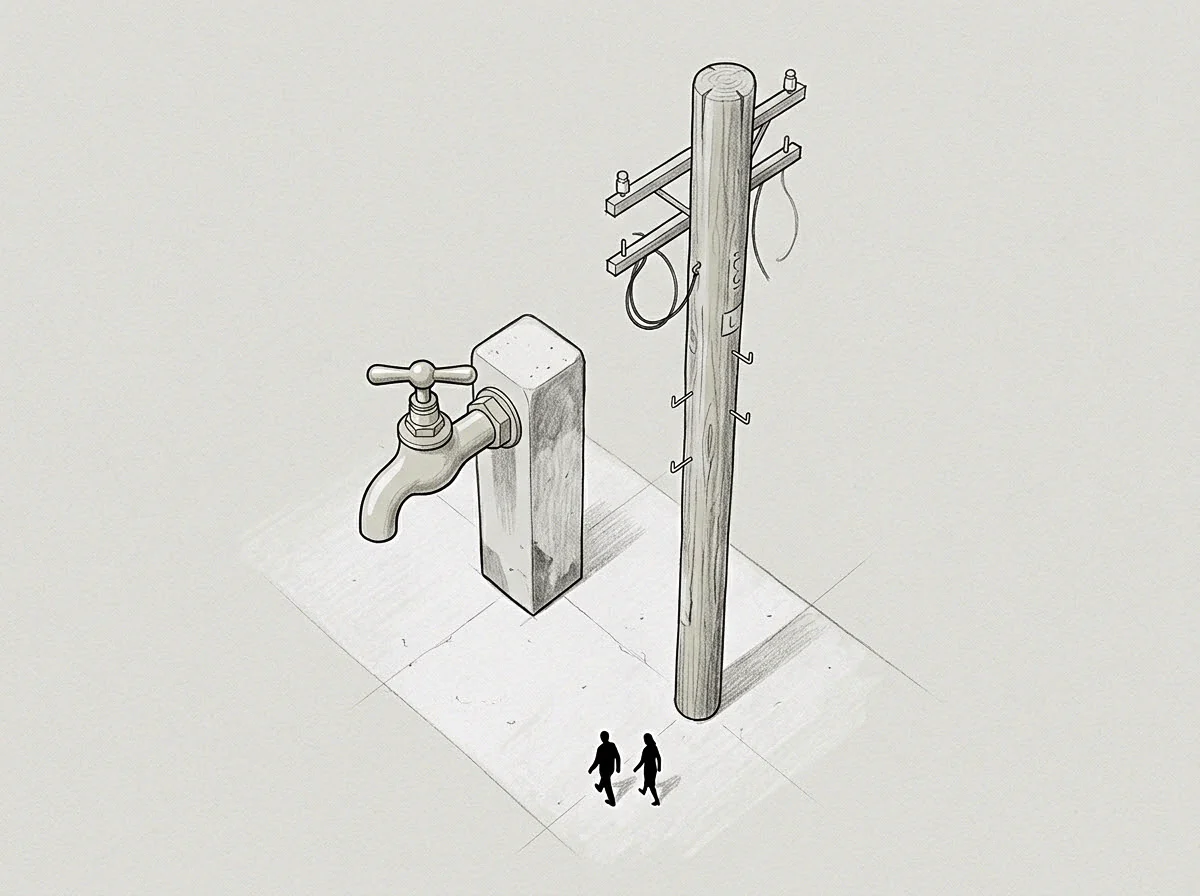
Continuous infrastructure shifts break linear metric coupling, causing squad velocity to mask systemic latency through cascading operational dependencies.
Mahalanobis distance detects multivariate telemetry anomalies by scaling metric deviations against empirical covariance to neutralize correlation noise.

Standardizing operational metrics requires decoupling dashboard labels from database derivations, enforcing centralized code definitions to prevent localized baseline drift.

Compounding unsettled transfer pricing assets distort subsidiary capital bases, requiring balance sheet recapitalization and adjusted operating hurdle rates.

Ordinal priority limits define recovery sequences, but operational freeze duration dictates whether remaining collateral volume yields any cash extraction.

Statutory ownership provides legal standing while operational extraction yield depends entirely on the live energetic cost of overcoming systemic organizational friction.

Balance sheet exposure calibration matches capital deployment rates to the physical transaction processing bandwidth of operational support systems.

Corporate asset deployment efficiency depends on mapping non-linear operational boundary limits rather than relying on cardinal balance sheet valuations.

Systematic operational descent hits structural return limits when fixed legacy overhead concentrates onto fewer output units, eroding baseline efficiency margins.

Incremental return rates collapse when cross-segment coordination queues expand faster than revenue, demanding structural decoupling of shared units to restore velocity.

System fatigue accumulates as hidden drag when constant nominal output consumes internal recovery buffers and forces unrecorded compensatory effort.

Cardinal output coordinates track positional displacement while internal structural strain measures the cumulative material deformation absorbed to sustain that rate.

Operational baselines derived under continuous strain capture systemic deformation rather than sustainable capacity, requiring avoidance vectors for calibration.

Residual capacity boundary limits are quantified by measuring secondary communication friction and error recovery costs when operational models obscure limits.
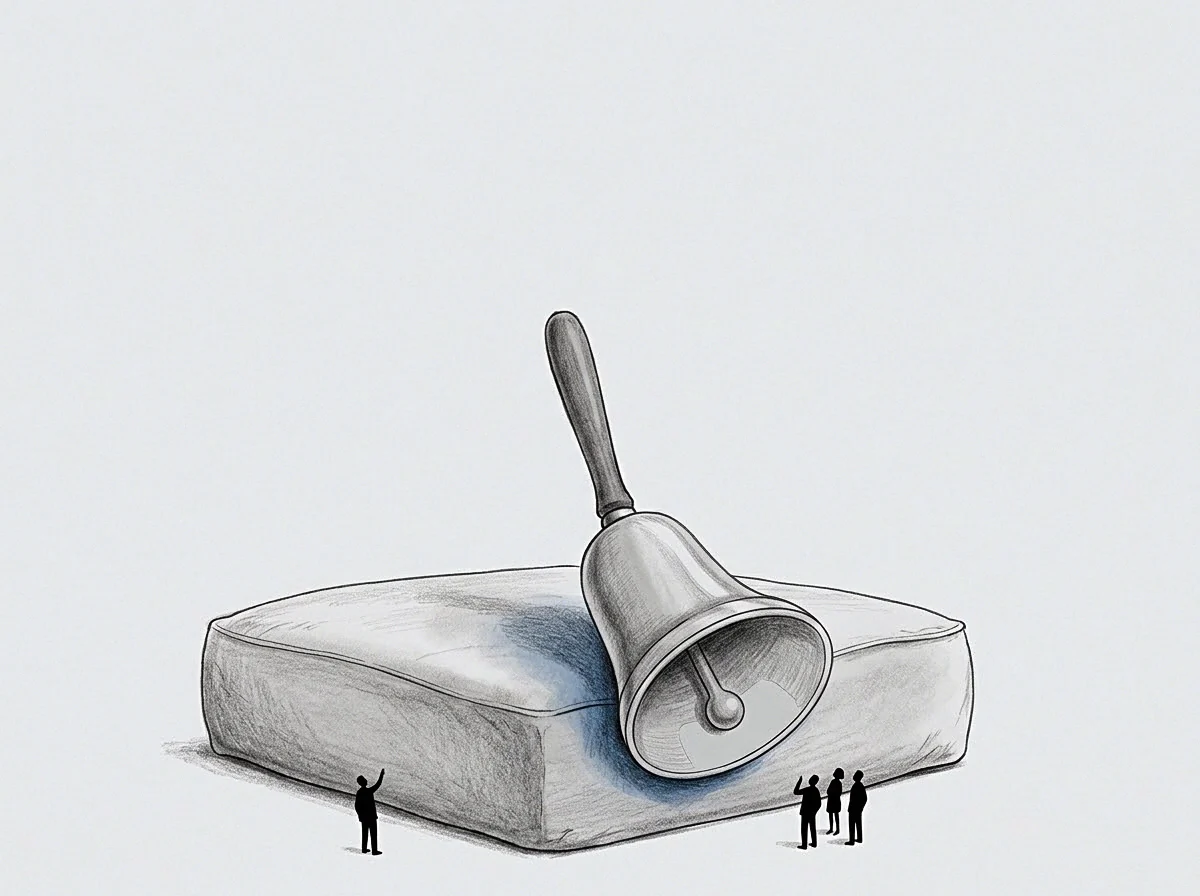
System avoidance gradients calculate structural friction by measuring the vector divergence between formal operational protocols and empirical employee workarounds.

Capacity loss signals manifest as uncounted manual workarounds and signal damping long before reported throughput metrics show execution loop failure.

Multi-axis metric variance hides baseline capacity depletion by prioritizing positive operational outputs over degrading recovery reserves.

Variance whitening aligns vector distance calculations to eliminate systematic evaluator bias caused by high-dimensional output noise.

Dynamic multi-dimensional baseline metrics scale by transforming heterogeneous telemetry into normalized dimensionless vectors across shifting operational volumes.

Capital constraints truncate high dimensional exploration, expanding gradient uncertainty bounds along unprobed axes and forcing dimensional collapse.

Marginal gradient descent updates non-convex portfolio weights through directional partial derivatives and stochastic perturbations to bypass local minima and saddle traps.

System regime shifts expand compressed latent spaces, enabling state reconstruction through shadow coordinate embeddings derived from observable residual gradients.

Negative gradient vectors derive from measuring the capital, labor hours, and operational drift consumed by workarounds designed to evade high-friction decisions.

Sustained execution stress forces operational systems into low-energy default states, contracting reachable execution options to local historical paths.
The terms are written where they belong. Each field holds three desks, and every entry a desk writes raises the terms it uses, each term given a meaning, a mechanism and the places it appears. The record on these pages stays first person and hand made; the fields grow the nomenclature.