

Designing Contractual Capacity Protections That Prevent Operational Collapse in Distressed Teams
Dynamic contractual capacity protections use automated scope attenuation and intake gates to prevent team operational collapse during severe distress.

Dynamic contractual capacity protections use automated scope attenuation and intake gates to prevent team operational collapse during severe distress.

Strategic action maintains telemetry validity by deploying parallel holdout streams that preserve unconfounded baselines during rapid feature iterations.

Kernel thread scheduling delays in distributed service mesh envelopes stem from cgroup quota exhaustion, runqueue starvation, and non-stationary preemption.
Decoupled open loop generators schedule traffic independently of backend replies, avoiding coordinated omission under extreme stochastic load.
Statistical isolation of telemetry baseline shifts uses sequential probability ratios and residual tracking to separate step changes from transient noise.

Early restructuring triggers establish contractual boundaries that force operational realignments before cash exhaustion destroys enterprise assets.

Percentile estimation under burst traffic requires decoupling arrival schedules from completion signals to prevent queue backpressure from hiding tail delay.

Post-crisis failure cascades propagate non-linearly across interdependent operational dimensions when single-scalar financial accounting hides critical resource exhaustion.
State-gated structural coupling aligns strategic recalibration cycles with operational throughput boundaries by gating strategic shifts through queue backpressure.
When capital reserves fail, financial pricing breaks down and resource allocation converts to an ordinal ranking of non monetary operational vectors.

Tracking multi attribute capacity vectors isolates operational survival from nominal cash balances by ranking non-monetary capabilities on ordinal scales.

Resolving structural balance sheet deficits early prevents cognitive depletion from destroying the high-context synthesis capacity needed for strategic choices.

Trading intellectual capacity for cash exchanges non-fungible future problem-solving agency for short-term liquidity, eroding proprietary advantage.

Preserving working attention during cash shortfalls requires structural buffers that isolate core operational execution from daily solvency negotiations.

Operational progress registers only when an observed performance delta exceeds the historical variance envelope of an undisturbed system over multiple cycles.

Optimal stopping under resource depletion balances marginal information value against baseline decay to halt tests before artifact variance exceeds true delta.
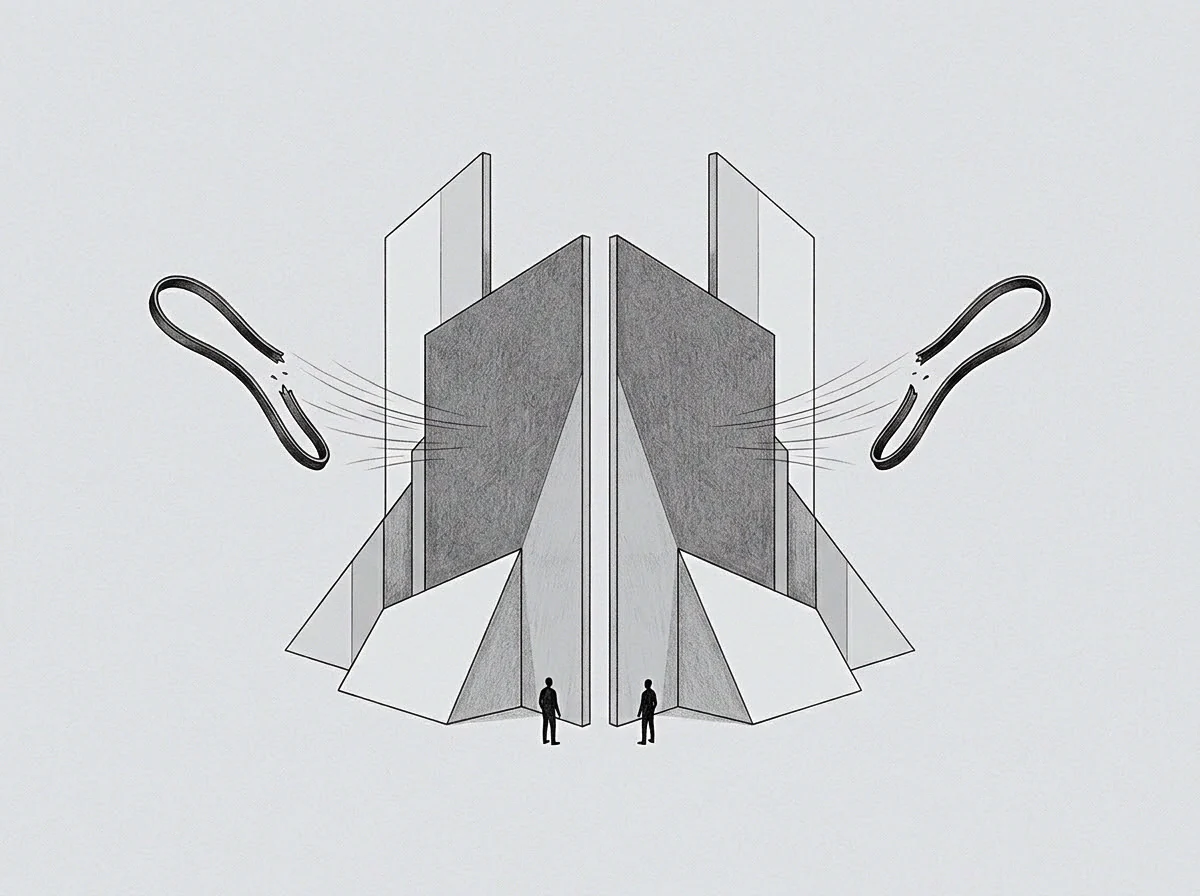
Executive cognitive recovery curves lag compressed corporate restructuring covenant deadlines, driving exhausted leaders to trade permanent equity for brief pauses.

Decoupled collection rates contract the harmonic mean of sample sizes, expanding the minimum detectable delta by inflating the standard error of the difference.

Dynamic telemetry sampling distorts moving baseline signals by selectively dropping rare tail events, requiring probability-weighted reconstruction for accuracy.

Delaying governance agreements until sleep baselines recover halts permanent voting concessions negotiated during transient prefrontal metabolic failure.

Distressed emergency capital uses founder exhaustion to extract senior liquidation multiples and voting rights that extinguish common equity value.

Signal resolution collapses when feedback latency exceeds decision cadence, trapping optimization loops in environmental noise and invalid surrogates.

Unstructured client escalations destroy fixed contract margins by imposing unpriced attentional switching cycles that degrade subsequent engineering output.
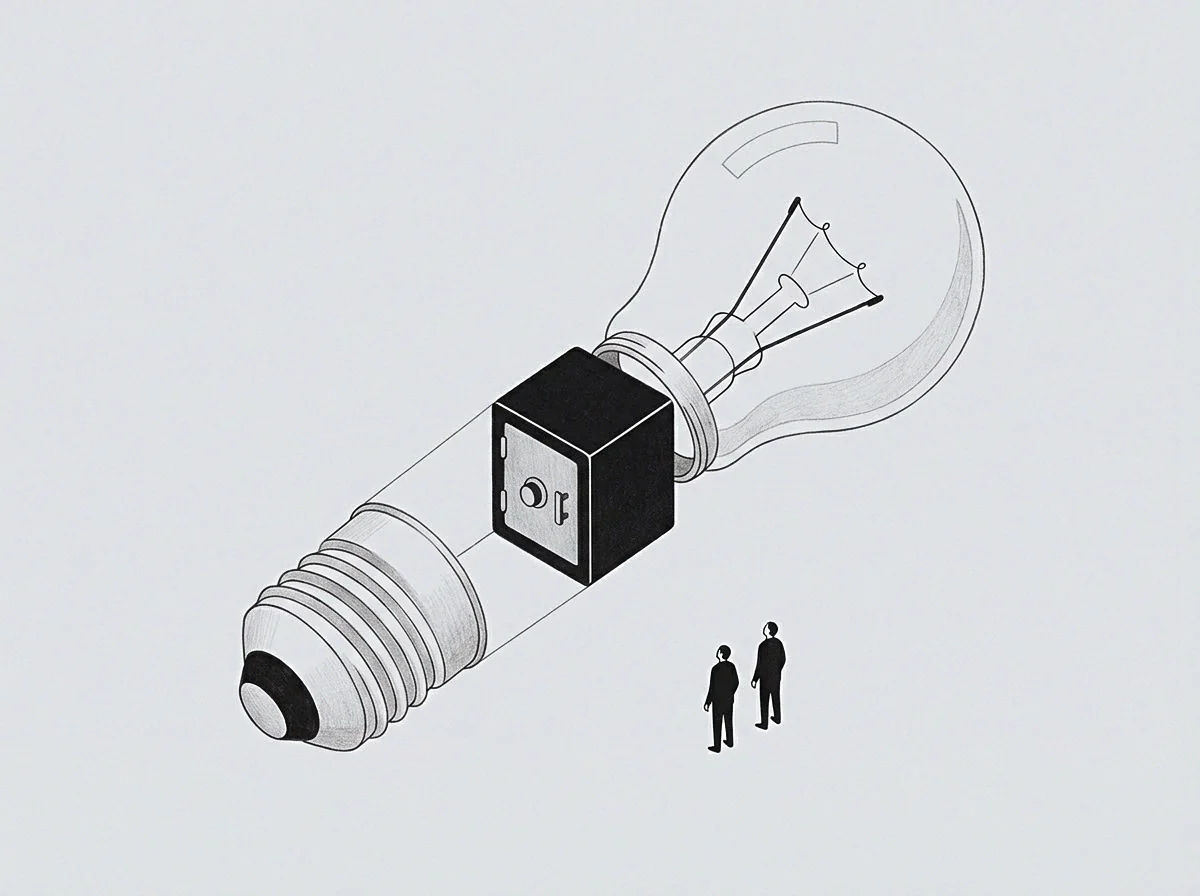
Unsynchronized redirection converts delivery hours into scrap work and switching waste whenever corporate strategy turns faster than operational propagation.

Systemic drag increases when strategic turn rate outpaces operational retooling, turning directional change into structural heat rather than forward movement.

Dynamic adjustment clauses convert multidimensional operational strain vectors into cardinal invoice additions via pre-indexed metric transformation schedules.

Measuring internal strain components converts unstated operational fatigue into explicit contractual boundaries before client delivery obligations take effect.
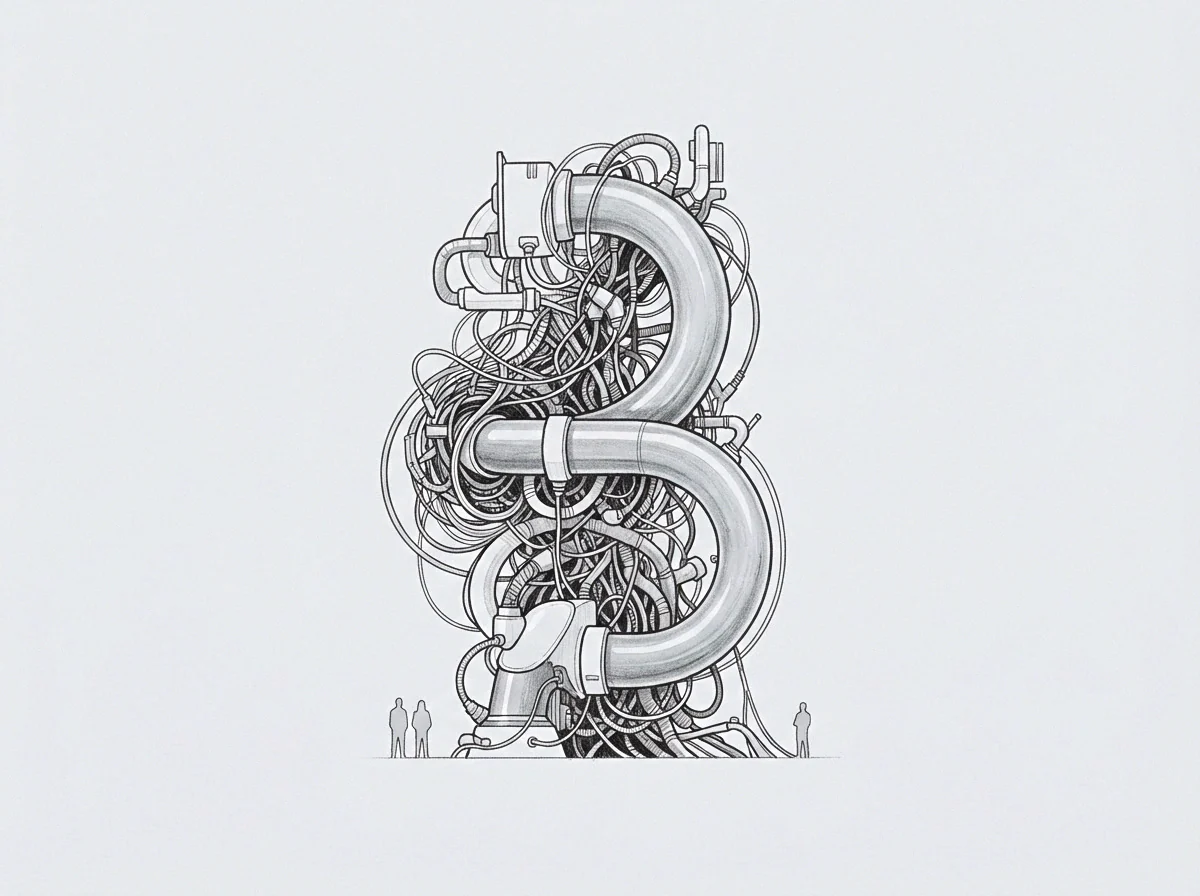
Distinguishing stochastic noise from metric shifts requires comparing early experiment variance against historical baselines using sequential testing methods.
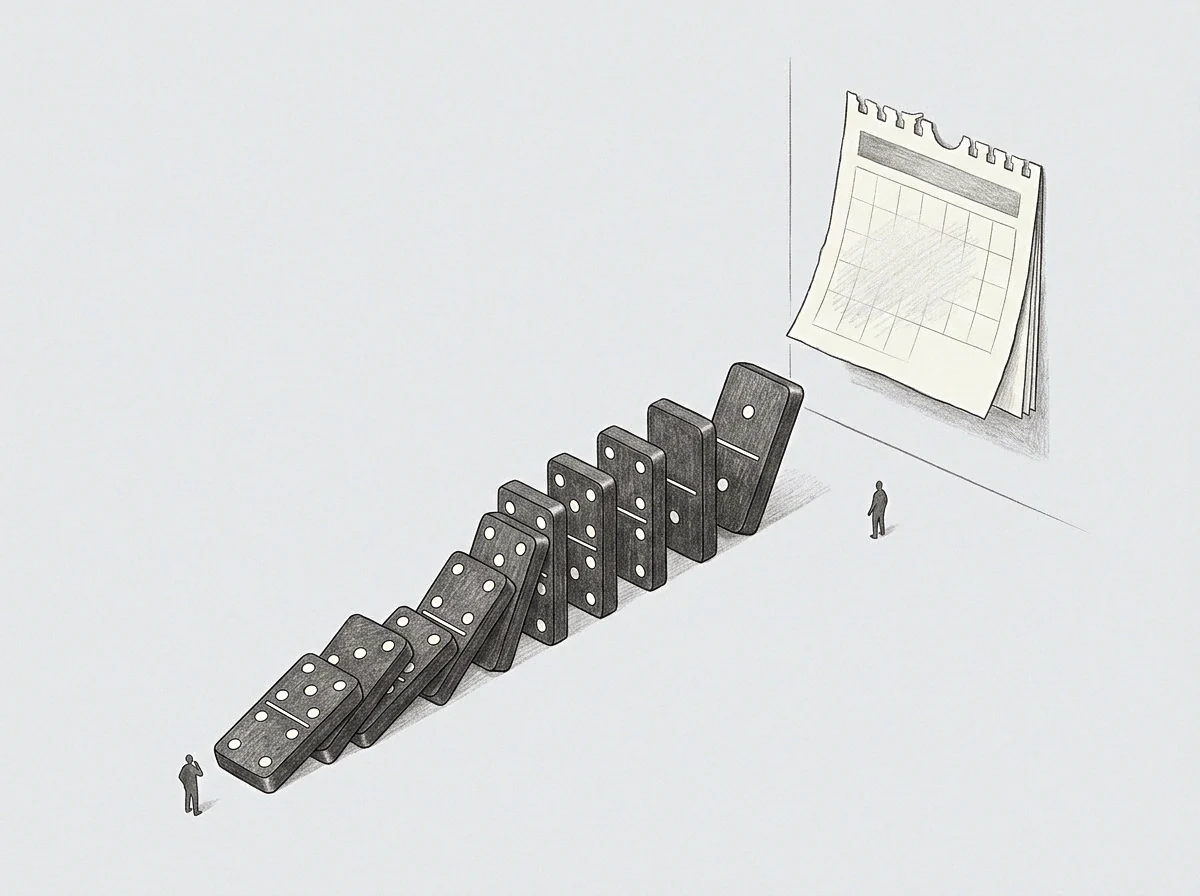
A bounded sampling period measures authentic baseline delta only when the observation window spans complete operational cycles against a fixed bedrock datum.

Strategic realignment reaches its boundary window when daily operational variance exceeds the expected delta of the underlying structural transition.
The terms are written where they belong. Each field holds three desks, and every entry a desk writes raises the terms it uses, each term given a meaning, a mechanism and the places it appears. The record on these pages stays first person and hand made; the fields grow the nomenclature.