
Identifying Hidden Friction Signals in Execution Loops
Hidden friction signals manifest as systemic rerouting around operational boundaries where formal setpoints clash with actual computational costs.

Circuit
An operator monitors an execution process where throughput statistics display steady operational velocity. Jira tickets move across columns, build pipelines return green status codes, and weekly status summaries record consistent project advancement. Inside the actual workflow, every deployment requires three informal chat messages to clear an ambiguous architectural boundary.
The primary system metrics show clear progress, yet the real effort expands into unmonitored coordination channels.
Execution loops operate as feedback control systems governed by stated setpoints. When the setpoint demands rapid iteration but the underlying system carries structural resistance, the loop generates an error signal. Organizations frequently track cardinal outputs such as completed tasks or deployed features while ignoring the ordinal cost vector associated with human friction.
The resulting variance between reported metrics and physical capacity creates invisible execution drag.
Dashboards register completed cycles while work routes around an unmeasured friction point.

The Metric Wall and Surface Throughput
Primary dashboards capture closed work units while masking secondary coordination delays. An operator completes a feature specification on schedule, yet engineering implementation halts until an unrecorded verbal alignment occurs. The system logs the completed specification as a successful state change.
The baseline holds.
Measuring surface throughput without accounting for internal latency produces false operational indicators. Work items accumulate in buffer states that lack formal representation on execution boards. Capacity drains quietly.
State changes carry cost. When formal reporting mechanisms fail to capture these intermediate holding patterns, leadership observes nominal output while team capacity degrades under unallocated friction.

Signal Distortion Across System Boundaries
When handoffs cross functional divisions, human actors absorb friction through unrecorded channels. A product design team transmits assets to a software development unit without validating interface constraints. Software engineers make unrecorded adjustments to design specifications to maintain build schedules.
The official execution loop reflects uninterrupted progress, but the system accumulates state fragmentation across division boundaries.
This structural distortion obscures the real location of operational bottlenecks. The feedback loop receives modified signals that report smooth progress, preventing the system setpoint from recalibrating to match actual capacity. Invisible friction signals persist because the operational protocol rewards surface completion over structural alignment.
Whether the accumulation of invisible bypasses originates from poorly calibrated setpoints or from structural misalignment remains unmeasured until the boundary undergoes deliberate load.
Drift
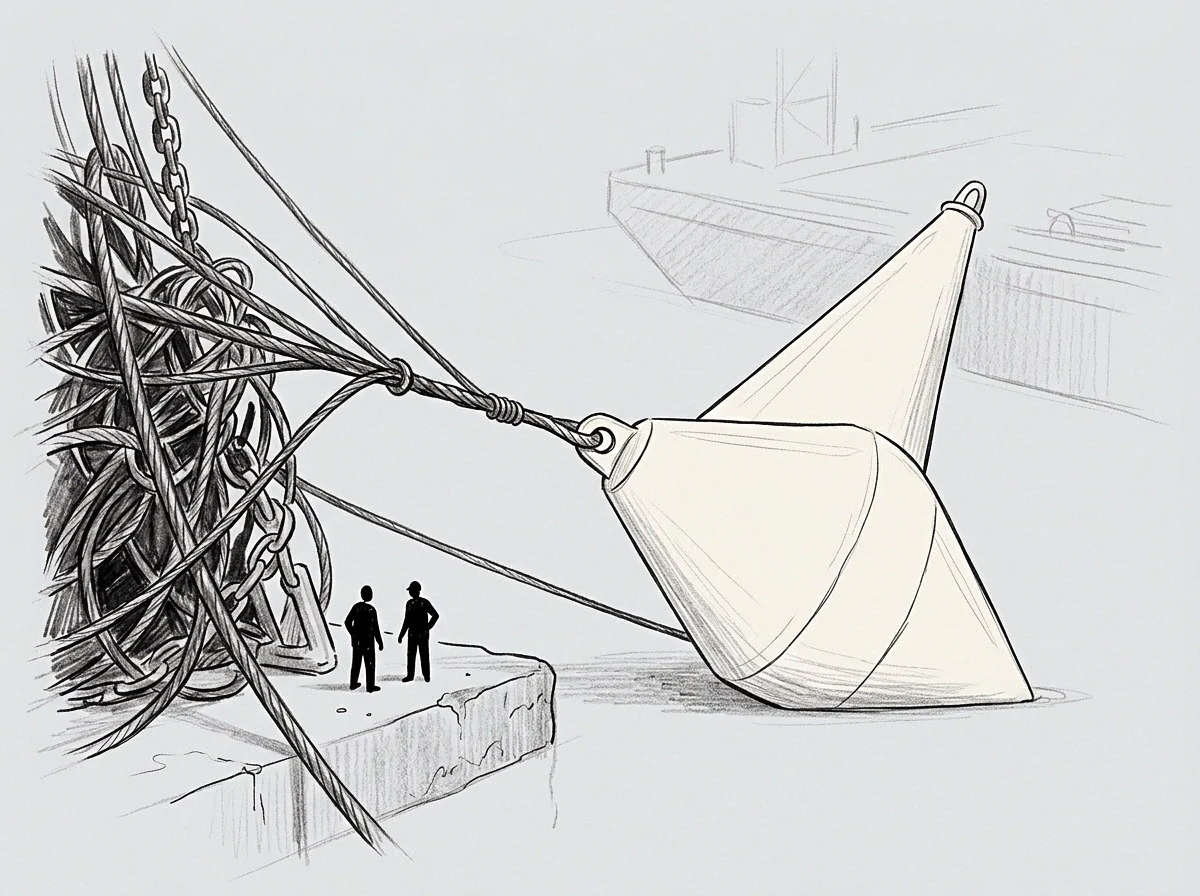
Operational paths change shape whenever explicit protocols demand higher energy than informal workarounds. System actors follow the path of least resistance, descending along the steepest local energy gradient. When formal approval steps require four days of queue latency, engineers consult informal peers to proceed with unverified assumptions.
The system converges toward local minima where short-term execution speed takes precedence over structural stability.
Tracking this trajectory requires reading avoidance as an explicit coordinate marker. Where a system routes around a process step, it identifies a point where computational or administrative costs exceed perceived operational yield. Operators seek least resistance.
Work routes around tension. The gradient indicates direction. The gap between formal procedures and actual execution paths marks the precise location of hidden system friction.
When an execution loop encounters structural resistance, the path of least resistance routes capacity around the point of friction.
Avoidance Vectors as Coordinate Markers
Systemic resistance reveals its location through the specific tasks operators delay or bypass. When automated deployment suites regularly produce false failures, developers bypass the test harness and issue manual deployment overrides. The avoidance of the automated check serves as an exact spatial marker of system friction.
The following failure modes illustrate how avoidance vectors manifest in execution loops:
- Silent rerouting occurs when an operator bypasses automated validation to avoid latency, accumulating hidden technical liability.
- Deferred reconciliation happens when teams postpone structural decisions, causing execution loops to operate on stale architectural assumptions.
- Covert renegotiation surfaces through informal workarounds that replace published operating terms without updating system specs.
System monitoring requires mapping these bypass behaviors rather than enforcing superficial compliance. An avoidance vector maps the energy required to complete a step under current rules. High-friction steps generate predictable workarounds that become normalized over repeated execution cycles.
| Signal Marker | Observed Behaviour | Ordinal Cost Vector | System State |
|---|---|---|---|
| Queue Latency | Tasks sit pending handoff approval for extended durations | High coordination overhead | Stalled gradient processing |
| Informal Bypass | Operators use direct messaging to skip formal review gates | Accumulating structural liability | Uncalibrated execution loop |
| Rework Spikes | Completed deliverables require immediate secondary adjustments | Wasted operational capacity | High error signal variance |
| Specification Drift | Realized outputs diverge from initial setpoint definitions | Degraded output precision | Local minimum convergence |
Latent Potential Above the Baseline
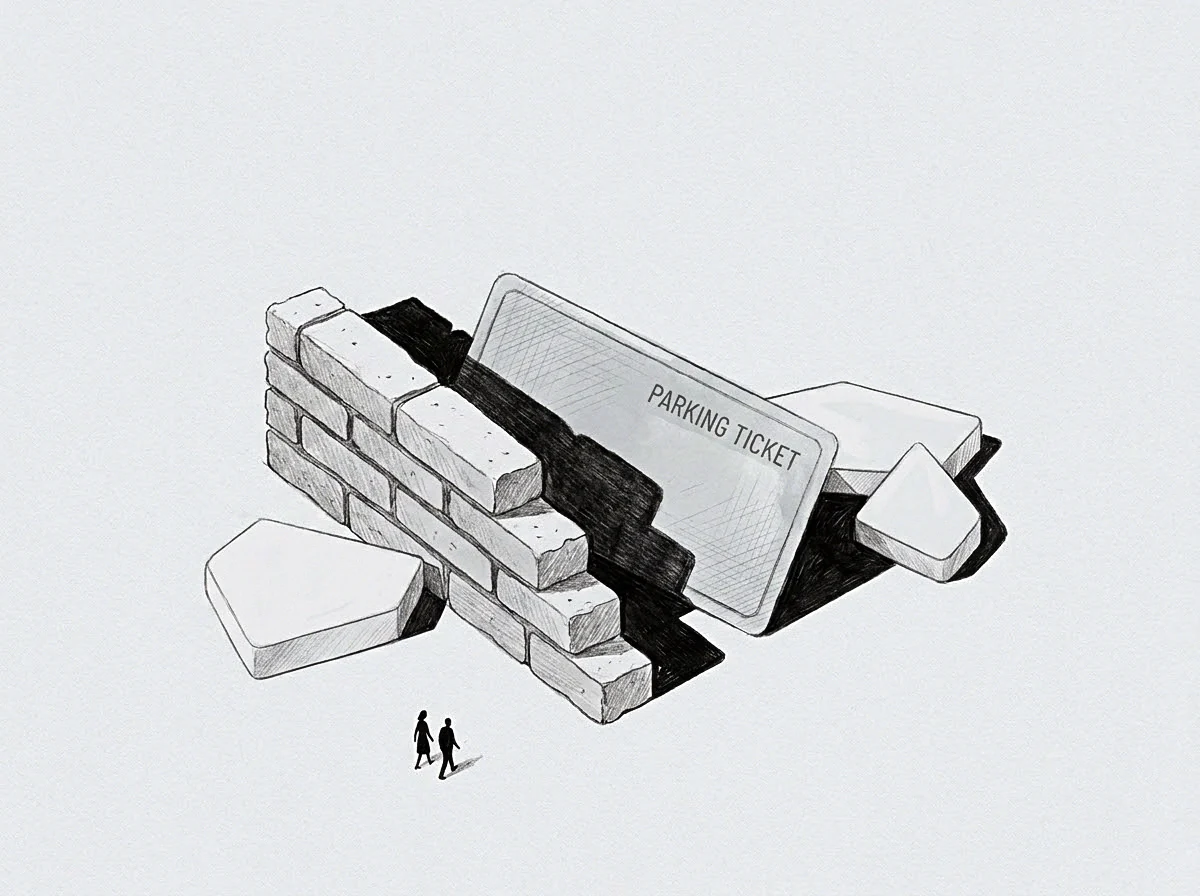
Unrealized efficiency accumulates directly opposite the points of maximum operational resistance. Mirroring the negative gradient above the baseline reveals the volume of latent potential locked inside inefficient processes. When a team spends twenty percent of its weekly operational capacity manually reconciling data across mismatched systems, that spent volume defines the exact opportunity value of systemic automation.
Latent potential is not an abstract hope for improvement. It represents a real, unspent operational capacity blocked by structural friction. Removing the boundary condition that forces manual data reconciliation releases that trapped capacity back into the primary execution loop.
A system consistently routes capacity around its most expensive unaddressed constraint.

Strain
Friction compounds when execution loops loop back onto unclosed dependencies. A software engineering team releases code while leaving database schema updates unfinalized, creating persistent operational drag during subsequent deployment cycles. The unclosed dependency acts as an open feedback loop, constantly feeding small error signals back into the primary execution path.
Cost vectors accumulate. Friction leaves readable markers. Human operators absorb this ongoing strain by increasing manual oversight.
Over successive operational cycles, the cumulative administrative burden reduces overall execution bandwidth, causing iteration speed to decay even while surface effort remains high.
Friction expands to fill the space where formal commitments lack explicit state checks.

What Converts Latent Strain Into Execution Lag?
Unprocessed dependencies generate systemic drag whenever setpoints remain uncalibrated. A project team establishes a bi-weekly release target based on theoretical engineering throughput. As technical debt and unaddressed edge cases accumulate, each deployment requires additional manual validation hours.
The fixed setpoint fails to account for increasing internal resistance.
The setpoint remains fixed. The discrepancy between theoretical targets and physical operational capacity creates constant friction. Rather than adjusting the setpoint or addressing the underlying structural debt, management increases pressure on operators.
Operators respond by shortening quality verification cycles, which accelerates the accumulation of structural strain in future loops.

Error Arithmetic Across Operational Cycles
Calculating execution divergence relies on measuring the discrepancy between projected iteration speed and actual output. Every execution cycle introduces small operational errors, such as missing documentation, incomplete API definitions, or unaligned testing environments. In isolation, these micro-errors appear negligible to project managers tracking high-level milestones.
When multiplied across dozens of repeating execution cycles, these minor errors compound into significant systemic latency. The system spends more energy resolving internal coordination failures than producing functional deliverables. Tracking error arithmetic allows operators to quantify the total operational drag generated by unaddressed friction signals before project timelines suffer catastrophic delays.
Failing to decode local friction signals guarantees that systemic capacity drains into administrative workarounds long before output metrics register a decline.

Chamber
Consider an execution arrangement where two engineering divisions share a single production delivery pipeline. Division A operates on a rapid daily release schedule, while Division B conducts monthly stability testing. Assume Division A holds sixty percent of total pipeline bandwidth while Division B controls pipeline merge permissions.
The operational arrangement creates immediate interfacial friction at the release boundary.
Division A continuously generates integration requests that queue behind Division B’s extended review protocol. To maintain daily release targets, Division A engineers establish a staging environment that bypasses Division B’s permission checks entirely. The system settles.
Avoidance maps the boundary. The wall bounds computation.
Unstated handoff terms transfer computational burden from automated protocols to individual operators.

Interfacial Friction in Shared Execution Environments
Shared operational handoffs expose hidden structural mismatches between adjacent teams. When two divisions execute on different cycle speeds, the interface between them acts as a high-resistance barrier. Division A experiences pipeline queue latency as an operational failure, while Division B views fast-tracked pull requests as violations of stability protocols.
The unstated friction forces both teams to expend capacity negotiating individual handoffs rather than executing core objectives. The lack of standardized handoff terms converts routine releases into complex inter-departmental negotiations. The following sequence demonstrates how interfacial friction degrades system speed over time:
- The primary loop executes routine steps while deferring complex handoffs.
- Informal channels absorb the resulting coordination overhead without log entries.
- System performance metrics report high velocity while structural lag increases.

Unspent Capacity Along the Boundary
Divergent operational priorities create structural deadweight at organizational touchpoints. The volume of unspent capacity along the boundary scales with the degree of misalignment between division setpoints. While Division A and Division B maintain internal operational discipline, their shared pipeline operates at a fraction of theoretical throughput.
Resolving this boundary friction requires establishing explicit interfaces with rigid state requirements. When handoff criteria are clearly defined, execution loops complete state transitions automatically without manual intervention. Replacing informal negotiations with deterministic state checks restores pipeline capacity and eliminates hidden administrative drag.
“The official process takes twice as long, so the team uses the private channel to keep the release on schedule.”

Threshold
Identifying where execution halts establishes the exact structural limit of the existing architecture. Systems hit absolute operational walls when informal workarounds can no longer compensate for structural friction. An operator attempting to scale a manual onboarding process encounters a wall when candidate intake volume exceeds the human capacity available to clear administrative backlogs.
The wall marks the model’s boundary. Attempting to push past this boundary without structural modification increases error rates and operational burnout. Discomfort experienced by team members during execution serves as a direct computational measurement indicating that the system has reached its current processing threshold.
Mapping System Boundaries Through Resistance Coordinates
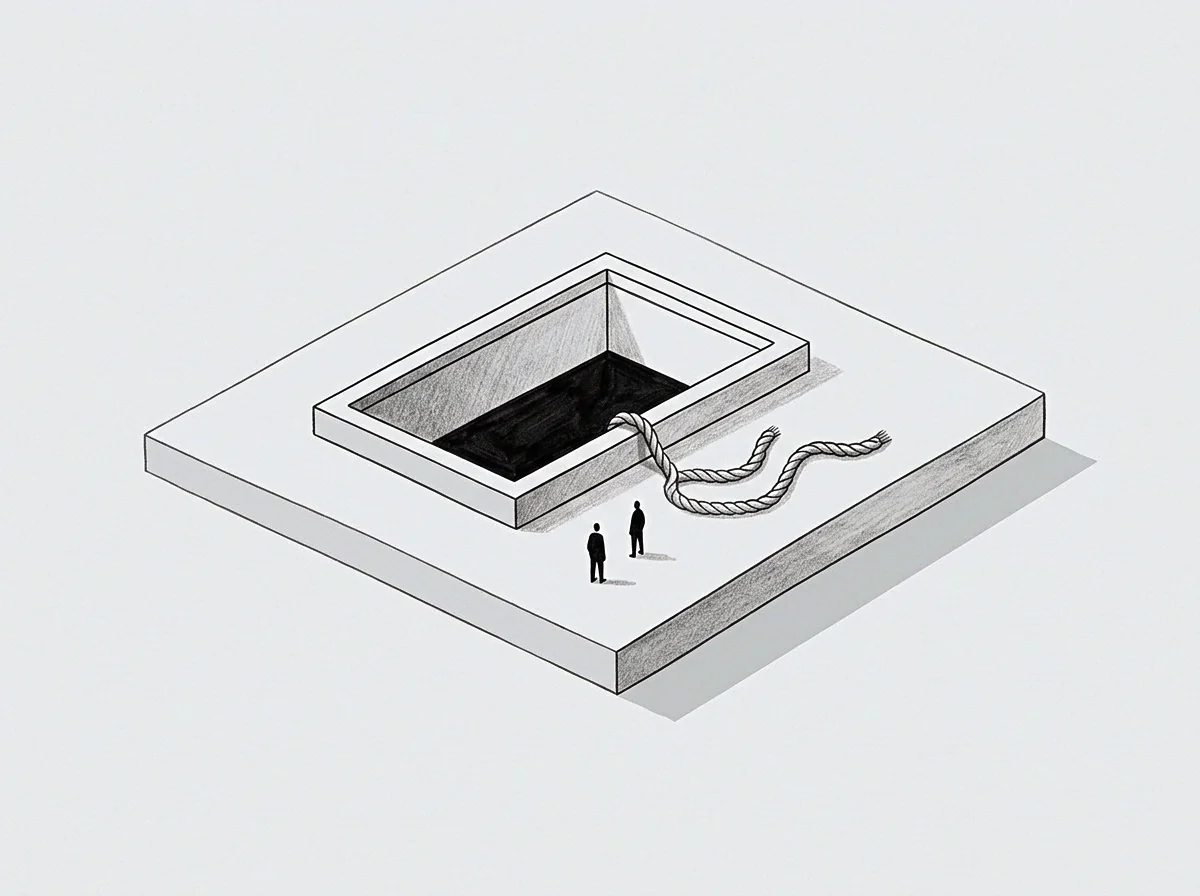
Locating structural barriers requires tracking where execution loops repeatedly fail to complete without manual interventions. A development team consistently experiences deployment failures at the database migration step. This recurring point of failure provides exact resistance coordinates indicating that the database deployment tooling has reached its scaling limit.
Surveying these boundary coordinates allows leadership to allocate engineering capacity precisely where structural reinforcement is required. Rather than applying generic productivity initiatives, the organization focuses resource expenditure on removing explicit operational walls. System transformation occurs exclusively along these identified boundary edges.

Calibrating Setpoints Against Realized Gradient Slopes
Adjusting operational parameters to reflect empirical capacity eliminates fictitious throughput targets. When an execution loop shows consistent structural lag at high volume, management must recalibrate system setpoints to align with realized gradient slopes. Setting aggressive targets without modifying underlying processes guarantees high friction signals and execution breakdown.
Calibrated setpoints establish realistic baseline expectations while structural remediation occurs. By lowering throughput expectations to match actual capacity during refactoring phases, management prevents operators from resorting to dangerous workarounds. Sustainable execution speed results from maintaining continuous alignment between system setpoints, explicit process terms, and physical execution capacity.
Establishing an explicit state check at every boundary handoff terminates invisible rerouting and converts latent strain into readable execution signals.