Meaning
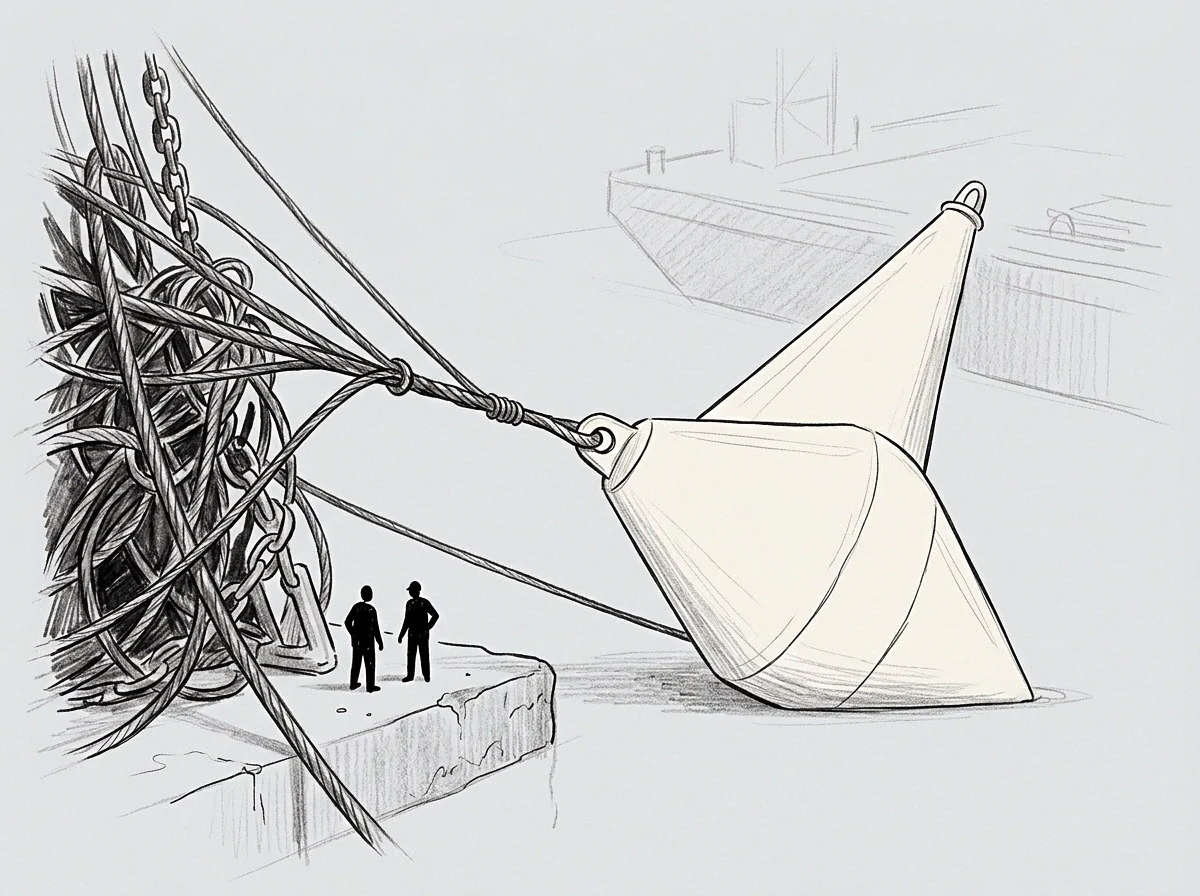
Automated rate modulation represents the deliberate restriction of operational throughput under conditions of localized load saturation. Within technical governance, dynamic throttling regulates incoming execution demands to preserve computational stability, latency targets, liquidity margins, and personnel attention. The instrument functions on a cardinal continuous scale, adjusting permissible transaction flow relative to instantaneous system capacity.
It measures and enforces the delta between raw incoming volume and sustainable processing velocity. The throttling mechanism ceases to apply during complete system shutdown or in systems with boundless elasticity where resource exhaustion cannot occur.
Modulation Engine
Adaptive algorithms restrict incoming process requests the moment operational parameters exceed safe operating baselines. Dynamic throttling detects queue build-up in customer onboarding, engineering support tickets, or supplier fulfillment orders. Instead of allowing downstream systems to fail entirely, the mechanism introduces deliberate delays, request rejections, or graduated access tiers.
In operational leadership, this resembles an explicit cap on monthly new client onboarding to protect operational delivery quality. The governor steps down transaction limits incrementally, maintaining steady performance for existing commitments while rejecting marginal influx. Throttling thresholds elevate automatically as internal capacity scales, creating a responsive membrane around core operations.
Throughput Variance
Quantitative measurements track the spread between baseline operational capacity and throttled real-time output. High variance indicates that incoming operational demands fluctuate wildly, testing the boundaries of fixed overhead. Tracking dynamic throttling events isolates systemic bottlenecks by highlighting exactly which processing nodes trigger flow restrictions under scale.
The resulting data enables founders to locate real capital deficits rather than responding with blanket hiring across unaffected departments. Throttling logs reveal the true holding capacity of each operational team during demand spikes.
Stabilization Response
Recovery cycles measure the duration required for throttled systems to clear internal backlogs and restore standard access. The intervention prevents cascade failures, where one overloaded node drags adjacent systems into reciprocal collapse. Dynamic throttling operates as an essential mechanical shock absorber, ensuring that exceptional operational stress degrades service quality gracefully rather than causing terminal structural failure.
Dynamic throttling preserves foundational operating integrity at the planned cost of short-term volume expansion.