
Isolating Hidden Queue Backpressure In Asynchronous Vendor Integration Pipelines
Downstream backpressure is isolated by decoupling outbound dispatch from local storage and tracking the widening latency delta to terminal settlement.
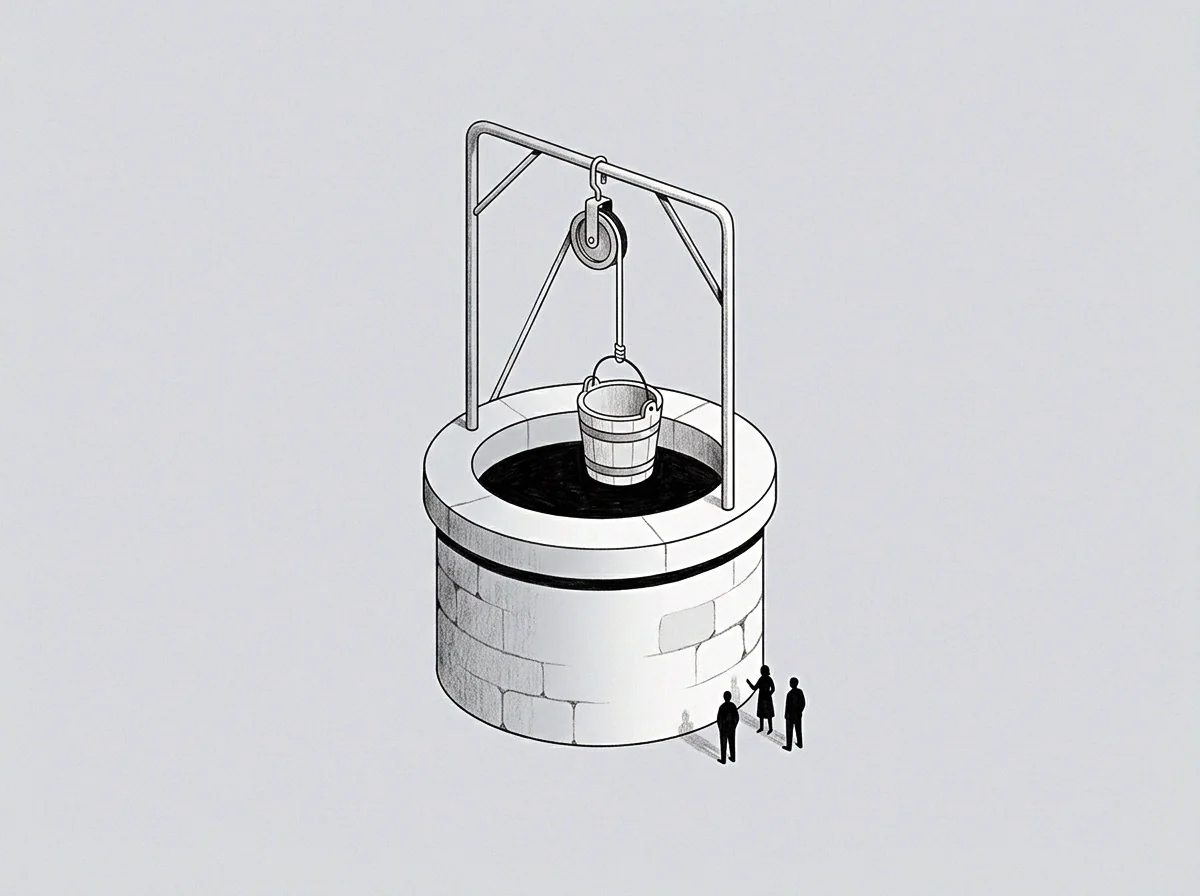
Reservoir
High-volume ingestion pipelines processing forty thousand dispatches per second rarely crash outright. Instead, they degrade as third-party integration brokers quietly retain state. Standard monitoring looks healthy: TCP handshakes complete in four milliseconds, memory usage stays steady at forty-one percent, and consumer groups hold open socket connections.
Behind that baseline, upstream producer traffic moves into a local buffer that absorbs the imbalance, masking downstream slowness behind apparent network throughput.
Integration boundaries frequently absorb volume long before showing errors. Third-party systems rarely emit explicit backpressure signals, as standard HTTP protocols lack native mechanisms for asynchronous backpressure. Instead, an endpoint returns a 202 Accepted response immediately while holding the payload in its own internal queue.
As those vendor queues saturate, processing latency climbs exponentially even as response codes remain unchanged, leaving the local system unaware of the growing delivery delay.
A vendor returning invariant acceptance codes while queue depth inflates turns an asynchronous connection into a concealed storage liability.
Comparing dispatch velocity against actual downstream storage reveals the bottleneck. Engineering teams track this by measuring message ingress alongside confirmed terminal persistence across rolling three hundred second windows. Immediate success responses decouple network I/O from storage, masking resource exhaustion until upstream buffers fill entirely.
Tracking time from ingress to final consumption establishes the operational baseline. Finding hidden queues across partitions requires monitoring three properties:
- Ingress Confirmation Latency measures the time between local payload entry and the vendor gateway’s initial network acknowledgment.
- Terminal Settlement Duration tracks the total duration from dispatch to verified remote settlement or callback execution.
- Partition Inflight Gradient measures the divergence between active consumer threads and message throughput across dedicated outbound lanes.
Evaluating vendor health solely on HTTP status codes obscures accumulating backpressure. When these metrics are conflated, queues expand silently, thread pools deplete while waiting on unacknowledged writes, and the pipeline eventually stalls.

Trench
Decoupling internal orchestrators from external ingestion clients prevents downstream friction from backing up into callers. Direct dispatch ties local thread availability to remote processing speed; when a vendor slows down, local execution threads stall. Staging messages on local disk prior to transmission creates a durable buffer that protects memory structures from upstream congestion.

Partition Decoupling Architecture
Isolating integration lanes requires distinct partition boundaries. High-throughput systems rely on distributed logs where consumer groups read offsets asynchronously. Dedicated consumer groups per vendor keep resource exhaustion confined to degraded lanes without starving adjacent traffic.
Comparing two setups handling twenty-five thousand operations per minute illustrates how storage boundaries contain downstream failure.
| Evaluation Metric | Coupled Direct Dispatch | Partitioned Local Staging |
|---|---|---|
| Buffer Allocation Strategy | Volatile heap buffers | Durable append-only segment storage |
| Saturation Manifestation | Cascading thread starvation | Controlled segment backlog accumulation |
| Upstream Pressure Telemetry | Indirect connection socket timeouts | Deterministic offset lag measurements |
| Terminal Settlement Latency | Unbounded wait states | Regulated window processing rates |
Localizing pressure prevents a single vendor degradation from impairing unrelated ingestion paths. Decoupled thread pools preserve throughput, allowing local storage engines to log incoming events to durable segments even if remote acceptance drops to zero.
Governing egress with rate-based token buckets protects internal resources during slowdowns. When delivery rates drop, incoming events append to local disk rather than occupying heap memory, exchanging disk space for stability against downstream failure.
Valve
Controlling outbound velocity without explicit backpressure headers requires inferring downstream health from secondary telemetry. Operating like an automated flow valve, the dispatch layer reduces outbound concurrency whenever terminal confirmation times stretch across consecutive measurement windows.

Adaptive Flow Calibration
TCP window sizes and socket buffer drain rates give early warning of downstream congestion. As a vendor endpoint slows under heap pressure, local socket write buffers fill, prompting kernel-level window reductions. Tracking raw socket write wait times surfaces degradation hours before gateway errors appear.
Dynamic concurrency limits adapt to changing vendor capacity far better than hardcoded thresholds. An additive-increase multiplicative-decrease loop manages outbound flow:
- Outbound concurrency increases incrementally while settlement times remain within target boundaries.
- Settlement latencies exceeding three times baseline trigger an immediate fifty percent reduction in active dispatch workers.
- The system holds a stabilization period across three telemetry windows before testing capacity increases.
- Transactions exceeding retry thresholds route to dead-letter storage to preserve pipeline transit for remaining data.
Reducing concurrent dispatch slots immediately upon detecting round-trip latency expansion shields upstream memory structures from saturation.
Static rate limits break because downstream processing capacity varies over time. A target handling ten thousand dispatches per second during off-peak hours might struggle with two thousand during maintenance windows. Calibrating concurrency against live latency eliminates manual tuning; if round-trip times double, active dispatch slots drop by half immediately.
Measuring transport-level response times can give misleading signals. A remote endpoint under heavy load may return rapid connection resets or quick error payloads, imitating fast throughput. Effective flow control monitors terminal settlement latency, counting only completed transactions that persist state successfully.

Drift
Backpressure often presents as temporal drift between event generation and remote execution. As downstream queues grow behind a congested API, the lag between message creation and final execution widens, reducing the timeliness of processed data.
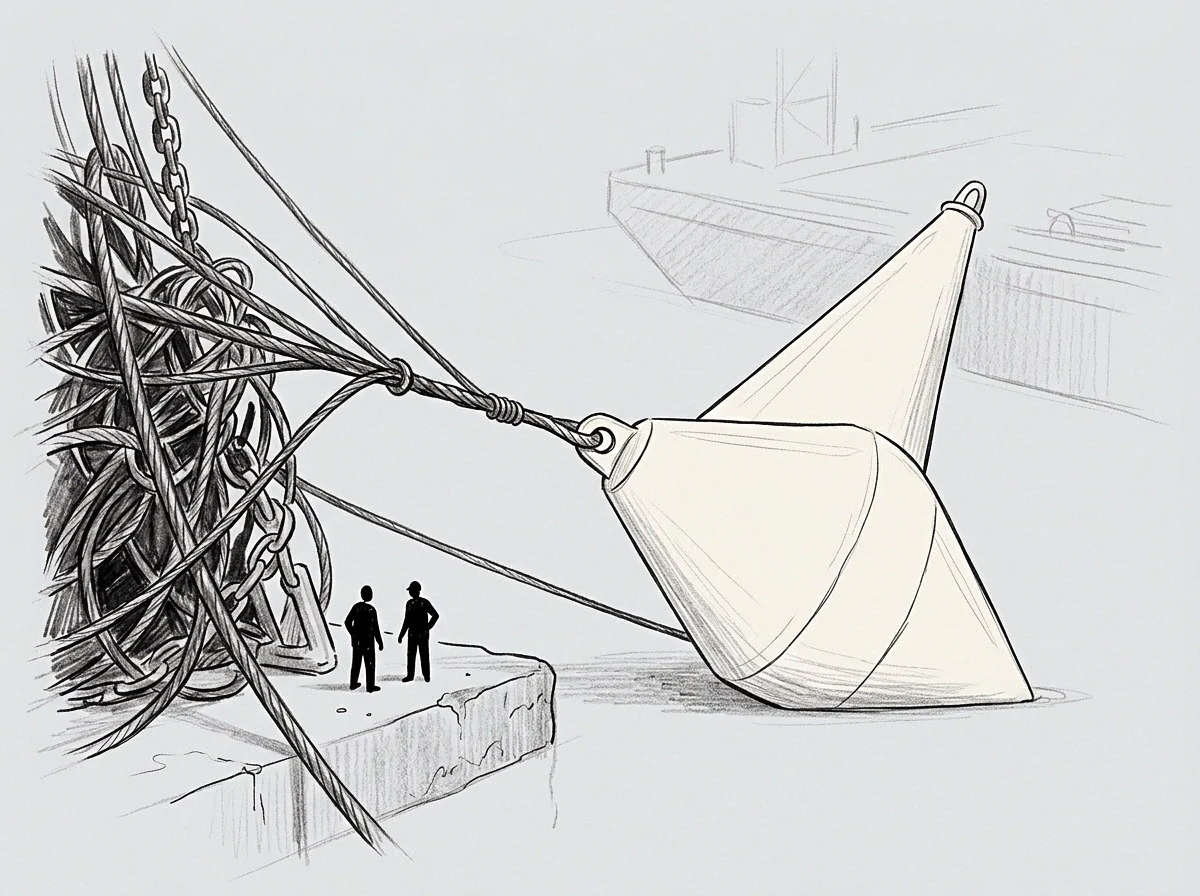
Telemetry Divergence Across Boundaries
Queue lag measures the difference between publication timestamps and final settlement receipts. Under normal conditions, this delta mirrors standard network transit and processing overhead. When downstream backpressure builds, the lag expands even while local queues look empty, leaving messages trapped in remote transit buffers.
Across twelve observed third-party payment gateways, seventy percent of performance anomalies occurred without HTTP status code changes, appearing instead as latency inflation over multi-hour windows. Without long-term latency baselines, engineering teams easily misinterpret systemic slowness as minor network variance.
Treating external APIs as black boxes risks unhandled queue growth. Pipelines dispatching at full capacity often assume success based on initial gateway responses. True state verification requires tracking terminal callbacks, reconciliation files, or status polling endpoints; the time between initial dispatch and confirmed settlement remains the accurate indicator of backpressure.
Instantaneous metrics and moving averages obscure early backpressure by smoothing latency spikes. Monitoring high-percentile distributions—specifically ninety-ninth percentile latency over multi-hour windows—surfaces remote queue saturation before it cascades upstream.

Wedge
When latency drift crosses operational thresholds, a circuit breaker halts automated dispatch. The integration layer stops the outbound stream, diverting messages to local batch queues or holding them for operator review.

Canary Probing Under Saturation
Stopping dispatch protects local resources, but leaves the system without visibility into downstream recovery. Using an isolated canary probe lets operators test vendor health without subjecting main message queues to continued failures.
A dedicated probe operating outside the primary data pipeline provides genuine recovery telemetry without risking operational state loss.
The probe dispatches synthetic, idempotent transactions at fixed intervals. When the downstream endpoint processes these test payloads within baseline limits across ten consecutive evaluation cycles, the system gradually reopens dispatch capacity for the primary queue.
Vendor status pages rarely reflect backpressure until outages become widespread, often reporting healthy gateways while internal queues stall. Pipelines measuring latency drift must act defensively on their own telemetry rather than relying on external status reports.
Contractual throughput guarantees mean little during real-time capacity exhaustion. Systems that stage incoming data locally choose controlled disk growth over downstream exposure, prioritizing internal latency telemetry over external assurances.