
Reconciling Ordinal Capital Resistance Vectors With Cardinal Budget Constraints During Enterprise Reallocation Cycles
Reconciling capital allocations requires mapping ordinal organizational resistance as structural terrain constraints against cardinal liquidity boundaries.

Friction
A product line runs an accounting loss of three hundred thousand dollars over four quarters while its engineering backlog contracts by seventy percent. The capital expenditure committee sees the cash drain as a failed allocation and moves to cut the operating budget by half. Across the hall, engineering views the reduction of architectural debt as a success that readies the system for immediate redeployment.
The two groups are working in different mathematical frameworks. The committee calculates with cardinal figures constrained by cash reserves, bank covenants, and past revenue returns. The engineers track ordinal relations—ranking resilience, velocity, and dependencies along an axis of structural difficulty.
When reallocation cycles squeeze these perspectives into the same budget window, organizational paralysis follows from treating structural difficulty like a cardinal price instead of an ordinal vector of systemic resistance.
Cardinal budget constraints follow standard arithmetic: units have stable intervals, sum directly, and sit against a hard zero baseline. Pulling two million dollars out of an unallocated treasury pool leaves exactly two million dollars less. Ordinal resistance vectors follow a different logic.
Ranking four operational divisions by resistance to redeployment shows relative order, not distance. Shifting capital out of legacy infrastructure may carry more friction than pulling it from regional sales, but the ranking alone cannot show whether that gap is ten units of operational strain or ten thousand units of organizational delay.
An ordinal ranking shows the relative slope of systemic resistance without setting the dollar cost required to clear it.
Reallocation cycles stall when executive teams try to drop ordinal resistance figures straight into cardinal spreadsheets. Subtracting an ordinal rank from a dollar balance breaks the model. Operations sees structural friction; leadership sees insubordination.
Both are looking at the same division while measuring entirely different properties of the system.
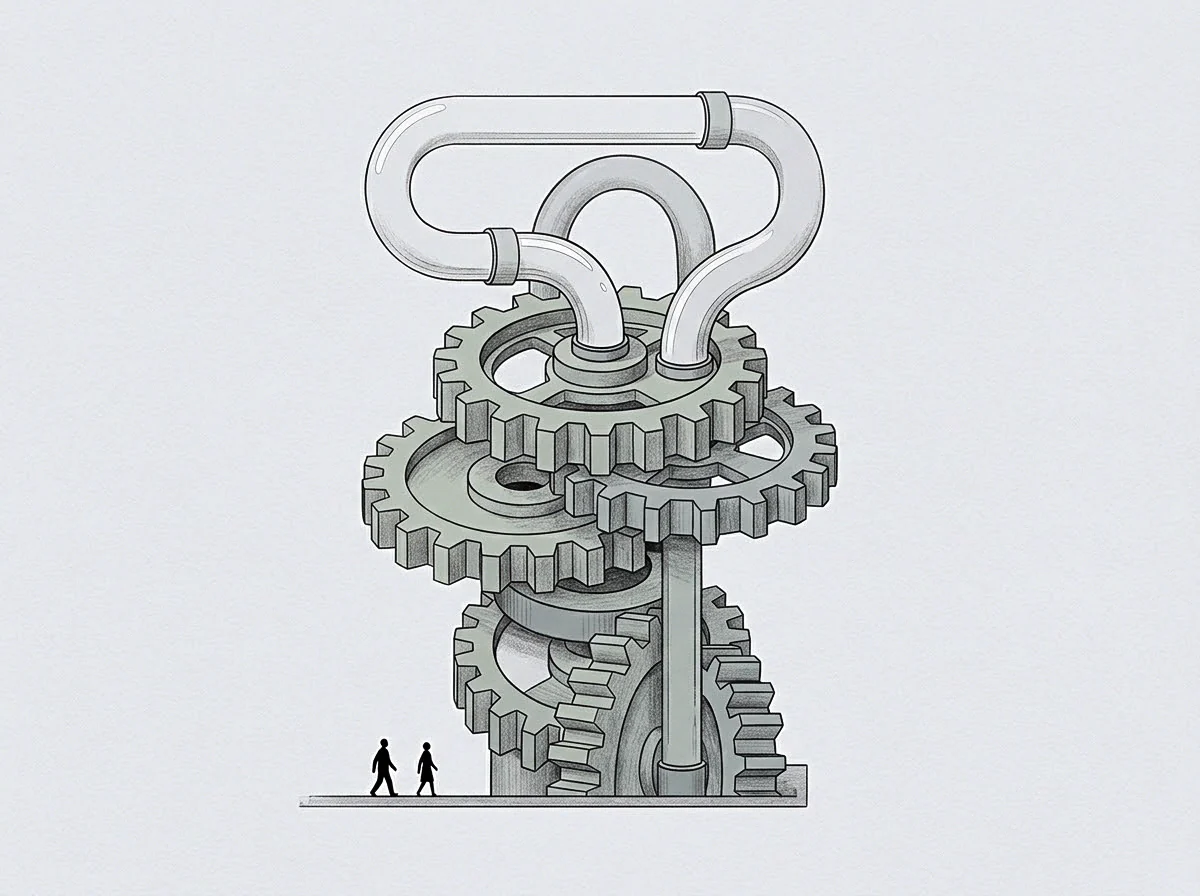
Strata
Enterprise capital sits across distinct organizational strata, each with its own scale and decay rate. At the top, treasury assets carry pure cardinal liquidity; cash in a primary account moves across ledgers with almost zero friction. Below that sit physical and software assets—industrial tooling, ERP systems, distribution hubs.
Capital tied up here loses instant mobility but retains clear market valuations.
The deepest stratum holds coordination networks, implicit technical knowledge, and administrative habits formed under stress. This is where resistance vectors originate. When leadership announces a fifty-million-dollar shift from legacy maintenance to automated acquisition pipelines, the cash line changes instantly on the balance sheet.
The underlying operational structure responds far more slowly.

Structural Properties of Capital Layers
Evaluating how resistance emerges across an organization requires looking at where numerical budget allocations separate from operational mechanics.
| Layer | Measurement Metric | Mathematical Scale | Redeployment Velocity | Primary Resistance Source |
|---|---|---|---|---|
| Treasury Capital | Nominal currency | Cardinal continuous | Immediate transfer | Legal covenants and cash minimums |
| Productive Assets | Replacement valuation | Cardinal discrete | Quarterly disposition cycles | Depreciation rates and secondary market liquidity |
| Operational Capacity | Throughput run-rates | Mixed ordinal ranks | Multi-quarter realignment | Contractual obligations and supplier lead times |
| Systemic Coordination | Relative execution friction | Ordinal relative ranks | Multi-year adaptation | Tacit team routines and political capital preservation |
Systemic resistance acts along specific lines rather than as uniform drag. Pulling twenty senior engineers out of an established division to staff a new product team creates asymmetric disruption. The legacy system loses critical coordination capacity, hurting reliability, while the receiving team needs three full quarters just to absorb the headcount into its delivery rhythm.
The resistance vector points against executive intent like a steep grade.
Cardinal models bypass directional drag altogether. A ledger records twenty heads moved at zero net change in payroll, marking the move budget-neutral. That financial symmetry hides the loss of operational capacity.
The organization burns through quiet structural reserves just to push a transfer across unmapped human friction.
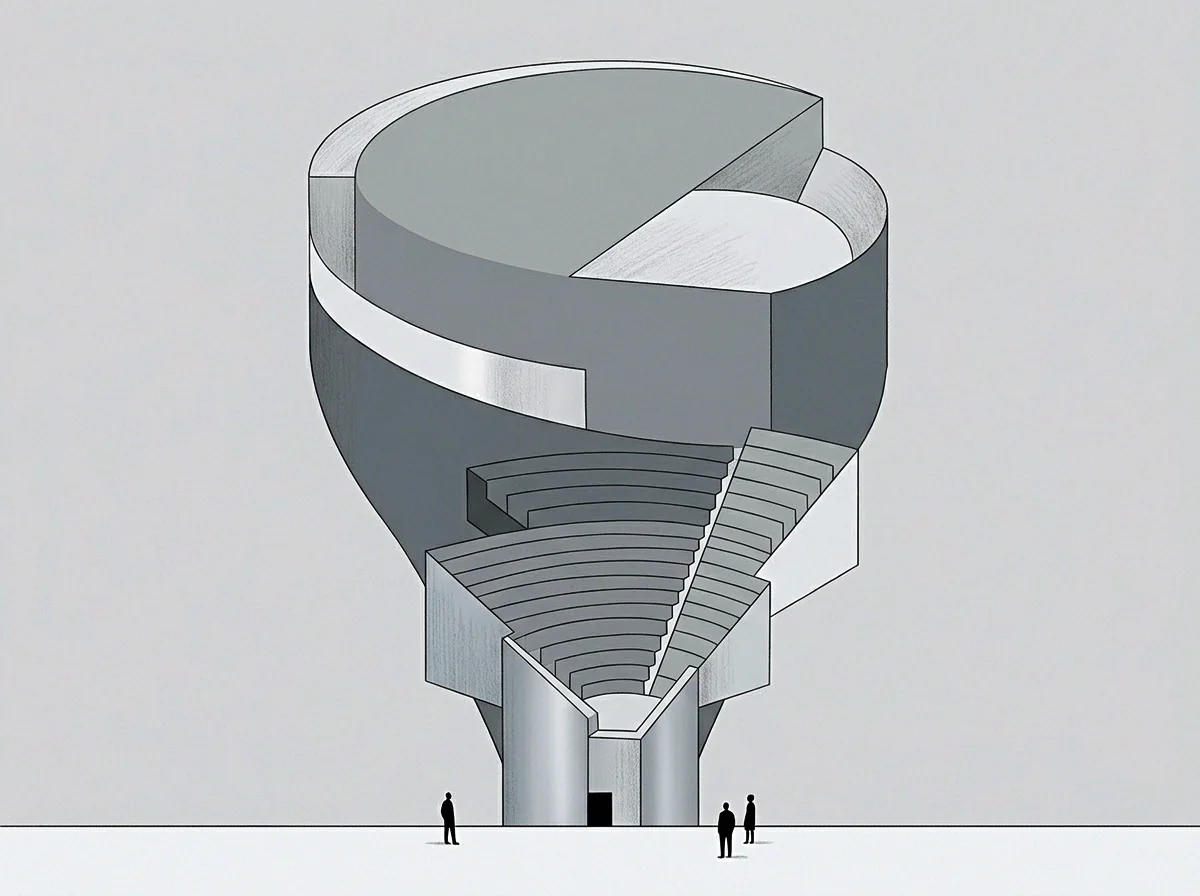
Trench
Operational systems wear deep channels of habit that take the path of least resistance. These routines reflect past optimizations that keep output steady during daily uncertainty. As long as capital follows existing channels, execution costs stay low because institutional memory handles coordination automatically.
Diverting funds outside those channels hits immediate structural walls.
Take an industrial firm running two operating lines. The legacy manufacturing division delivers steady gross margins of twelve percent on thirty million dollars in annual overhead. Looking at an adjacent digital automation market with thirty-five percent projected margins, executive leadership orders a ten-million-dollar cut from the legacy unit to finance software development over twenty-four months.
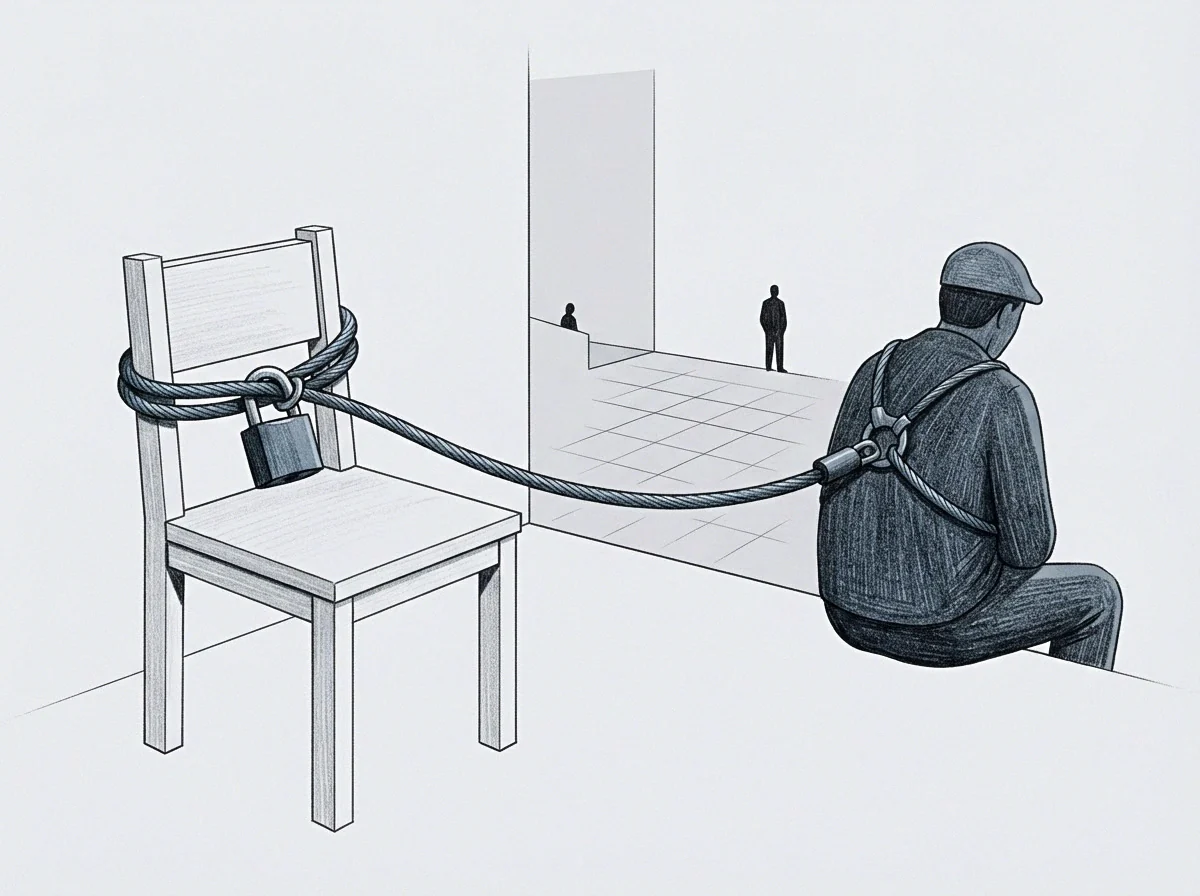
Operational Erosion Under Forced Reallocation
That capital diversion immediately creates operational friction across the legacy business. Cutting funds removes preventive maintenance and administrative support. Resistance rarely looks like outright refusal; it shows up as declining stability across basic operations.
- Component Lead Times expand from six weeks to twenty-two weeks because specialized procurement staff were reassigned to the automation initiative, leaving vendor relationships unattended.
- Key Talent Attrition concentrates among senior operational technicians who absorb extreme coordination burdens to compensate for broken administrative support pipelines.
- Defect Escalation Ratios rise across legacy production batches, consuming emergency maintenance cash that erodes the cardinal savings originally projected by executive leadership.
- Middle Management Retrenchment produces widespread bureaucratic slowdowns, as operational supervisors withhold discretionary effort to preserve their immediate team structures.
The business absorbs ordinal drag that never hits quarterly reports. There is no invoice for organizational fatigue, and financial controls cannot price the decay of informal communication networks. The cost is non-monetary: team morale drops below baseline, client confidence slips relative to competitors, and safety margins contract toward dangerous levels.
Starving an established operational channel of direct funding creates systemic drag that destroys capacity faster than new initiatives can absorb it.
By the sixth quarter, the plan encounters compounding failures. Unchecked friction prevents the legacy line from meeting cash targets. At the same time, the automation group struggles to spend its allocation effectively, held back by missing domain knowledge and missing coordination protocols that once sat inside legacy operations.
The business runs up against the limits of its operational model.
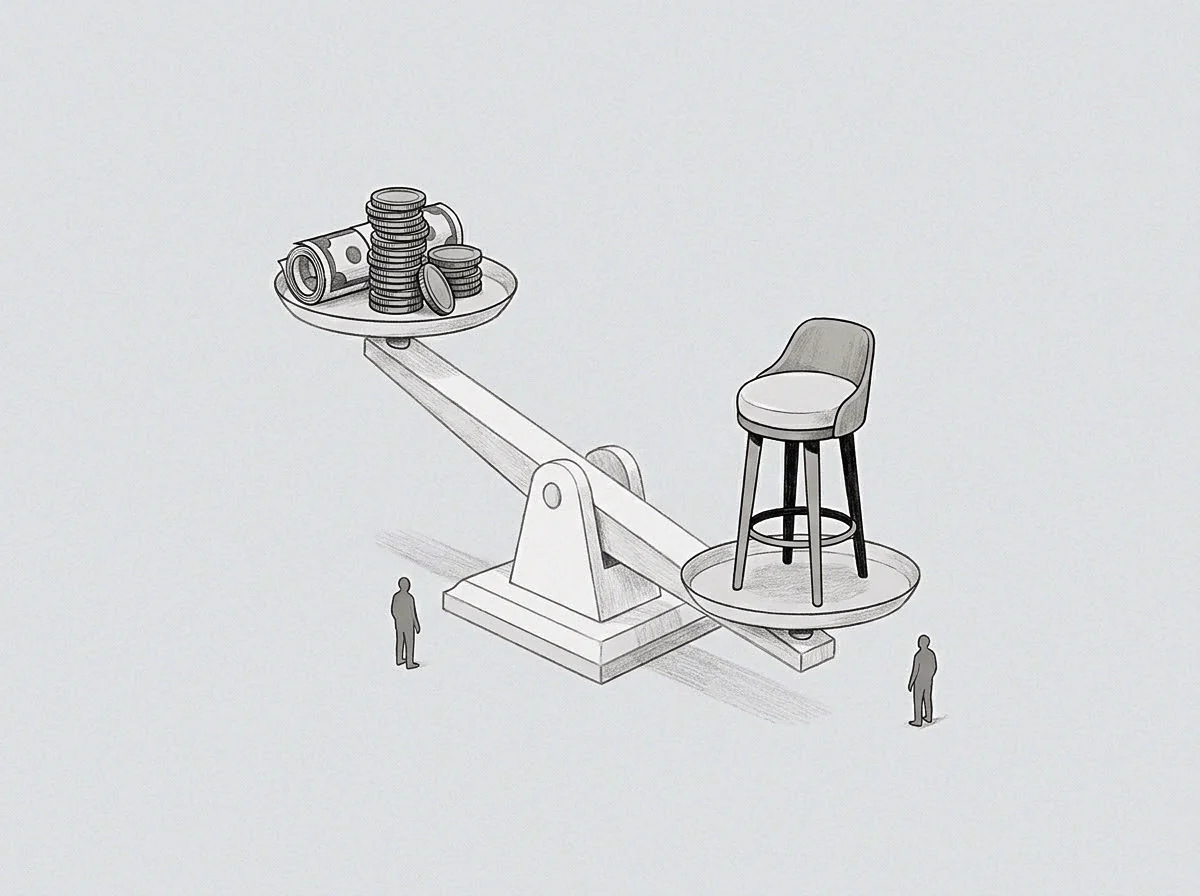
Parity
Balancing ordinal resistance against cardinal budgets requires converting relative order into concrete operational limits. Ordinal ranks cannot be turned into cash values using arbitrary multipliers; multiplying a resistance score of five by fifty thousand dollars yields empty math. Instead, operators map thresholds to find the minimum capital needed to move an operating unit past a resistance barrier without triggering structural failure.
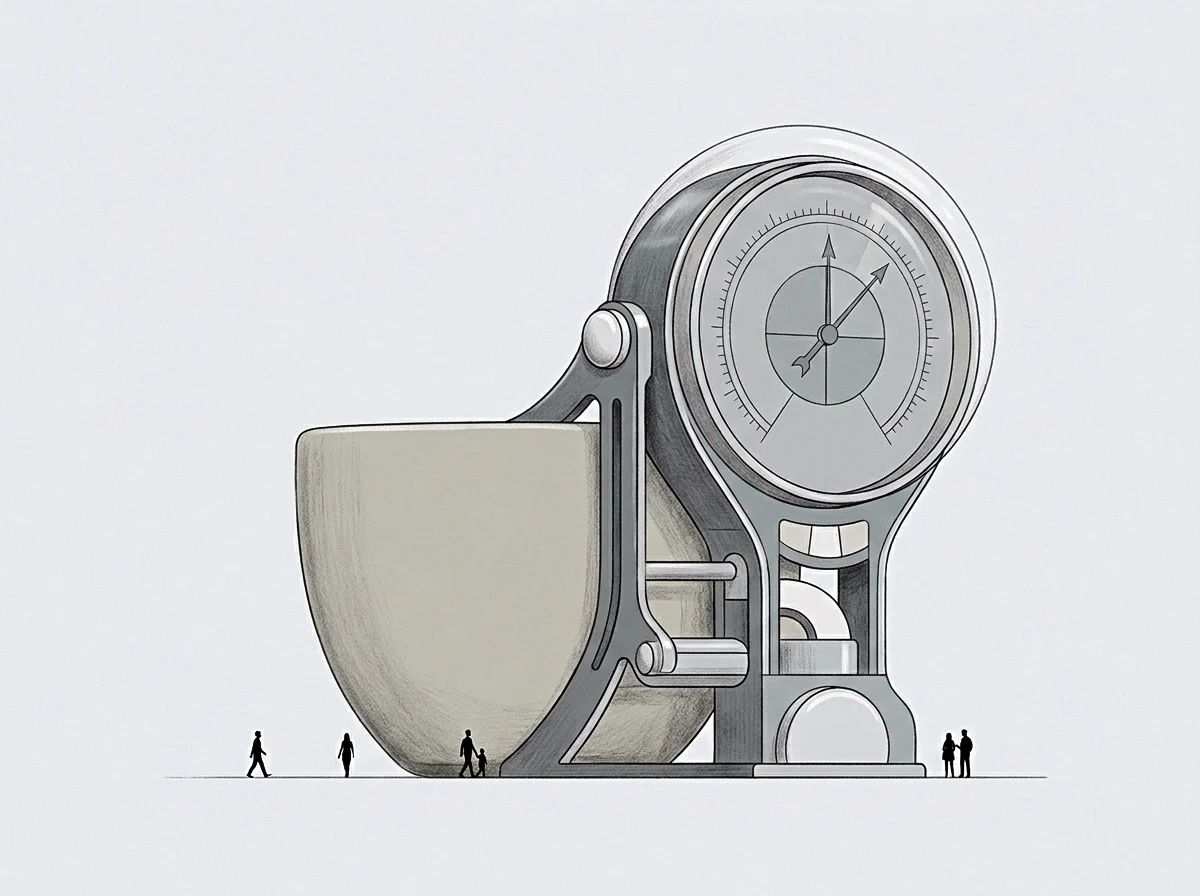
Do Resource Windows Determine Reallocation Viability?
A cardinal budget acts as a time limit. Available cash sets how long an enterprise can sustain an intervention before liquidity runs out or structure fails. If restructuring an operating unit takes twenty-four months of coordination work, but available liquid reserves cover only twelve months, the reallocation plan is unviable regardless of projected returns.
Bridging these two domains requires setting operational parity conditions. The reallocation is split into stepped capital releases, with each tranche contingent on verified structural milestones within the operational system.
- Identification of the target organizational unit’s baseline resistance rank relative to adjacent divisions along dimensions of dependency and skill specialization.
- Computation of the maximum allowable systemic degradation the donor division can absorb before revenue-generating capability contracts past a self-sustaining threshold.
- Establishment of cardinal liquidity reserves dedicated strictly to dampening friction within the donor division during early transition phases.
- Execution of small-scale capital diversions designed to measure real-time operational response rates before committing the balance of the reallocation pool.
- Recalibration of the remaining cardinal deployment schedule based on observed friction vectors, adjusting the duration of the cycle rather than attempting to accelerate institutional change through cash injections.
This approach works as an empirical probe. Releasing a modest sum into a boundary area lets operations measure system deflection. If a five-hundred-thousand-dollar allocation for software modernization causes workflow paralysis and data withholding among branch managers, resistance is high.
Doubling the budget will not force a breakthrough; pausing deployment acknowledges that money alone cannot fix deep coordination bottlenecks.
Adding extra capital to a unit stalled by high ordinal resistance increases administrative waste without reducing institutional drag.
Management literature splits on how organizations should handle non-quantifiable friction. One view holds that all operational resistance can be priced if models include enough probabilistic detail. Institutional economics argues instead that organizational routines are non-ergodic and resist dollar quantification.
In practice, operators avoid false precision, treating resistance vectors like terrain contours and using capital to map boundaries rather than force speculative conversions.
The contract specifies an immediate freeze on further asset reallocation whenever donor division delivery error rates cross the five percent threshold for two consecutive reporting cycles.
Pivot
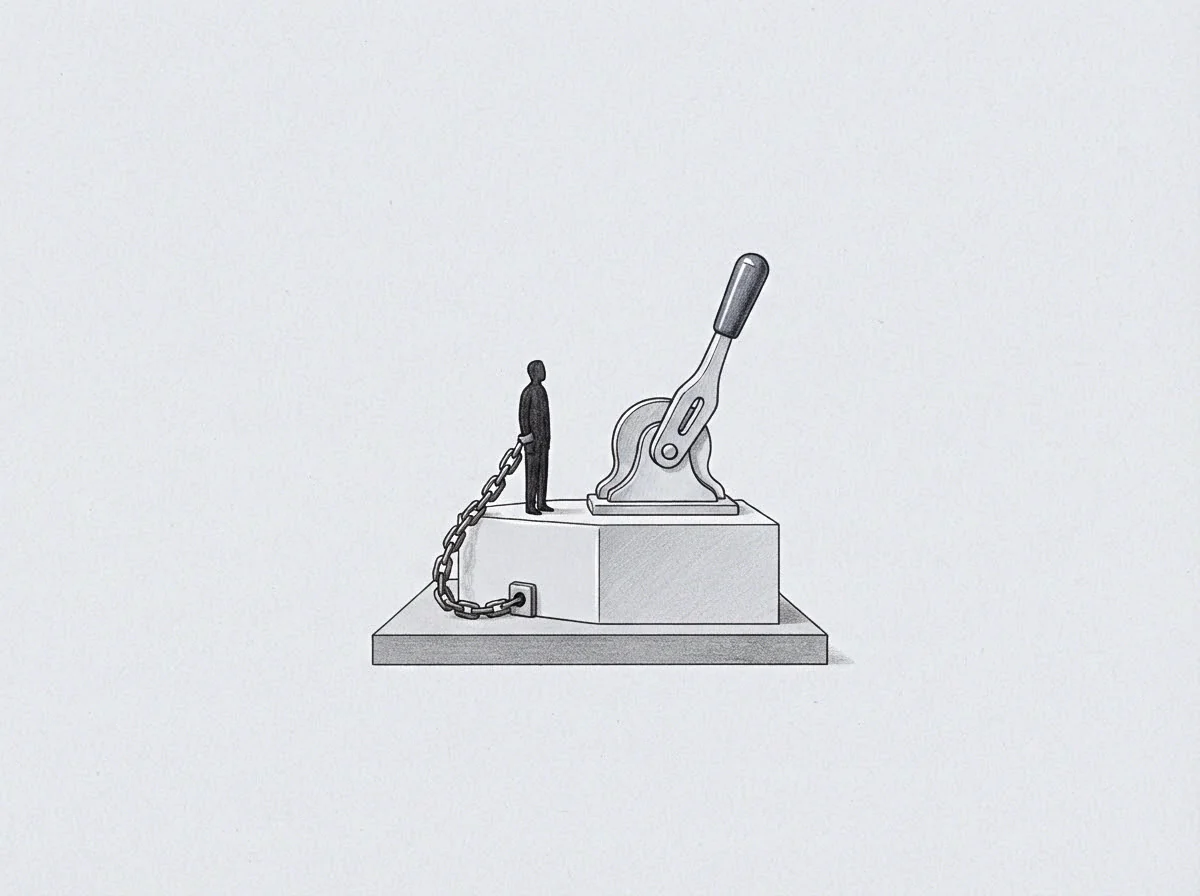
Making the shift during a reallocation cycle requires uncoupling budget schedules from rigid calendar timelines. Planning committees usually run on twelve-month cycles, mandating twenty-five percent capital transfers every quarter. That pacing ignores how long human systems actually take to adapt.
Balancing the two demands funding releases tied to observed operational readiness rather than calendar dates.
When a system hits high resistance, the operator pivots capital around the obstacle rather than pushing directly against it. Much like physical fluid dynamics, this path finds routes where operational readiness matches available liquidity.
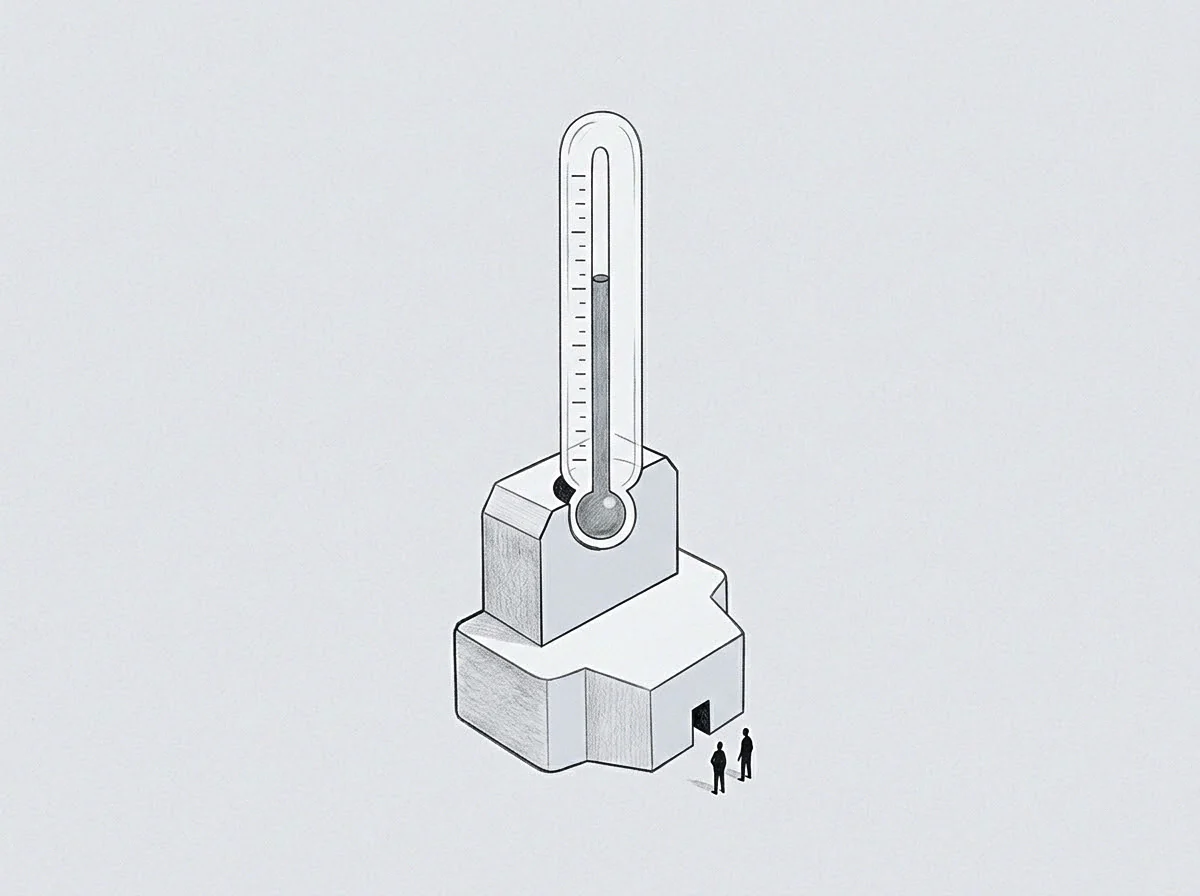
Constructing the Dual-Paced Transition
Suppose a firm with forty million dollars in unencumbered reserves moves to convert an industrial service model into an automated subscription engine. The legacy division, across twelve regional service hubs, pushes back. Field technicians refuse to log asset data into centralized software, citing pressing client maintenance work.
The financial mandate requires moving thirty million dollars over three years to stay competitive, but resistance in the field risks corrupting the data entirely.
Instead of issuing threats or imposing compliance scorecards, operations builds a separate peripheral unit free of legacy habits. Capital flows directly to the new group, while legacy divisions keep stable maintenance funding to prevent premature collapse. Operational resistance is handled not as insubordination, but as a structural boundary of the existing model.
Over four quarters, the new unit builds the automated platform using a fraction of the capital pool. Hiring personnel without legacy habits allows digital routines to take hold naturally. As capacity matures, clients move to the automated system for faster service and lower prices.
Legacy workloads drop naturally, flattening resistance because field staff are no longer forced to unlearn deep habits under crisis pressure.
Redeployment works when it matches institutional capacity. Forcing change against heavy resistance burns capital for minimal gain. Routing resources through low-resistance paths protects reserves while letting older operational structures wind down at a manageable pace.
The team simply waits out the executive directive until the budget cycle resets and priorities shift back to the existing line.
Ground
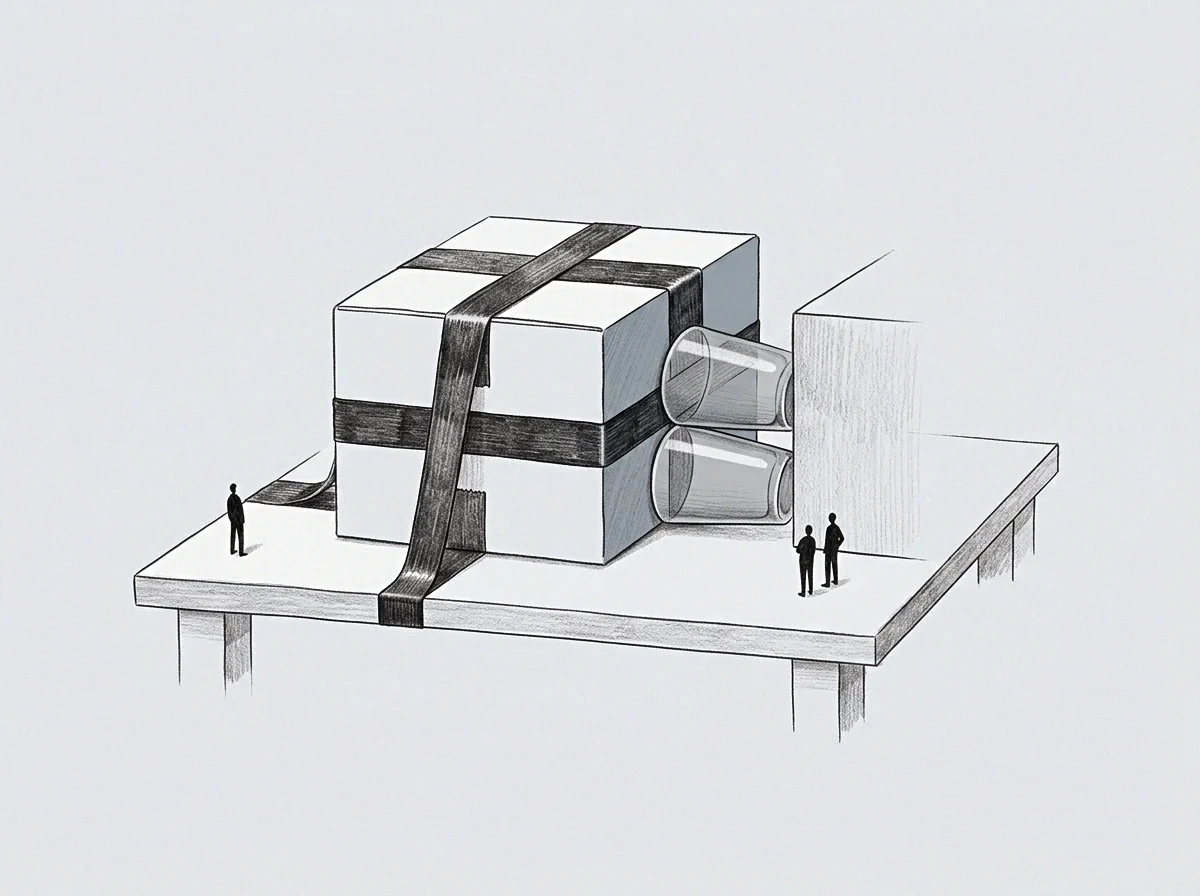
Every system eventually hits the limits of physical infrastructure and human endurance. The final match between ordinal resistance and cardinal budgets plays out on this concrete ground. Beyond spreadsheet models and slide decks, operators sit in real rooms, managing physical equipment and everyday working constraints.
Reallocation boundaries are set at this physical interface.
Budget numbers have complete flexibility on paper; a CFO can change a cell from ten million to fifty million dollars in a second. Physical operations do not bend that way. A specialized cleanroom facility takes eighteen months to build, validate, and commission, whether leadership allocates twenty million dollars or two hundred million dollars.
Capital accelerates procurement only up to the limits of supply chains and physical reality; past that point, extra money yields zero speed.
Human capacity shares those same limits. Overtime incentives cannot force an engineering team to absorb three years of architectural changes in a ninety-day sprint. Cognitive throughput is constrained by communication and human capacity.
Pressuring the timeline with cash leads to burnout, severe code failures, and turnover among key staff.
Experienced operators view resistance as a sign of where an organization has established true stability. A division resisting abrupt capital cuts often relies on tightly integrated routines that prevent daily operational failures. Dismantling those routines for quick financial reallocation risks destroying the groundwork that creates enterprise value.
Balance comes from recognizing the line between balance-sheet accounting and shop-floor reality. Capital supplies the fuel, but ordinal resistance defines the terrain. Reallocation works only when financial plans respect physical and operational limits.