
Measuring Latent Capital Accumulation Along Unmapped Structural Avoidance Vectors Inside Growth Architecture
Unaddressed operational friction creates compensatory detours that accumulate human problem-solving capacity, converting structural avoidance into recoverable latent capital.

Slope
A billing run executes ten minutes past midnight while four engineers patch an unindexed database query by hand for the twentieth consecutive week. The patch consumes ninety minutes of concentrated labor. The ticket requesting a schema migration sits at the bottom of the engineering queue, untouched since the previous fiscal quarter.
On the operational ledger, those ninety minutes register as maintenance overhead. Beneath that recurring operational expenditure, the working reality shifts: the system alters its deployment sequence, assigns senior personnel to nocturnal coverage, and builds informal channels to alert customer support before errors reach the user dashboard. The operational routine curves around the unindexed table.
Every commercial architecture develops paths of least resistance. When an operational node creates high friction, the organization alters its trajectory, moving around the obstacle rather than removing it. This displacement produces a measurable negative gradient across the local workflow.
The steepness of that slope reflects the energy spent circumventing the barrier relative to the cost of fixing it. Where conventional reporting tracks throughput, the geometry of the route reveals where unmapped assets collect. A bypass relies on procedural accommodations that accumulate institutional familiarity, tooling, and behavioral compensations that stay invisible until growth forces their extraction.
A negative gradient indicates procedural circumvention wherein organizational energy collects behind a structural obstacle.
Measuring this displacement requires tracking the gap between direct execution and actual operational drift. Value sits on the baseline axis. Along this axis, each circumvention deposits latent resources, turning acute administrative resistance into chronic structural adaptation.
The asset is unspent capacity held in reserve behind operational reluctance. When an enterprise expands, apparent velocity often masks capital trapped inside these avoidance loops.

Mathematical Properties of the Deflected Path
The mathematics of physical descent apply to organizational movement with strict boundary conditions. A mechanical body follows gravity toward a minimum energy state. An operating team diverts collective attention away from systemic points of friction.
The vector field formed by these evasions carries definite numerical properties:
- Coordinate displacement measures the geometric distance between the direct developmental path and the trajectory chosen to circumvent friction.
- Accumulation velocity tracks the rate at which informal technical scripts and peripheral staffing hours gather around an unaddressed node.
- Potential retention quantifies the total volume of labor preserved inside defensive routines rather than deployed toward production.
These vectors define a shadow profile of the organization. Where official charts show linear pipeline progress, execution logs show cyclical divergence. The bypass becomes permanent infrastructure.
Over twelve operating months, an avoidance route gathers more specialized code, managerial attention, and institutional habit than the primary workflow it surrounds. A limitation on schema write permissions converts temporary hesitation into a durable operational boundary.
Shelf
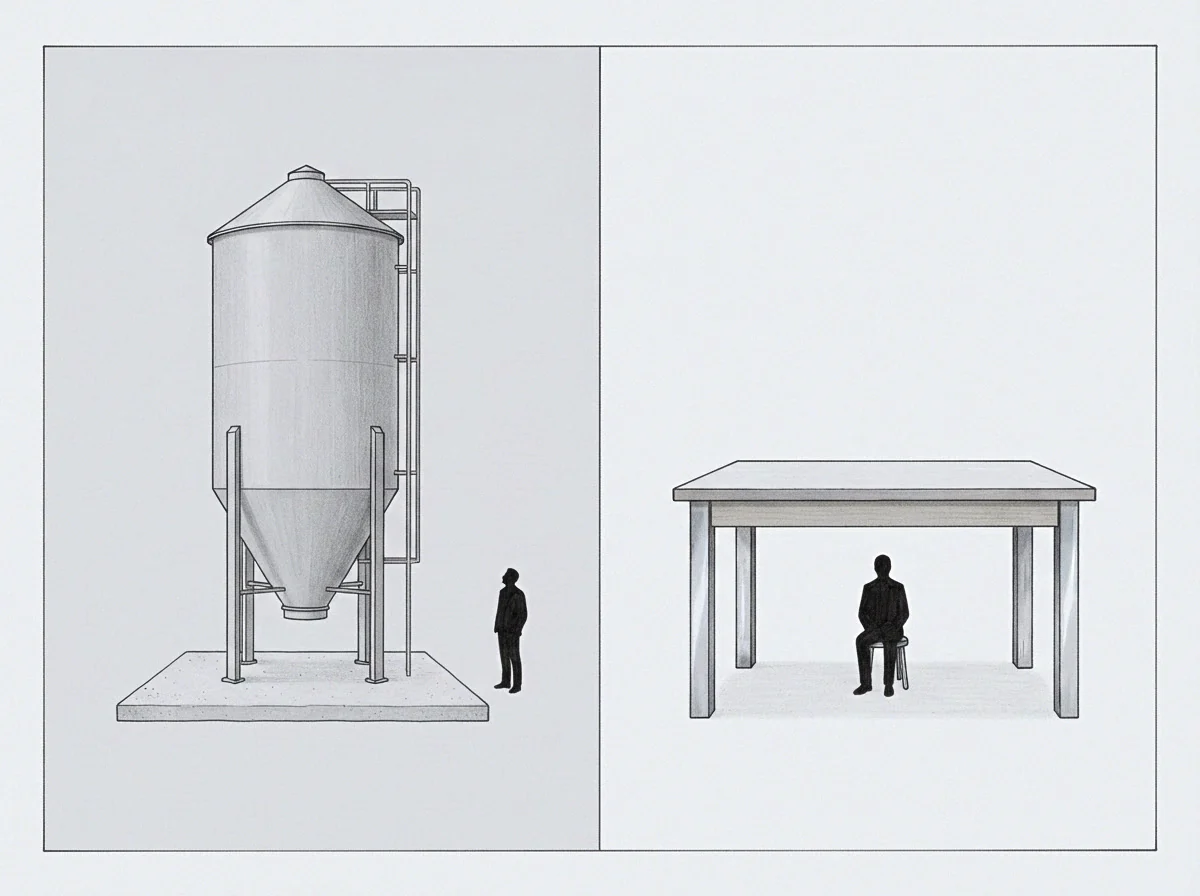
A founder preserves capital along an avoidance trajectory without intending to build a repository. In early stages, technical and operational choices follow immediate survival. Deciding not to resolve vendor renegotiations or skipping automated reconciliation yields an immediate surplus of daily attention, which gets redirected into acquisition pipelines.
The bypassed administrative requirement rests on an operational shelf. Months later, that unaddressed requirement has built up surrounding machinery: manual spreadsheets, dedicated junior clerks, and custom verification scripts written solely to bridge the gap.
This accretion functions as unmapped capital. An organization builds an entire operational team to avoid buying an enterprise license or rewriting legacy code. Resources committed to maintenance remain real, cardinal, and continuous.
The capability developed while compensating for the deficit represents an unindexed balance sheet item. The personnel operating the manual spreadsheets build granular analytical capabilities that automated tooling never demands.
A team compensating for missing software accumulates analytical capability at the expense of baseline processing efficiency.
The unspent volume behind an avoidance route equals the energy required to sustain the circumvention multiplied by the duration of the detour. An organization that routes around contract arbitration for three years compiles extensive defensive documentation habits. Those habits form a latent legal intelligence network.
When direct confrontation becomes unavoidable, that retained volume determines whether the transition succeeds or fractures the enterprise.

Quantifying Compensatory Reserves
Evaluating compensatory reserves requires separating active operational expense from retained adaptive capacity. Audited firms frequently display processes that appear inefficient on the surface. Closer examination shows those inefficiencies shelter secondary analytical capabilities that protect enterprise stability during sudden volume spikes.
The manual intervention acts as a surge damper.
Circumvention carries distinct physical markers within company records. Routine tasks require multiple approvals. Peripheral software tools multiply without central procurement.
Senior operators spend disproportionate time mentoring administrative personnel on undocumented edge cases. These habits map the boundary of an unaddressed systemic defect. The defect holds latent value because resolving it frees personnel for productive tasks while preserving the analytical precision developed under constraint.
The process functions as a protective measure that preserves customer relationships during system instability.
Deflection
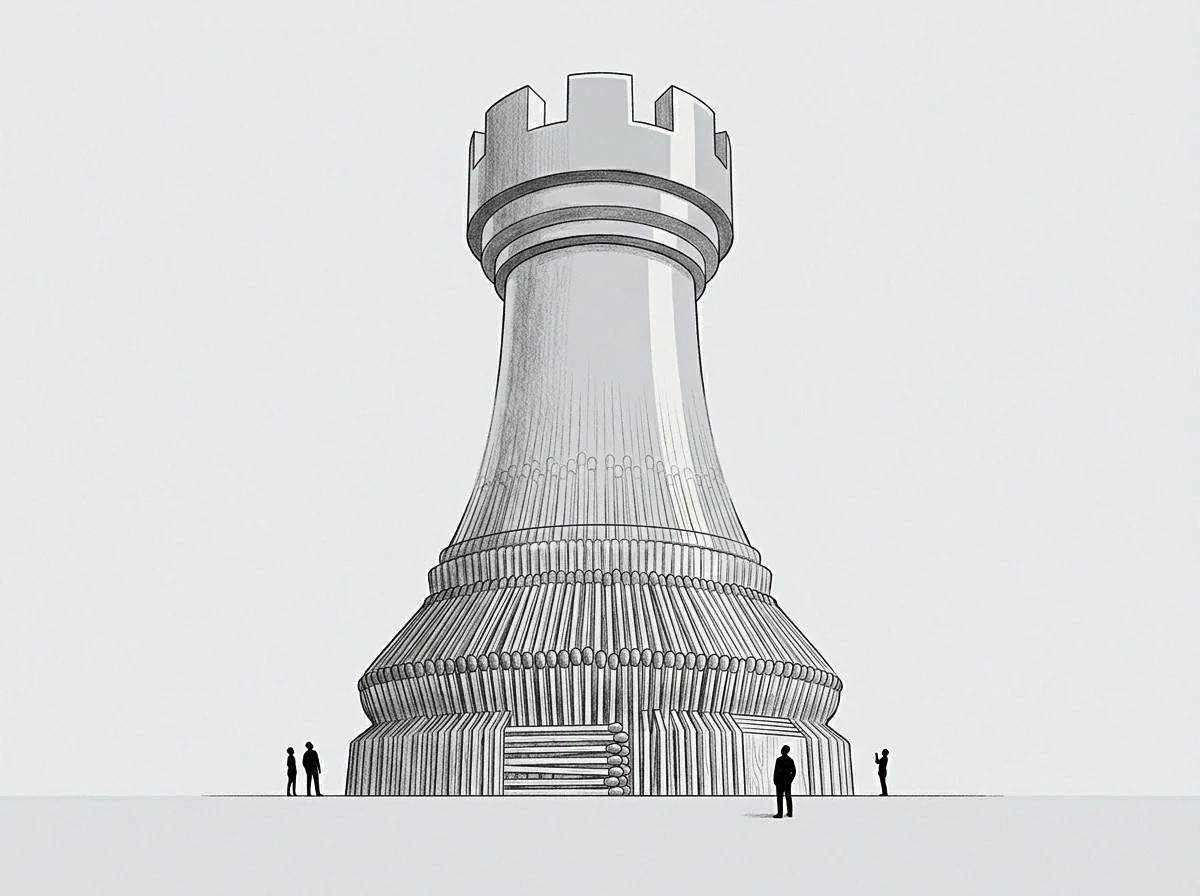
A deliberate detour differs from simple operational failure across every structural metric. Incompetence degrades throughput uniformly, scattering energy into random noise. Structural deflection concentrates energy along predictable contours, building disciplined secondary pathways around an unaddressed core friction.
That distinction determines whether an enterprise accumulates recoverable capability or merely bleeds operating margin into disorganization.
| Evaluation Criterion | Direct Trajectory | Deflected Trajectory | Degenerative Drift |
|---|---|---|---|
| Resource Allocation Profile | Capital deployed toward permanent infrastructure automation | Labor invested into manual bridges and peripheral routines | Expenditure dispersed across random crisis resolutions |
| Competency Retention Vector | High reliance on static third-party software definitions | Granular operator comprehension of internal transaction limits | Progressive erosion of technical process records |
| Reversibility Horizon | Immediate replacement via administrative depreciation cycles | Complex extraction demanding workflow decommissioning | Irreversible loss of operating baseline parameters |
| Latent Reserve Yield | Zero recoverable operational surplus post-implementation | Concentrated problem-solving capacity available upon integration | Net deficit requiring complete team restructuring |
Analyzing the data reveals that deflection preserves capital in an unconventional, highly localized format. The direct path builds capital inside explicit technical assets. The deflected path stores capital inside human operational patterns.
The degenerative path destroys capital entirely. Trouble arises during enterprise expansion when leadership treats deflected paths as plain defects without auditing the capabilities built inside the detour.

Is Deflection Distinguishable From Strategic Refusal?
Distinguishing systematic avoidance from deliberate prioritization demands examination of organizational feedback loops. Strategic refusal explicitly accepts a performance boundary to concentrate capital on primary growth vectors. Avoidance occurs when the system wants the outcome of the difficult path while engineering operational contortions to escape the immediate price of confrontation.
In physical engineering, pressure relief valves divert fluid to protect structural integrity. In enterprise development, deflection diverts cognitive pressure away from unresolved governance, compensation, or technological debts.
The operational cost compounds quietly. When an avoidance vector remains active across multiple growth cycles, the circumvented problem expands alongside the enterprise. A missing database index in a startup becomes an architectural barrier in a mature corporation.
The workaround scales with transaction volume: ten hours of monthly manual oversight expand into three dedicated shifts of contract workers validating records by hand.
A workaround allowed to scale with revenue converts temporary friction into institutional paralysis.
Premature extraction of latent capital damages operating stability. If executive leadership demolishes an avoidance bypass without transferring compensatory intelligence into the replacement infrastructure, transaction failure rates escalate immediately. The manual reconciliation team held edge-case knowledge that software engineers never incorporated into system specifications.
Demolishing the bridge without absorbing its traffic destroys the latent asset while magnifying the underlying structural deficit.

Volume
Extracting the unspent capital stored along avoidance vectors requires a precise operational sequence. The enterprise must locate the boundary where avoidance solidifies into systemic limitation. That boundary presents as an operational ceiling where additional labor deployments yield diminishing marginal returns.
Adding more personnel to a manual reconciliation loop no longer compresses processing cycles. At this coordinate, the avoidance vector stops accumulating latent capacity and begins actively consuming enterprise solvency.
A founder surveys the operational boundary to identify which bypasses contain harvestable competencies. The conversion process demands four precise movements:
- Boundary mapping identifies the specific operational friction that prompted the initial historical deflection.
- Competency isolation extracts the undocumented heuristics developed by the team maintaining the workaround.
- Structural resolution addresses the baseline architectural deficit through capital expenditure or software automation.
- Capability redeployment transfers the human operators into offensive development roles with their institutional knowledge intact.
Consider two enterprises operating identical sales funnels. The first automated its qualification pipeline immediately upon inception, using standard scoring models. The second avoided implementing automated qualification for eighteen months due to internal disputes over lead assignment.
During those eighteen months, the sales team conducted qualification interviews manually, keeping unstructured notes on prospect hesitancy. The second enterprise accumulated a proprietary catalog of customer objections that no automated tool captures. By resolving the avoidance vector through structured automation that incorporated those manual notes, the second firm converted historical avoidance into superior conversion architecture.
The conversion is not guaranteed. If an avoidance route persists past structural utility, latent capital calcifies into administrative resistance. Personnel guarding the workaround view incoming automation as an existential threat and defend the manual detour because their status derives from operating the bypass.
At this threshold, the cost of extraction exceeds the value of the stored asset.
What remains undetermined is whether an enterprise can systematically manufacture productive avoidance vectors to train operational personnel, or whether the latent capital emerges strictly as an unintentional byproduct of genuine organizational failure.