
Evaluating Multidimensional Phase Alignment Across Asynchronous Latency Windows
Phase alignment across asynchronous latency windows isolates real structural drift by measuring phase vector delta against timed signal arrival intervals.

Mesh
Asynchronous data channels present an immediate measurement challenge when operational metrics update at uneven intervals. Telemetry arriving from primary customer activity carries sub-second precision, while telemetry from upstream financial settlements or channel distribution updates on multi-day delays. Evaluating systemic performance across these mismatched timeframes often causes teams to mistake pure temporal lag for functional degradation.
An engine reading live interaction telemetry beside delayed balance updates detects an apparent mismatch that exists solely because the measurement intervals do not share an edge.
Phase alignment across mismatched time horizons requires isolating the underlying periodicity of each signal stream. When two dependent processes execute on distinct clocks, their relative state cannot be determined by comparing simultaneous samples. A single point observation across asynchronous channels reflects temporal offset rather than operational divergence.
Real structural shifts emerge only when each stream is mapped to its specific update frequency and evaluated across overlapping observation windows.
Phase tracking begins by recording the baseline arrival interval for every active data channel. Systemic offsets become predictable once the distribution of latency for each input stream is established over time. When an incoming data point arrives outside its expected arrival window, the deviation introduces an uncertainty vector into the state calculation.
The evaluation process isolates these timing discrepancies before applying state adjustments across dependent operational layers.
State reconciliation fails when operators force real-time convergence onto asynchronous signal feeds. Forcing instantaneous alignment across channels operating on unequal update cycles introduces false correction loops into the control structure. This dynamic leaves open whether an unaligned state vector represents a true operational failure or an uncollected signal payload.
Gauge
Quantifying phase relationship across non-simultaneous streams demands a consistent coordinate baseline. Direct subtraction of raw channel values yields phantom errors whenever update frequencies diverge. True evaluation requires calculating the phase vector across a common time horizon while preserving the native sampling rate of each constituent signal.
Temporal Dispersions in Parallel Data Streams
Signal channels degrade along predictable axes when arrival intervals fluctuate. A high-frequency interaction stream exhibits low latency but high point-to-point variance, whereas a delayed settlement stream exhibits high latency with high absolute precision. Combining these feeds into a single state estimation requires weighting each input by its temporal reliability.
State vector updates executed prior to minimum latency windows generate redundant corrective cycles.
Engineers assess alignment fidelity by measuring the phase lag between input signals and system state changes. When arrival latencies expand, the effective observation window must widen proportionally to prevent premature state invalidation. Failure to adjust the observation window corrupts the error calculation across all downstream channels.
Evaluating phase offset across distinct latency profiles relies on structured reconciliation approaches tailored to specific stream behaviors.
| Reconciliation Mode | Latency Profile | Evaluation Window | State Fidelity Impact |
|---|---|---|---|
| Instantaneous Snapshot | Sub-second to uniform | Fixed point observation | High error rate under variable arrival times |
| Moving Window Average | Moderate asynchronous drift | Rolling multi-cycle interval | Attenuates transient noise but introduces signal smoothing |
| Phase Vector Interpolation | Highly irregular latency | Variable decay horizon | Preserves structural direction across long gaps |
Systemic Consequences of Misaligned Phase Evaluation
When multi-stream tracking algorithms ignore arrival intervals, control systems react to stale state assertions as if they were current inputs. The resulting adjustments introduce instability into active operational processes.
- Instantaneous state assertion forces concurrent evaluation on non-simultaneous arrivals, creating false error signals that trigger unnecessary automated interventions.
- Unbounded sample accumulation delays state updates until every channel responds, causing catastrophic latency inflation across time-sensitive execution pathways.
- Static phase windowing applies uniform time bounds across non-uniform channels, obscuring structural trend shifts beneath uncompensated temporal drift.
Applying an uncalibrated evaluation window across asynchronous channels leads directly to automated control loops oscillating against historic ghost states.
Filter
Separating structural state changes from arrival latency requires testing whether incoming data varies with live system inputs or reflects cached historic responses. A signal stream that outputs invariant values regardless of operational shifts indicates a broken processing loop rather than a stable underlying state. Live calculations alter their output when input vectors move, whereas retrieved answers maintain invariant metrics despite environmental changes.

Is Latency Discrepancy Indistinguishable From True Signal Decay?
Distinguishing temporal lag from actual signal decay depends on measuring output variance over consecutive observation cycles. When an upstream channel experiences network congestion, the payload arrives late but retains its structural relationship to adjacent data points. True decay alters the underlying correlation between channels even when payload delivery arrives on schedule.
A steady signal output across shifting input conditions reveals a cached retrieval path.
Evaluating multi-channel streams involves injecting controlled reference variations into active inputs. If downstream metrics track the injected variation after the calculated latency window expires, the processing path remains structurally sound. When downstream outputs ignore input variations, the channel is executing against cached state assertions.
Operators auditing third-party integration feeds regularly observe this phenomenon during silent upstream failures. The external service continues responding with success codes containing stale pre-calculated values. The integration path appears functional because response latency remains low, yet the dimensional phase alignment has completely collapsed.
System integrators often summarize this failure state flatly: the stream returns valid syntax while conveying zero current truth.

Offset
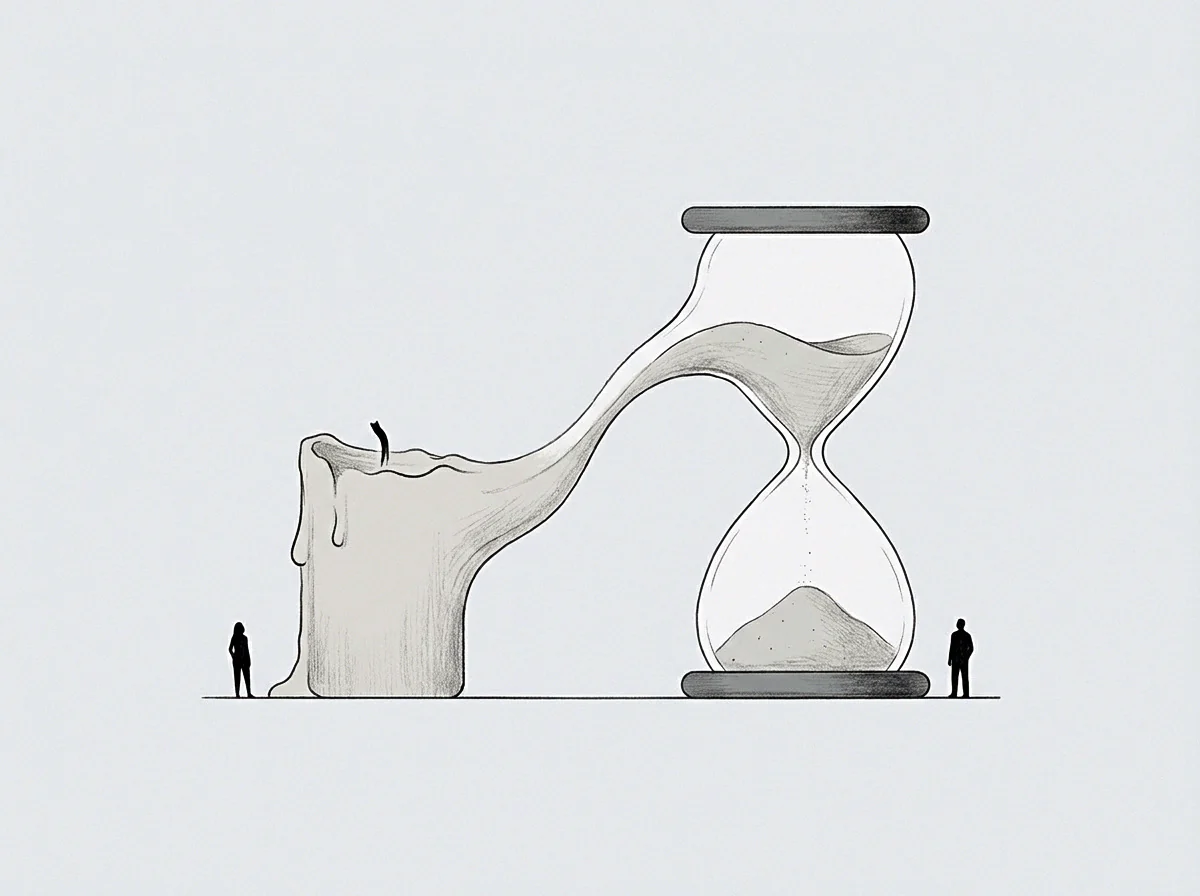
Calibrating phase alignment requires defining the exact temporal boundary where an unreceived signal transitions from a latency delay to a missing state. This boundary, termed the decay threshold, dictates how long an evaluation window retains historical values before degrading their weight in the state vector.
Long Window Vector Calibration
Establishing an effective decay threshold relies on recording baseline arrival intervals over extended operational cycles. Initial estimates derived from vendor documentation or short-term testing rarely reflect real-world network jitter and processing queues. Long-term baseline tracking reveals the true probability distribution of arrival times across all connected channels.
Phase vector accuracy improves as observation duration expands relative to peak channel latency.
When operating across asynchronous channels, phase alignment progresses through explicit operational stages.
- Establish baseline latency distributions for every independent data stream under normal operational loads.
- Define window boundaries based on maximum observed arrival intervals rather than average latency targets.
- Apply time-decay weightings to stored channel values as elapsed time exceeds primary arrival bounds.
- Recalculate multidimensional state vectors only when all active channel weights meet minimum confidence thresholds.
State calculation integrity depends entirely on enforcing the maximum observed latency condition during phase reconciliation cycles. Omitting this temporal boundary allows stale inputs to distort multidimensional state calculations without raising operational flags.
Grid
Operational execution across asynchronous latency windows ultimate rests on setpoint management. A control system must maintain stability even when individual feedback channels experience temporary starvation or severe arrival jitter. Setting clear operational boundaries prevents localized timing errors from propagating across the global execution grid.
Execution setpoints require wider tolerance bands when feedback loops rely on asynchronous telemetry streams.
Dynamic adjustment of control thresholds protects systems from overreacting to transient phase shifts. When multi-stream telemetry indicates temporary misalignment, expanding the setpoint tolerance band allows the system to absorb latency spikes without triggering emergency fallback routines. Once channel arrival intervals normalize, setpoint bounds contract back to baseline operational limits.
Managing Setpoint Drift in Delayed Feedback Loops
Continuous feedback loops require explicit mechanisms to handle asynchronous telemetry dropouts. If a primary data feed drops offline, the control system faces a choice between holding the last known valid state or initiating a graceful degraded execution protocol. Holding state preserves short-term operational continuity but risks severe divergence if the outage persists.
Long-term operational resilience emerges from setting setpoints against minimum reliable arrival rates rather than optimistic throughput assumptions. When feedback loops respect the physical latency limits of their slowest channel, systemic phase alignment remains stable across routine operational disruptions. Calibration improves when observation windows match the physical update limits of the underlying hardware.