
Rebuilding Latent Systemic Elasticity After Severe Multi Axis Metric Compression
Multi axis metric compression strips operational slack; rebuilding systemic elasticity requires mapping structural hysteresis and funding unspent potential reserves.

Axis
A dashboard running four conversion metrics turns green for three consecutive quarters while the engineering group quietly halts schema refactoring. Sprint throughput remains stable, transaction expenses decline by twelve percent, and executive reports reflect steady execution. Beneath the numerical indicators, the software architecture loses structural modularity as teams patch technical debt with localized wrappers.
When an unexpected load spike occurs, the system cannot distribute compute tasks, causing cascading timeouts across three primary services.
Value functions as an underlying value axis, but executive monitoring tools compress complex systemic health into flat quantitative targets. Evaluating operations along compressed coordinates forces teams onto the path of least resistance. Gradient descent along this compressed slope reduces operational variance, shearing away the unspent capacity that absorbs environmental shocks.

Dimensional Reduction in Systemic Performance Metrics
Severe metric compression isolates discrete operational variables and penalizes deviation from targeted ranges. When executive teams monitor an organization through narrow cardinal ratios, local operators adjust behavior to satisfy those specific coordinates. This dynamic strips out structural buffer volume, converting variable operational cushions into rigid throughput channels.
Metric targets disguise structural decay. The organization interprets tight variance control as operational precision. The system liquidates unspent systemic volume to sustain performance within tight bounds.
Avoidance of target breach becomes the primary driver of task selection, routing energy around complex architectural maintenance.
Systemic elasticity declines whenever quantitative metric thresholds are treated as structural ceilings rather than temporary baselines.

The Accumulation of Unprocessed Operational Strain
Unprocessed material in a compressed system accumulates at the boundaries of unmonitored coordinates. When financial targets prioritize immediate cash conversion velocity, secondary vectors such as technical debt, worker exhaustion, and vendor relational capital experience rapid degradation. The system routes around non-metricized maintenance tasks because performing them generates negative metric movement on executive monitors.
Avoidance marks the boundary coordinate. The magnitude of what an organization avoids maintaining measures the latent liability accumulating behind the metric wall. When metric compression persists across multiple consecutive cycles, systemic flexure vanishes, leaving a rigid structure vulnerable to micro-shocks.
Targeting localized metric optimization without mapping structural dependencies guarantees an abrupt capacity failure when operational volatility exceeds the compressed bandwidth.

Floor
Rebuilding elasticity begins by establishing the structural baseline floor. The floor defines the lower bound of operational redundancy and financial reserves below which a system experiences irreversible yield. Under severe multi-axis metric compression, management often mistakes the structural floor for operational excess, cutting reserves to maximize immediate yield figures.
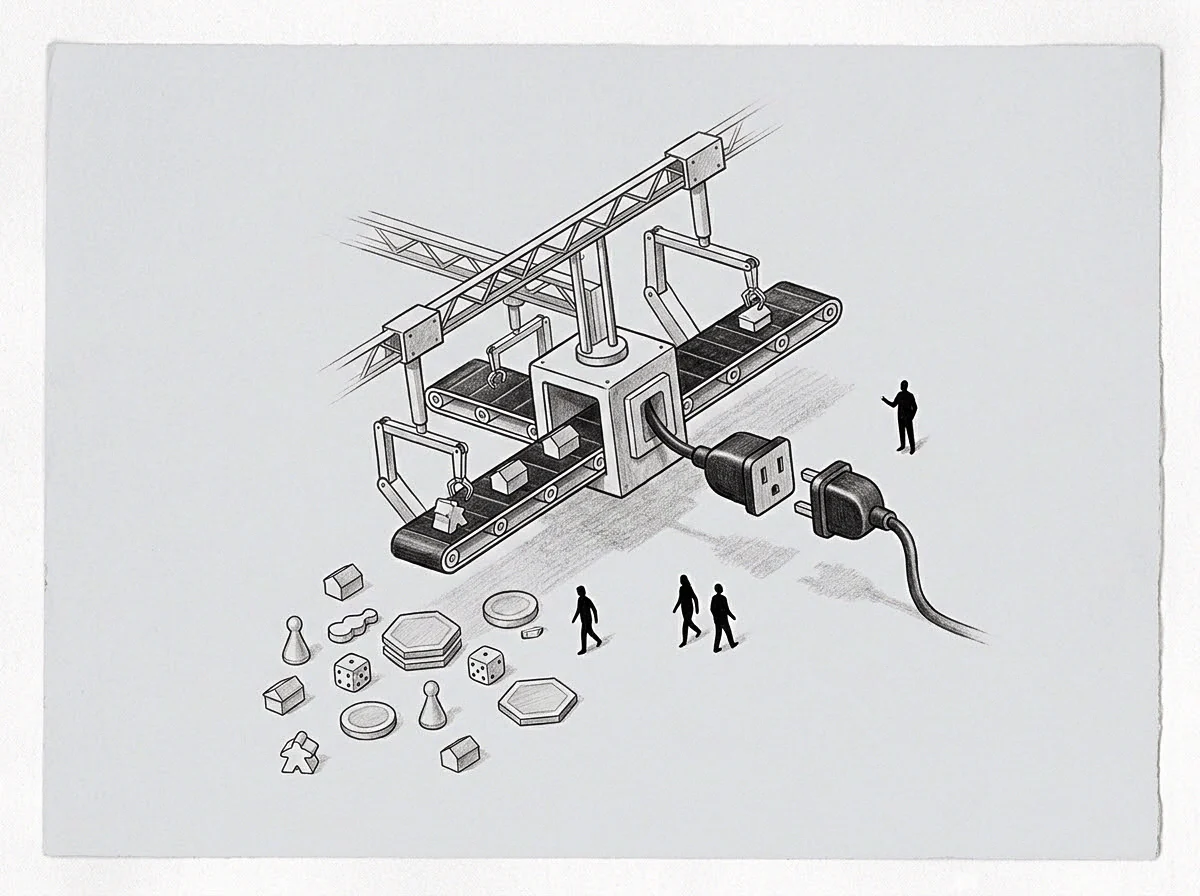
Mapping Minimum Operational Reserves Across Critical Axes
Evaluating elasticity across compressed environments demands clear differentiation between lean execution and structural starvation. The structural floor represents the non-negotiable volume of latency, financial reserves, and architectural redundancy needed to absorb vector shocks.
| Systemic Axis | Compressed Operational State | Elastic Reserve Baseline | Restorative Recovery Mechanism |
|---|---|---|---|
| Technical Architecture | Zero-slack deployment pipelines directed strictly toward immediate feature delivery throughput. | Twenty percent dedicated engineering capacity reserved for schema refactoring and debt clearance. | Automated architectural linting and mandatory refactoring budget allocation per cycle. |
| Financial Capital | Working capital stripped to match daily operational burn without contingency buffers. | Ninety days of operating expenses held in liquid instruments outside short-term yield calculations. | Ring-fenced liquidity covenants decoupled from quarterly return target evaluations. |
| Human Bandwidth | Continuous one hundred percent task allocation across all operational engineering roles. | Fifteen percent unallocated operational capacity designated for emergent system repair and cross-training. | Strict cap on recurring sprint commitments enforced by automated task intake thresholds. |
| Partner Dependencies | Single-source vendor contracts negotiated purely on immediate unit price metrics. | Dual-vendor sourcing structures maintaining warm secondary failover capacity. | Contractual multi-homing terms funded through shared operational resilience allocations. |
| Establishing elastic reserve baselines prevents catastrophic systemic failure when operational volatility breaches compressed metrics. | |||

Identifying Structural Boundaries Before Critical Yield
The wall represents the physical limit of system adaptation under existing operational parameters. When an organization operates near its structural floor, small operational fluctuations trigger non-linear failure modes. Identifying these boundary conditions requires measuring the slope between current operational performance and the structural floor across every key axis.
Elasticity demands unallocated baseline volume. When leadership treats every unallocated asset as inefficient capital, the system loses the ability to execute non-routine adaptations. Restoring elasticity demands explicit boundary protection, preventing metric compression loops from liquidating essential structural floor reserves.
A mandatory quarterly reserve allocation clause resets the baseline operational buffer and prevents metric compression from liquidating systemic redundancy.

Hysteresis
Restoring systemic elasticity is an asymmetrical process. When multi-axis metric compression is lifted, the system does not instantly regain its former flexibility. Instead, the recovery path exhibits marked hysteresis, requiring greater energy input to rebuild structural capacity than was extracted during the initial compression phase.

Is Systemic Stiffness Mistaken for Operational Efficiency?
Prolonged metric compression alters organizational structure and team behavior. Employees internalize rigid decision pathways, treating risk avoidance as standard operating procedure. When management removes tight metric targets, teams often maintain defensive operational habits, confusing structural stiffness with high operational efficiency.
Systemic recovery carries high energy costs. Re-establishing trust, refactoring brittle codebases, and rebuilding depleted cash reserves require continuous capital allocation without immediate proportional output gains. The negative slope observed during compression must be mirrored above the baseline to estimate the true volume of latent capacity locked within the system.
Removing metric pressure without expanding structural capacity forces work back into informal organizational workarounds.

The Energy Gradient of Restorative Operational Recovery
The path of restorative recovery demands deliberate allocation of uncommitted resources over extended time windows. Management accepts reduced short-term output metrics while the system re-establishes internal elasticity. Metric targets disguise structural decay.
- Architectural Stiffening occurs when compressed release cycles force developers to lock dependencies, preventing systemic schema updates for subsequent feature releases.
- Cognitive Retraction emerges when team members restrict task intake strictly to measured metric outputs, ignoring unmeasured operational vulnerabilities.
- Contractual Sclerosis develops as vendor agreements lock in rigid minimum throughput commitments, restricting operational flexibility during demand downturns.
- Resource Atrophy results from long-term capital diversion away from base infrastructure maintenance into high-visibility short-term conversion initiatives.
Energy loss defines the hysteresis loop. Understanding the magnitude of this energy loss enables operators to forecast the realistic timeline and capital investment required to restore baseline systemic elasticity.
Recovery time outlasts compression duration because structural rebuilding demands higher unit energy than operational consumption.

Flexure
Operational flexure represents the dynamic capacity of a system to bend under vector shock without incurring permanent structural yield. Rebuilding flexure requires designing variable tolerances directly into organizational evaluation loops, ensuring that minor performance fluctuations do not trigger aggressive cost-cutting or operational over-corrections.

Designing Variable Tolerances Into Metric Evaluation Loops
Static metric targets amplify systemic rigidity. When performance evaluations enforce strict zero-variance tolerance bands, teams spend disproportionate energy managing short-term metric noise rather than executing core operational tasks. Variable tolerance bands allow operational metrics to oscillate within safe boundaries, absorbing external volatility without disrupting underlying systemic processes.
Retained reserves absorb vector variance. By establishing explicit deadbands around key performance indicators, executive monitoring systems allow local operators to exercise discretion during minor operational shifts. Reserve margins absorb environmental shocks.
True operational flexure manifests as unallocated capacity that absorbs metric noise without altering systemic outputs.

Reallocating Latent Capital to Absorb Vector Shocks
Capital reallocation forms the practical backbone of systemic flexure. Rather than deploying all available liquidity into immediate expansion, elastic organizations reserve dedicated financial and operational capital specifically to absorb unexpected vector shocks. Unfunded reserves degrade under scrutiny.
- Audit existing metric evaluation loops to identify rigid target thresholds that trigger immediate operational cutbacks.
- Establish floating tolerance ranges around primary financial and operational indicators to absorb environmental noise.
- Allocate ten to fifteen percent of capital expenditure directly into base structural maintenance reserve accounts.
- Decouple team performance evaluations from short-term metric fluctuations occurring within defined safe tolerance bands.
- Monitor systemic hysteresis recovery rates quarterly to adjust capital allocation ratios based on measured elasticity.
Structural slack acts as operational damping. Without intentional flexure, external metric pressure forces the organization into repeated cycles of crisis management and panic compression. Compression reduces systemic response options.
The board expected immediate output gains from the capital allocation, unaware that the funds were absorbing accumulated operational deficit to prevent structural breakdown.

Recourse
Rebuilding systemic elasticity concludes with establishing permanent operational recourse mechanisms. Recourse guarantees that when metric compression pressures resurface during market downturns, the organization possesses structural safeguards to prevent the total liquidation of operational buffers.

Institutionalizing Baseline Protection Against Metric Recurrence
Institutional recourse relies on explicit operational governance covenants. By establishing hard covenants that prohibit executive teams from reducing reserves below the structural floor, the organization anchors its long-term elasticity against short-term metric pressure. Operational buffers stabilize velocity spikes.
Boundaries shift under continuous stress. Continuous auditing of operational boundaries ensures that structural floors adapt to growing organization size and increasing environmental complexity.
Systems that measure only output velocity eventually collapse into the boundary conditions they refused to compute.

Longitudinal Elasticity Audit Protocols
Longitudinal audits track systemic elasticity over multi-year horizons, evaluating whether operational flexure expands or contracts relative to organizational growth. These audit protocols convert operational error coordinate data into actionable boundary models, ensuring continuous systemic resilience.
Latent capacity requires active floor protection. When an organization treats systemic elasticity as a permanent operational asset rather than a temporary expense, it secures the structural flexure needed to navigate severe multi-axis metric challenges.
Whether leadership will maintain structural reserves when short-term competitor margins put renewed pressure on operational buffers remains an open structural vulnerability.