
Decoupling Dynamic Calibration Windows From Slow Service Error Rate Velocity
Separating sample count accumulators from clock duration prevents sparse execution spikes from distorting error bounds.
Cadence
An operator sits before a terminal at midnight watching an asynchronous payment reconciler process four jobs every twenty minutes. A single socket timeout registers on the fourth run. The adaptive alerting pipeline, designed to shrink its inspection duration whenever failure rates accelerate, contracts from thirty minutes to forty-five seconds.
The system immediately signals a critical operational outage. Nobody changed the code, the database retains healthy connection capacity, and downstream ledgers accept transactions without hesitation. The worker pool drained.
The pipeline simply measured an apparent failure surge because a solitary fault arrived within an artificially compressed slice of elapsed time.
The Idle Queue
Low-throughput services create a recurring trap for automated monitoring. When transactions occur hundreds of times per second, calculating an error percentage over a moving two-minute interval yields a mathematically stable indicator. A single dropped packet moves the ratio by fractions of a basis point.
The calculation collapsed. On a batch worker handling twelve settlement dispatches an hour, that exact dropped packet represents an instantaneous eight percent failure reading. When telemetry software links the width of its inspection horizon to the velocity of incoming failures, sparse queues cause severe mathematical distortion.
The observer contracts the observation interval during the exact operating conditions where wider windows are statistically mandatory.
A dashboard showing ten errors across twenty minutes registers an emergency when traffic drops to three jobs an hour.
A false alarm generated by compressed sampling consumes human attention. The operator wakes an on-call engineer, who traces network paths and inspects storage volumes only to discover that the service executed precisely as intended. The incident report records no code defects, no infrastructure degradation, and no lost customer records.
Traffic fell sharply. The only casualty was forty hours of engineering sleep sacrificed to a monitoring algorithm that treated intermittent job intervals as high-frequency streams. Connecting the calibration interval directly to the pace of incoming faults turns normal traffic pauses into phantom crises.
Clock
Telemetry pipelines track system state against wall time, relying on internal crystal oscillators that tick whether work enters the system or stays away. This temporal foundation causes systemic errors when applied to low-volume services. A statistical baseline demands a fixed number of independent observations before its variance settles within acceptable bounds.
While high-volume ingress satisfies this condition within seconds, an infrequent batch process might require twenty-four hours to produce equivalent statistical power. Measuring both systems with identical wall-duration rules produces inconsistent diagnostic confidence.

Asymmetric Window Sizing
Decoupling the assessment window from error acceleration restores mathematical integrity to telemetry. A resilient architecture establishes two independent reference parameters: an event counter that accumulates discrete completed units of work, and an elapsed duration timer that enforces minimum statistical relevance. The sample bucket starved.
The system prevents alerting logic from updating its probability distribution until the event counter reaches its minimum sample threshold, regardless of how many minutes pass on the wall clock. Elastic window contraction based on the pace of errors remains reserved exclusively for pipelines with high, steady request density.
When request volume drops beneath statistical power thresholds, an adaptive temporal filter amplifies background variance instead of tracking system health.
Coupling these variables introduces distinct structural dysfunctions into production operations:
- Window Collapse shrinks the temporal observation bucket down to seconds during intermittent traffic dips, causing isolated network timeouts to appear as total operational outages.
- Alert Thrashing alternates rapidly between critical alarm notifications and silent clearing events, creating operational fatigue that trains engineering personnel to disregard incident pages.
- Reference Class Evaporation discards historical baseline distributions during periods of low activity, forcing the evaluation algorithm to score health against tiny, non-representative sample sizes.
- Budget Cannibalization burns through allowable error limits during normal quiet hours, leaving zero operational margin for actual daytime deployment regressions.
A calibration baseline derived from fifteen hundred transactions reflects actual software stability. A baseline derived from four transactions over three minutes reflects pure arrival noise. Establishing an explicit operational condition that halts window adaptation whenever hourly throughput dips below forty invocations eliminates synthetic error spikes entirely.
Gate
Separating the monitoring interval from failure acceleration requires an intermediate admission boundary between ingestion queues and evaluation pipelines. This architectural separation acts as an inspection checkpoint. Raw request outcomes arrive from worker nodes, but the calculation engine withholds threshold recomputation until a quorum of executions registers.
Arrival order governs statistical weight. The wall clock ceases to be the primary index of diagnostic truth. Instead, work volume dictates the pace of state transitions, while elapsed duration functions purely as an operational timeout.
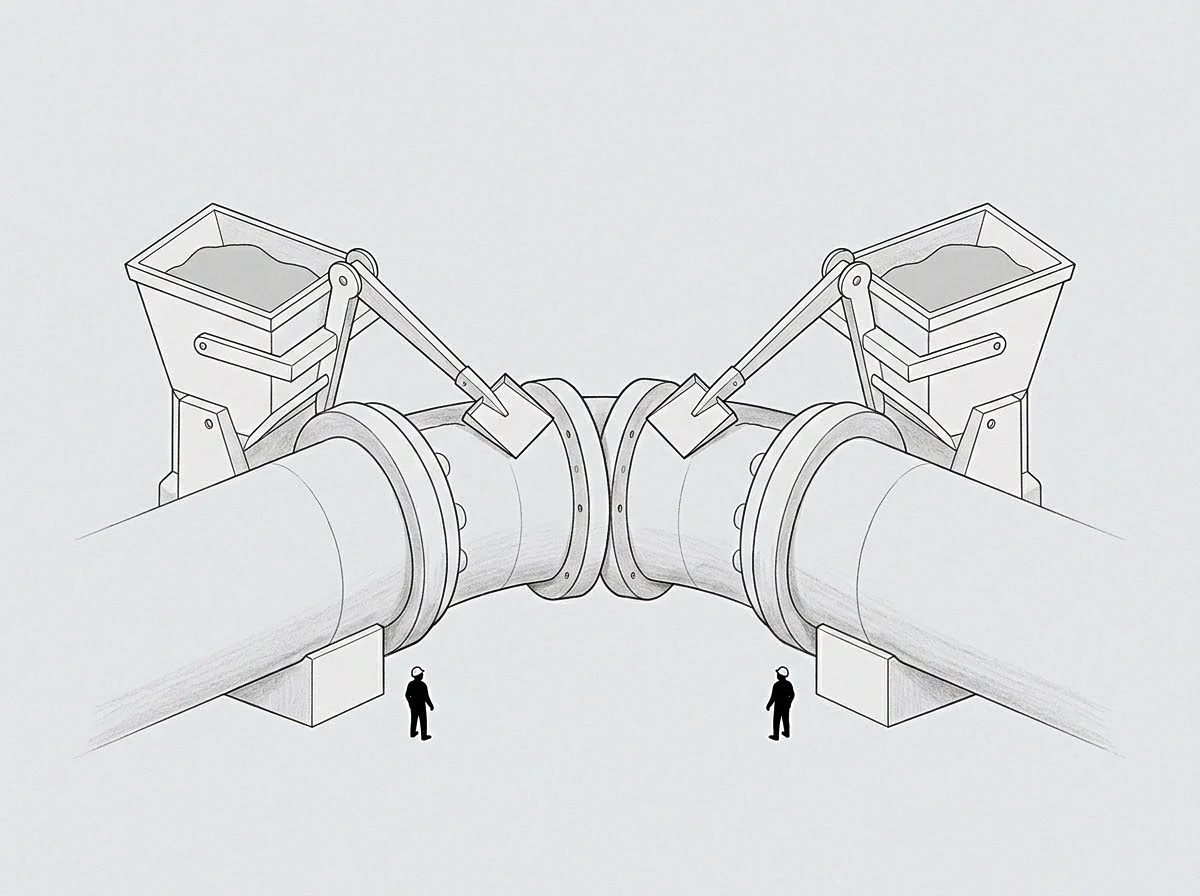
When Does Sparse Execution Corrupt Rate Estimation?
Mathematical instability occurs whenever sample counts drop below the threshold required to distinguish binomial variation from environmental degradation. In a standard Poisson arrival process, the standard error of an observed proportion scales inversely with the square root of the total sample count. When an automated engine encounters two failed tasks inside a sample of three executions, the estimated failure rate registers at sixty-seven percent, accompanied by massive confidence intervals that span from nine percent to ninety-nine percent.
If the telemetry daemon shortens the observation window because the failure velocity appears elevated, the sample size contracts further. The counter never resets. The pipeline enters a self-reinforcing distortion spiral, where high perceived failure velocity shrinks the sample, which in turn inflates the perceived rate.
Consider marine navigation methods developed for dead reckoning across calm waters. A navigator recording vessel speed by observing wood chips floating past the hull faces massive proportional errors when ocean currents stall. Counting three seconds of dead water drift produces wildly misleading calculations of ship velocity, turning a stationary vessel into a phantom voyage on the navigational chart.
Ocean navigators learned centuries ago to distrust short timer readings during dead calms, anchoring their calculations to celestial coordinates or lead lines dropped to the seabed. Telemetry engineers face the identical mathematical trap when measuring quiet services through elastic temporal lenses.
Accumulators sized by event counts protect low-volume services against the phantom panics of wall clocks.
Architectural Comparisons Across Traffic Regimes
Designing telemetry for mixed workloads requires clear distinctions between coupled duration sizing and decoupled event accumulation. The table below outlines operational parameters across these two monitoring designs under variable throughput conditions.
| Operational Criterion | Velocity Coupled Windows | Decoupled Sample Quorum |
|---|---|---|
| Low Volume Stability | High variance, frequent false positives caused by isolated failures | Stable probability density derived from fixed sample counts |
| Evaluation Trigger | Wall clock ticks combined with failure rate derivatives | Event counter threshold reached or max duration exceeded |
| Computational Expense | Continuous sliding recalculations across shifting temporal boundaries | Batch evaluation triggered only on discrete sample fulfillment |
| Outage Detection Lag | Extremely fast during storms, dangerously noisy during calm periods | Bounded deterministically by the time required to collect samples |
| Baseline Integrity | Constantly recalculated against shifting, arbitrary sample sizes | Anchored to a fixed reference class of historical executions |
Sparse signals deceive timers. The empirical finding that binomial variance inflates under small denominators rests on basic probability theory; it holds across every discrete manufacturing, networking, and queuing domain. Disproving this behavior would require demonstrating that small samples yield identical variance profiles to large cohorts under identical distributions.
Because that contradiction is mathematically impossible, decoupling the observation window from error rate velocity remains the only reliable route to operational calm.

Margin
Balancing alert latency against false alarm immunity requires managing an explicit trade-off. An operator who demands instant notification for a single failed background task must accept constant operational disruption during quiet periods. An operator who requires high confidence before paging on-call staff must accept that detecting a total failure across a slow service will take several hours.
Latency climbed without warning. This operational reality cannot be eliminated through sophisticated algorithms or machine learning models. The limitation lives in the physical sparsity of incoming information.
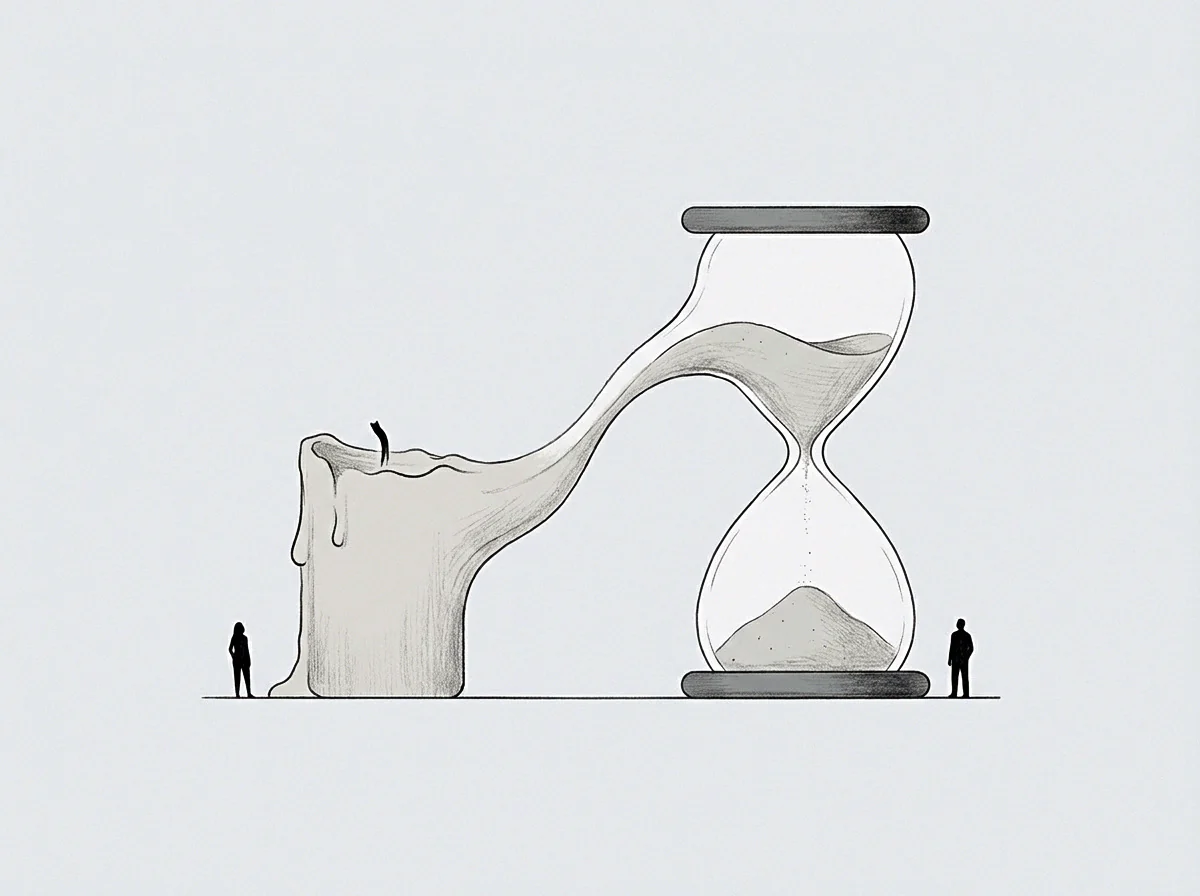
Decoupled Filter Sequencing
Implementing a decoupled calibration pipeline follows an ordered technical sequence that insulates monitoring infrastructure from traffic fluctuations:
- Signal Ingestion logs the status, latency, and resource consumption of completed tasks into a durable local buffer without evaluating global failure ratios.
- Quorum Accumulation tracks the count of discrete completed units against a preconfigured statistical floor determined by the historical variance of the worker pool.
- Horizon Freezing suspends adaptive window adjustments whenever the observed throughput drops below the minimum threshold required to support reliable probability calculations.
- Ratio Determination evaluates the failure proportion across the completed sample cohort, applying standard confidence interval limits before determining severity.
Static sample partitions prevent intermittent background tasks from consuming the shared error budget prematurely.
Noise mimics systematic decay. When organizations implement these four stages, tensions between infrastructure operators and software developers change character. The developer no longer complains that an unpredictable monitoring system awoke them over an isolated socket disconnect.
The operations team can state with mathematical certainty that twenty consecutive runs failed before an alert sounded, leaving the receiving engineer with nothing to say except that the pipeline followed its documented rules.
Quorum
Decoupled telemetry treats the event count as the authoritative currency of measurement. A worker that runs three times an hour for two weeks establishes a clear historical profile. It exhibits baseline latency, nominal CPU utilization, and known dependency failure characteristics.
The ledger recorded nothing. When that service suffers a broken database migration, waiting for twelve execution cycles to fail ensures that the resulting alarm represents genuine structural breakage. The gate stayed closed.
This approach protects engineering focus, preserving team energy for actual software regressions.
Unanswered Boundaries in Zero Ingress States
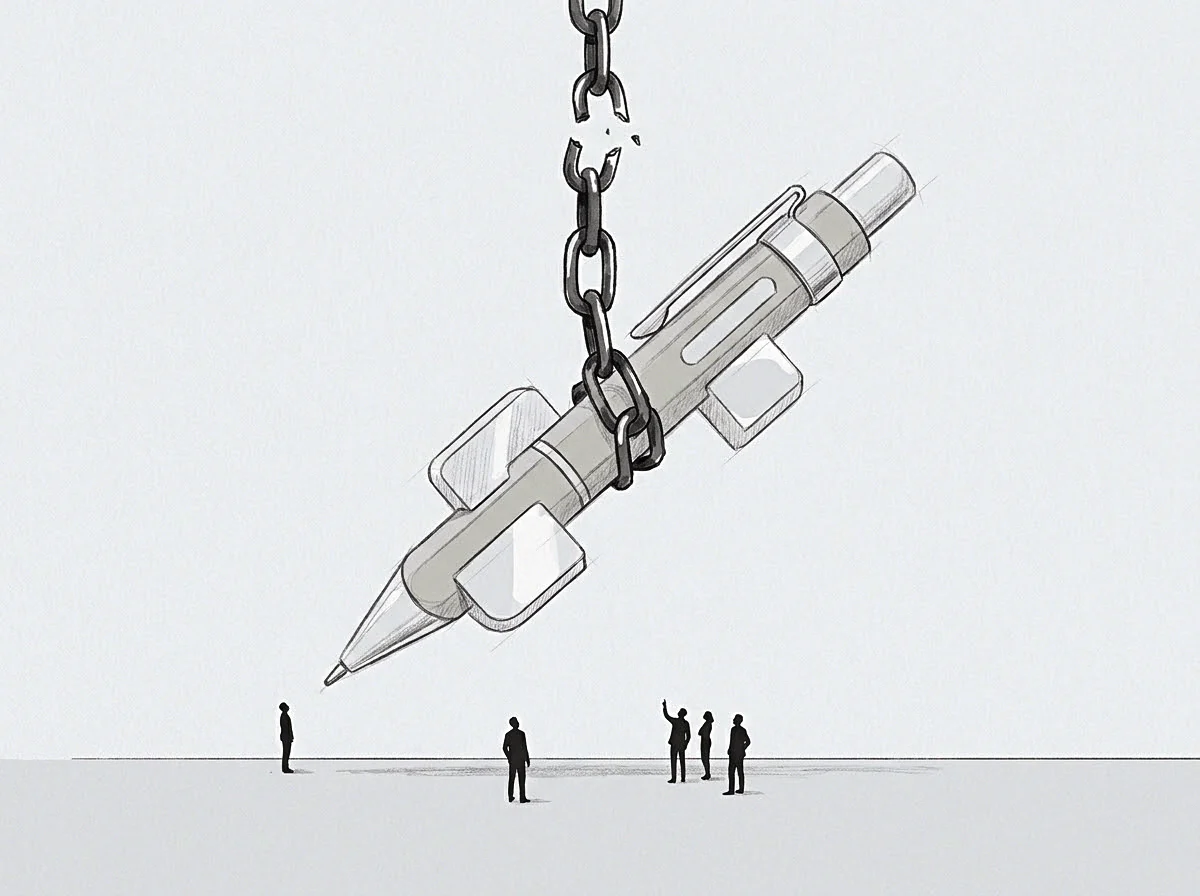
Silence yields zero variance. Total silence also conceals complete system collapse. When upstream event producers stop dispatching work entirely, a monitoring pipeline waiting for a fixed sample quorum remains blind.
Every batch carried risk. The event counter never increments, the failure ratio cannot be calculated, and the evaluation gate remains indefinitely closed. In this edge condition, separating the temporal window from error rate velocity leaves a critical blind spot that pure sample accumulation cannot resolve on its own.
Engineers manage this boundary by overlaying heartbeats or synthetic ping transactions onto quiet queues. Synthetic checks generate artificial volume, sustaining minimum traffic density to ensure evaluation pipelines receive data. The alert triggered anyway.
Yet this arrangement introduces its own unresolved tension, forcing the operator to decide whether artificial probes accurately represent the security contexts, network paths, and payload complexities of real customer workloads, or whether they simply offer a comforting simulation of system health.