
Validating Stale Data Ledgers Before Rerouting Production Network Ingress
Validating stale data ledgers before ingress rerouting prevents routing packets into nodes with invalid state, avoiding retry cascades and dropped connections.
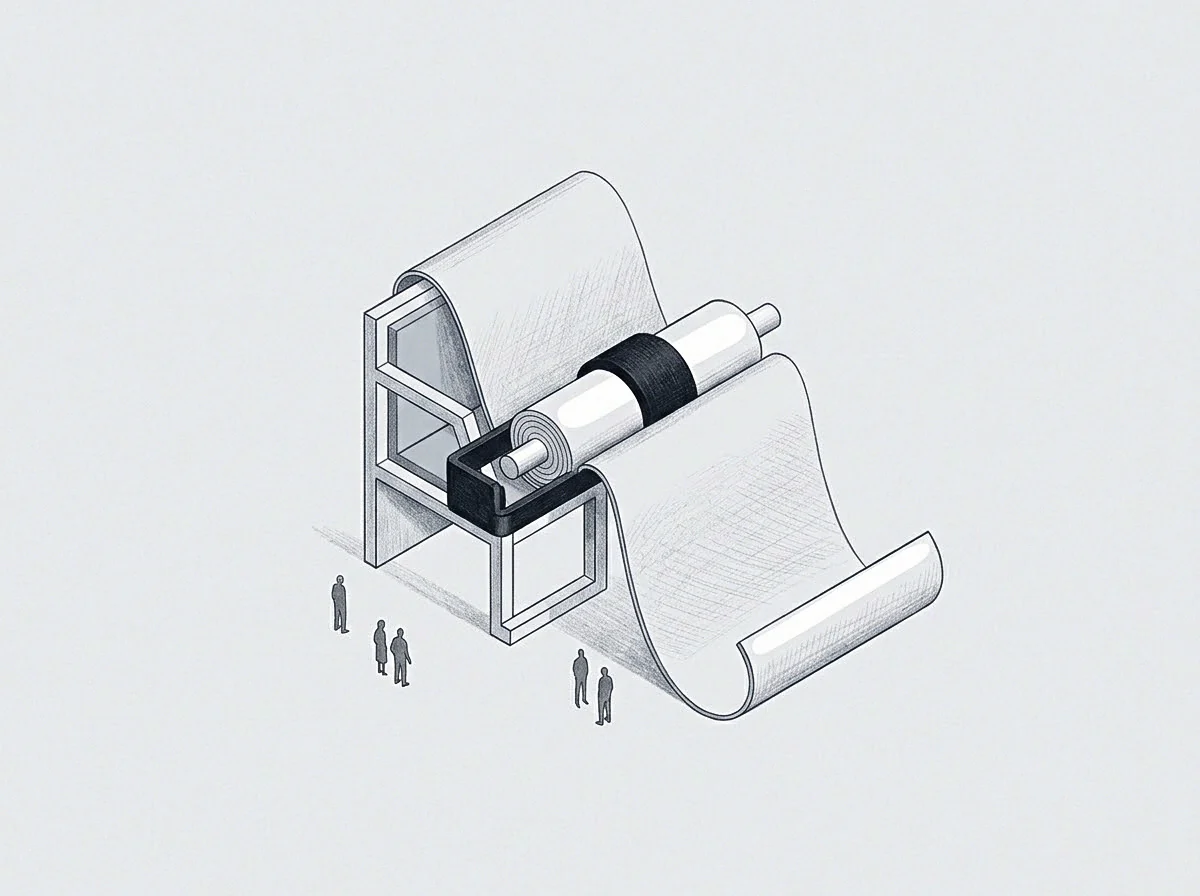
Gate
Traffic redirection across boundary proxies relies on accurate target state. When an infrastructure deployment shifts ingress traffic from one processing cluster to another, the network layer executes packet steering commands within milliseconds. The underlying data ledgers, including user authorization records, session state stores, and entitlement tables, often replicate across distributed nodes at a slower pace.
Primary ledgers update faster than proxies. A routing layer that directs incoming connections to a newly assigned cluster without verifying state ledger synchronization exposes backend services to unauthenticated requests, missing session keys, and silent write failures.
Redirection signals arrive at border nodes milliseconds before state propagation completes. Ingress controllers interpret infrastructure control plane signals as immediate permissions to swap routing targets. However, relational database clusters and key-value stores bound to the target network path maintain their own replication queues.
When packet steering outpaces ledger convergence, the boundary proxy delivers valid client traffic to destination services that hold outdated or incomplete records.

Ingress Point Mechanics During Traffic Cutover
Modern edge proxies process inbound requests by looking up destination addresses in localized routing memory. During a production reroute, an automation script updates the target address block within the ingress configuration. The proxy accepts this configuration change instantaneously.
The backend databases supporting those target endpoints rely on asynchronous replication streams to mirror primary state.
The operational discrepancy surfaces during the cutover window. Inbound API requests carrying bearer tokens arrive at the new ingress path. The local service attempts to validate the incoming token against its local ledger copy.
Because the replication pipeline is still processing backlogged transactions from the original cluster, the read attempt fails or returns stale permissions. The service responds with authorization errors despite the client presenting valid credentials.
Edge proxies steer ingress traffic to secondary targets only when replication lag remains below the designated heartbeat threshold.

State Synchronization Latency Across Edge Routers
Replication delays between primary ledgers and boundary proxies create windowed discrepancies in authentication tables. Network latency, serialization overhead, and lock contention on primary database nodes dictate the rate of ledger synchronization. Write locks pause background replication streams.
During periods of elevated ingress load, ledger synchronization lag expands from tens of milliseconds to several seconds.
Measuring this synchronization window requires analyzing the time difference between write commit timestamps on the primary ledger and read availability on edge replica nodes. If network rerouting occurs while this synchronization window is wide, traffic shifts onto nodes that lack the current state baseline. The resulting failures do not stem from proxy misconfiguration, but from a fundamental timing mismatch between network plane switching and data plane consistency.
Whether edge proxies can safely infer state freshness without introducing dedicated heartbeat overhead remains an open architectural debate.

Drift
Divergence between the authoritative ledger and read-side caches increases under high transaction rate. As internal databases process mutations, state updates distribute across storage networks via asynchronous WAL replication or message buses. When ingress nodes accept client traffic while state tables sit in a divergent condition, the system enters an indeterminate state where operational decisions run against stale records.
Evaluating operational discrepancy requires measuring row-level checksum variance across database nodes. Calculating stale data ledgers before executing a network ingress shift establishes a clear boundary between acceptable replication delay and critical state skew. Without precise measurement of ledger staleness, network engineers risk steering production ingress onto nodes that reject valid transactions or execute operations against expired business rules.
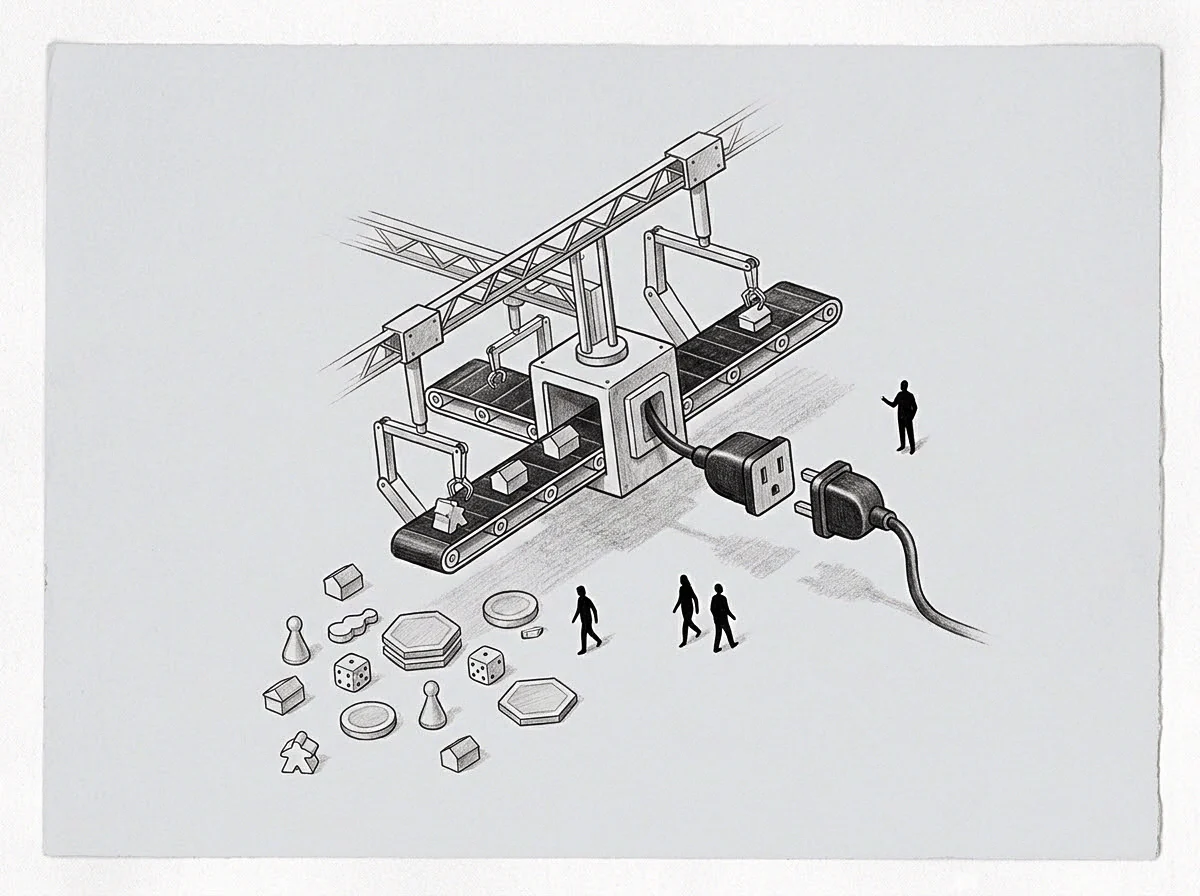
Quantifying Ledger Divergence Before Packet Steering
Quantifying state skew involves tracking transaction sequence numbers across authoritative stores and read replicas. Primary database engines assign monotonically increasing log sequence numbers to every write operation. Read replicas process these log sequences sequentially.
The difference between the primary log sequence number and the highest applied sequence number on a target replica defines the sequence lag magnitude.
Sequence lag represents one component of the overall cost vector associated with ingress cutovers. A secondary component is the mutation density, which measures the volume of data modified within unapplied transaction logs. High sequence lag combined with high mutation density yields an extreme risk profile for network rerouting.
Asymmetrical replication channels exacerbate this skew under heavy network utilization.
Unvalidated cache staleness during a network cutover forces backend services to execute expensive database fallbacks.

Ordinal Vectors of Cache Staleness
Engineers order risk by measuring execution delay rather than counting dropped connections alone. An ordinal scale ranks staleness states based on operational impact: synchronized state carries the lowest risk rank, transient read-side lag occupies a medium rank, and uncommitted schema mutations or unapplied security revocations represent the highest risk rank. This ranking directs cutover decisions more effectively than single cardinal figures like simple request latency.
Delta audits detect uncommitted transactions. When evaluating whether to flip ingress pathways, comparing ordinal staleness ranks against acceptable service limits prevents premature traffic migration. The following matrix details three established approaches for validating data ledger readiness prior to executing network ingress rerouting.
| Validation Method | Execution Mechanism | Detection Latency | Consistency Guarantee | Cost Vector Components |
|---|---|---|---|---|
| Delta Hash Auditing | Computes cryptographic root hashes of target database tables and compares against primary ledger hashes before routing. | Low to Moderate (10 to 50ms) | Strict state equivalence across audited tables. | High compute consumption, minimal network overhead, elevated memory utilization during hash generation. |
| Read-Repair Verification | Issues synthetic read requests to target replicas and triggers active synchronization on detected key discrepancies. | Moderate (50 to 200ms) | Eventual consistency guaranteed per audited read key. | Moderate network traffic amplification, localized database lock contention, low control plane complexity. |
| Transaction Epoch Fencing | Applies explicit monotonic sequence fences to database tables, blocking ingress processing until epoch targets match. | Very Low (< 10ms) | Absolute transaction order alignment. | Increased ingress latency during fence acquisition, minimal compute load, strict dependency on primary node availability. |
Selecting a validation method depends on service sensitivity to stale reads. Systems handling financial billing or identity access demand absolute transaction alignment, whereas telemetry ingestion services tolerate higher sequence lag. Ledger validation runs faster when comparing aggregated hash tree roots rather than scanning individual table rows.

Probe
Automated verification routines check state integrity immediately prior to switching network targets. Rather than relying on passive telemetry, proactive probing mechanisms actively query destination databases to verify that recently committed transactions on the primary ledger exist on the target replica. These checks act as a gatekeeper within the ingress deployment pipeline.
Border nodes issue synthetic transactions to evaluate store synchronization before opening pathways. If a validation probe discovers unapplied updates, the deployment pipeline holds the ingress swap. Active verification converts implicit assumptions about database health into explicit, measurable parameters, eliminating blind cutovers that rely solely on arbitrary sleep timers.

Active Verification Methods for Distributed State
Active probe architectures inject unique write tokens into the primary database ledger at a controlled frequency. These markers contain high-precision timestamps and unique transaction identifiers. Verification workers located near target edge ingress proxies constantly poll local read replicas for the arrival of these tokens.
The time delta between token injection on the primary node and token appearance on the read replica measures real-time end-to-end replication latency. When an ingress reroute is requested, the routing controller verifies that the latest token timestamp falls within the permissible freshness window. If the target node yields an outdated token, the cutover command aborts automatically.
Active probing provides higher confidence than passive metric monitoring when verifying distributed state ledgers.
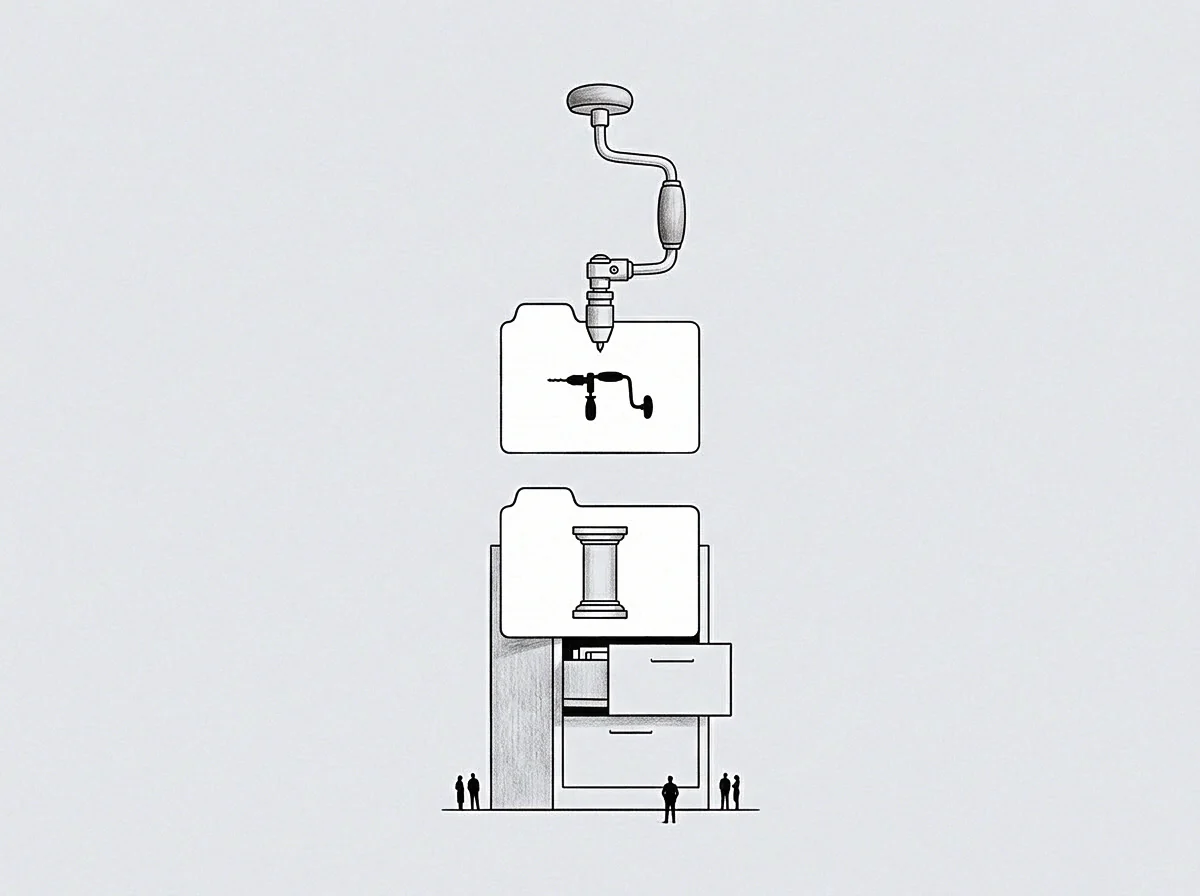
Why Do Stale Routing Entries Persist During Swapping?
Asynchronous replication topology introduces asynchronous queueing delays between core tables and perimeter proxies. Edge proxy instances cache routing decision tables locally to avoid querying remote state stores on every incoming HTTP or TCP connection. When centralized storage ledgers receive state updates, invalidation signals propagate across internal networks to clear edge proxy caches.
Cache invalidation takes time.
If network ingress rerouting occurs while edge caches retain outdated routing matrices, incoming packets continue to route to legacy application clusters. This condition creates split-brain routing states where part of the network ingress reaches the new deployment while another portion hits decommissioned hardware. The mechanics of persistent stale entries break down into distinct system behaviors:
- Stale Cache Retention occurs when edge proxy instances fail to receive broadcast invalidation messages due to packet drops or internal queue saturation, keeping dead endpoints active.
- Asynchronous Queue Backlog happens when database replication streams experience head-of-line blocking, delaying the arrival of sequence update markers at downstream read replicas.
- Connection Pool Persistence manifests when long-lived HTTP/2 or gRPC sockets remain tied to legacy ingress nodes, bypassing newly published DNS or IP routing definitions entirely.
- Divergent State Serialization arises when microservices write data using updated schema definitions that target nodes cannot parse until local schema stores refresh.
Addressing these conditions demands explicit validation sequences before executing the final ingress route update. Skipping read repair verification during network rerouting exposes authentication systems to elevated error rates and silent data corruption.

Loss
Premature network path updates land direct operational damage on downstream microservices. When ingress proxies steer live user connections onto a processing cluster whose local data ledgers lag behind primary state, system capacity degrades rapidly. The failure manifests not as a clean network outage, but as a compounding cycle of application-level errors, database lock contention, and resource exhaustion.
Client applications interpret stale authorization rejections as transient connectivity drops. When mobile clients or API integrations receive authorization errors or missing record responses, their embedded retry algorithms activate immediately. This behavior transforms standard ingress traffic into a massive retry storm that targets backend nodes already struggling to process replication backlogs.

Cascading Retry Amplification in Misaligned Networks
Consider a typical cutover scenario. Take two regional data centers running an ingress cutover with a four hundred millisecond state replication delay between primary relational tables and read-side edge caches. Assume the edge proxy handles fifty thousand requests per second during peak hours.
If ingress traffic shifts to the secondary data center while its local session store lags by four hundred milliseconds, up to twenty thousand inbound connections land on stale session records during that window.
The downstream applications reject these twenty thousand requests due to unverified user sessions. Edge memory buffers saturate quickly. The client applications immediately reissue the failed requests while standard ingress traffic continues unabated.
Within two seconds, inbound request volume doubles to one hundred thousand requests per second, overwhelming local CPU resources and saturating backend database connection pools.
A misaligned ingress swap consumes engineer attention and compute capacity faster than standard maintenance windows.

Capacity Consumption Across Downstream Dependencies
Service worker pools exhaust available threads processing invalidated authorization payloads. As worker threads block while waiting for database queries to fall back to the primary store, internal request queues fill to capacity. Asynchronous queues hide pending writes.
The system experiences severe performance degradation, forcing upstream ingress proxies to drop incoming connections due to gateway timeouts.
The operational cost of this failure mode spreads across multiple vectors: wasted compute cycles processing doomed requests, engineer hours spent triaging unexpected incident spikes, and reduced system capacity for legitimate transactions. The complete progression of a premature network ingress cutover follows a predictable four-stage failure sequence:
- The network control plane updates edge proxy routing tables before target database replicas finish processing uncommitted transaction logs.
- Ingress proxies direct incoming production requests to target clusters holding stale session and entitlement records.
- Target application services reject client requests with authorization errors, triggering automated client-side retry mechanisms.
- Retry storms saturate database connection pools and CPU worker threads, causing widespread service disruption across downstream microservices.
The infrastructure team reported that downstream databases collapsed because ingress proxies delivered traffic before session tables synchronized.

Shift
Deterministic criteria govern the final authorization to alter boundary proxy target addresses. Executing a safe production network ingress shift demands moving away from arbitrary maintenance windows toward programmatic, metric-driven cutover signoffs. A network reroute proceeds only when data ledger freshness metrics satisfy pre-established numerical boundaries across all target infrastructure components.
Quantitative cutover metrics replace speculative timing windows during major architecture swaps. By integrating ledger validation probes directly into continuous integration and deployment pipelines, infrastructure automation can verify database sequence synchronization, cache clear confirmations, and transaction log alignment automatically. If any validation metric breaches safety margins, the deployment pipeline aborts the reroute without human intervention.

Cardinal Switching Thresholds for Production Networks
Defining cardinal switching thresholds requires setting hard lower and upper limits for acceptable ledger lag. The primary metric is maximum permissible sequence lag, measured in transaction log offset differences. For high-criticality services, this threshold must evaluate to zero unapplied transactions on the target read replica prior to executing the route modification.
A secondary cardinal metric is maximum permissible replication delay duration. If target read replicas exhibit replication latency exceeding fifty milliseconds over a five-minute rolling window, the ingress controller locks the current routing path. Connection pools collapse during retries.
Monetary cost reflects wasted compute cycles. By enforcing these numerical parameters, infrastructure systems maintain high availability during complex network topology shifts.

Deterministic Cutover Signoffs Under Partial Staleness
Final operational approval rests on hard boundaries for maximum permissible replication lag. In distributed environments operating at high transaction rates, achieving zero absolute lag across all global replicas simultaneously presents significant engineering challenges. Deterministic cutover frameworks accommodate controlled partial staleness by isolating non-critical application paths.
When non-critical tables display minor replication lag while core authentication ledgers report complete synchronization, the ingress switch policy can apply path-based traffic splitting. Under this execution model, edge proxies steer user authentication and payment routes to fully synchronized clusters while directing telemetry or analytics endpoints to secondary targets. This granular approach balances operational throughput with strict data consistency requirements.
Enforcing an explicit transaction epoch fence condition delays packet steering until state ledgers confirm zero uncommitted write operations across all regional targets.