
Structural Restructuring of Asymmetric Client Contracts under Compounding Operational Capacity Constraints
Asymmetric contracts transfer counterparty volatility to vendor capacity; restructuring replaces unpriced optionality with bounded intake tariffs.
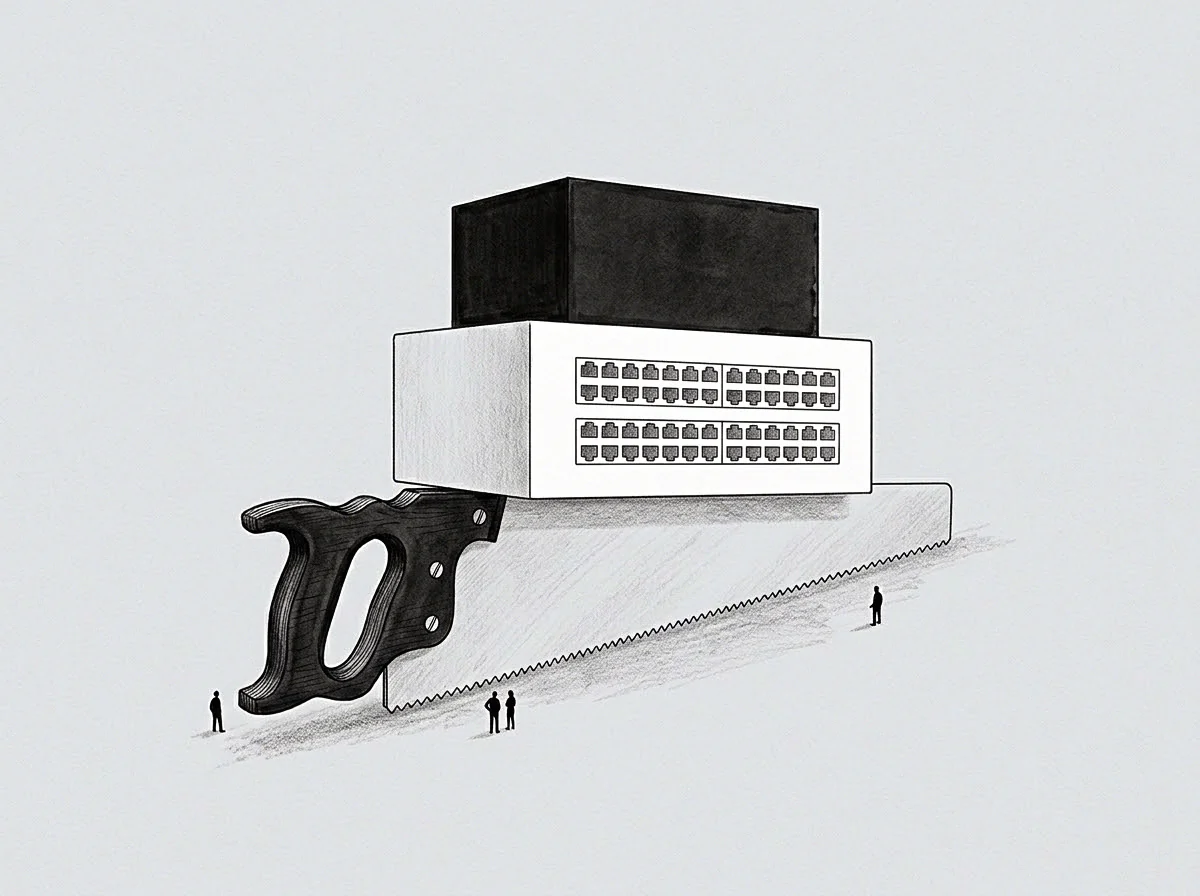
Queue
A spreadsheet cell turns red at midnight while five client requests sit in an intake line. The operating team answered forty emergency tickets during the week, all tracing back to a legacy agreement signed two winters prior. That agreement guaranteed round-the-clock engineering access for a cardinal fee of four thousand dollars each month.
The cardinal fee remains static, even as server logs record an influx of bespoke integration requests that consumed eighty internal production hours across ten consecutive business days. As a result, the production schedule slipped four weeks behind delivery commitments made to newer counterparties.
Operational performance degrades under this uneven pressure. An asymmetric service contract grants unilateral execution rights to the client while leaving the servicing firm with uncapped delivery obligations. The client treats the operating team as an elastic utility with negligible marginal friction.
When customer requests multiply, queuing latency spreads across the entire client roster. Newer accounts paying three times the monthly fee wait behind legacy accounts paying a fraction of current delivery rates. Every team member spends the morning triaging priority conflicts rather than building deliverables.
Under uncapped delivery agreements, increased client demand lengthens completion intervals across unrelated production queues.
System throughput decays along a non-linear path. Queuing theory shows that as resource utilization approaches ninety percent, wait times trend toward infinity. A firm operating near its physical limits cannot absorb variance without catastrophic schedule failure.
The asymmetric agreement introduces unbounded variance directly into the intake funnel. An unexpected request for thirty custom reports displaces scheduled platform maintenance. Deferred maintenance then causes unexpected downtime three weeks later, which generates sixty additional support inquiries from other counterparties.
Upstream Ingestion Pressures
Ingestion points reveal where the imbalance concentrates. When an account executive signs an agreement with loose definitions of maintenance, the operating group pays the difference through unplanned labor. The delivery team absorbs the shock through extended shifts and deferred upgrades.
Over six months, internal team turnover accelerates. Replacing an experienced systems technician consumes five months of recruiting effort and sixty thousand dollars in training wages.
The contract structure conceals this consequence during initial quarters. In early operating stages, spare labor masks structural asymmetry; the team absorbs excess requests because unallocated hours exist on the calendar. Once aggregate utilization crosses seventy-five percent, spare capacity disappears.
Every additional bespoke task directly cannibalizes scheduled work, causing production backlogs to grow exponentially. The client perceives standard fulfillment as an established baseline, treating any attempt to pace deliveries as a breach of goodwill.
Uncorrected structural imbalance eventually forces total delivery failure across legacy accounts and profitable contracts alike.
Seat
The physical desk holds two monitors showing incompatible schedules. An engineering lead sits in the primary chair, arbitrating which paying counterparty receives attention before midday. The contract signed by the account owner twelve months earlier allows the counterparty to alter technical specifications forty-eight hours before deployment.
Three separate enterprise accounts hold identical privileges. The lead spends six morning hours reconciling competing specification changes rather than executing code.
The structural vulnerability stems from contractual optionality granted without price escalators. In professional services and enterprise software, asymmetry manifests through unpriced optionality. An optionality asymmetry exists when one party retains unlimited discretion over project scope while the other absorbs all associated operational volatility.
The counterparty exercises this option whenever internal priorities shift, transferring organizational turmoil onto the service provider. The servicing organization absorbs the friction by reprioritizing tasks, reassigning personnel, and duplicating quality assurance protocols.
Contractual optionality granted without volume gates transfers client internal chaos onto vendor labor.
Resource allocation under compounding operational constraints behaves like an overloaded electrical circuit: adding a high-draw appliance trips the breaker for the entire room. In human organizations, that breaker is managerial attention. When four conflicting emergencies land on a single desk, the manager stops evaluating long-term technical debt and switches to crisis triage.
Triaging produces hasty patches, incomplete documentation, and unverified data transfers, driving the downstream error rate up by thirty percent.

Allocation Breakdown Mechanics
The mechanics of allocation failure follow predictable operational stages. Several distinct attributes distinguish unconstrained operations from systems under severe delivery strain:
- Intake velocity exceeds outbound completion throughput by twenty percent over consecutive quarters. This disparity creates inventory stagnation on active development boards.
- Switching overhead consumes three internal labor hours for every five hours of direct execution. Team efficiency plummets as context shifts multiply.
- Escalation volume triples as secondary clients experience unannounced delivery delays. Project managers spend afternoons writing explanatory emails instead of guiding production runs.
A manager facing this backlog cannot resolve the bottleneck simply by working longer shifts. The labor pool has fixed physical boundaries. Doubling overtime hours for three consecutive weeks produces diminishing returns, followed by an immediate increase in critical delivery bugs.
An operator who attempts to outwork an asymmetric contract structure subsidizes a broken legal instrument with human capital. That subsidy is finite. When capacity depletes, the account collapses anyway.
Unpriced client optionality always consumes the exact resource the vendor can least afford to surrender.
Tariff
The operational record separates contract revenue from delivery resource consumption. A forensic examination of sixteen enterprise service agreements shows that the bottom quartile of client accounts consumes fifty-two percent of engineering hours while generating nine percent of aggregate cash receipts. These accounts entered the customer base during early growth periods when revenue acquisition took precedence over governance clauses.
The agreements contain no indexation for inflation, no boundaries on revision rounds, and no penalties for delayed client approvals.
| Agreement Parameter | Legacy Asymmetric Tier | Restructured Constrained Tier |
|---|---|---|
| Intake Scheduling | Unbounded On-Demand Ingestion | Batch Allocation with Two-Week Reservation |
| Revision Privileges | Unlimited Iterations within Flat Fee | Two Structured Rounds with Overage Billing |
| Response Windows | One-Hour Direct Pager Access | Tiered Business-Hours Ticketing Portal |
| Delay Accountability | Vendor Absorbs Upstream Client Pauses | Client Inaction Pauses Delivery Milestones |
| Capacity Reservation | Permanent Dedicated Team Guarantee | Floating Shared Pool with Volume Caps |
Converting unconstrained client commitments into governed capacity channels requires structural intervention. A service organization restructuring its terms begins by establishing a utilization tariff. The tariff acts as a cardinal boundary applied to contract behaviors that generate negative externalities across the servicing organization.
If an account requires four revision cycles, the first two proceed under the base retainer while the third triggers an automated rate multiplier. The multiplier reflects the disruption inflicted upon secondary queues.

Whose Operational Deficit Breaks First?
When capacity constraints compound, the service provider and the client enter a contest of organizational endurance. The counterparty depends on below-market service rates to maintain internal margins. The vendor depends on client retention to justify baseline overhead.
If the vendor continues honoring asymmetric terms, its internal delivery engine breaks down through attrition and quality collapse. If the vendor imposes structural boundaries, the counterparty faces an immediate budget expansion or operational disruption.
A restructured fee schedule introduces Cardinal accountability into what was previously an open-ended commitment. The account team audits historical ticket logs over ninety days, calculating the exact hours consumed by out-of-scope requests, ad-hoc meetings, and expedited deliveries. The resulting figure is presented to the client executive alongside the renewal instrument.
The revised contract replaces vague scope descriptions with clear performance boundaries.
The client signed the agreement two years prior under the understanding that the servicing team would provide complete operational coverage for all edge cases.
Rift
The conversation across the table pauses once the new pricing schedule is laid down. The client vice president reviews the redlined document, noting the removal of unlimited emergency support clauses. The previous agreement permitted their technical staff to call senior architects on personal phone numbers at midnight.
The revised document routes all inquiries through a centralized portal with guaranteed four-hour response intervals. The client interprets this boundary as a reduction in service value.
Structural renegotiation inevitably triggers relationship friction. The service firm must accept a defined probability of contract termination to restore operational integrity. When an account consumes more delivery capacity than its revenue can replace, losing that client restores gross margin.
The released hours can be reallocated to higher-margin accounts or used to eliminate systemic backlog. The vendor trades uncollectible goodwill for tangible production headroom.
Reclaiming exhausted operational capacity requires willingness to release unprofitable enterprise counterparty accounts.
The transition requires a rigorous transitional covenant that specifies interim service levels while contract terms change. Abandoning support overnight invites legal exposure and reputational damage. The restructuring instrument establishes a ninety-day migration runway.
During this phase, client teams receive training on self-service portals, batch ticket submission, and asynchronous approval workflows. The provider holds bi-weekly checkpoint reviews to measure compliance with new ingestion standards.

Controlled Exposure Protocols
Managing the renegotiation runway demands explicit operational safeguards. Account managers apply three structural adjustments during renewal negotiations:
- De-escalation sequencing transitions high-maintenance client contacts from executive channels to structured technical support queues, preserving managerial focus for organizational planning.
- Deliverable metering enforces strict limits on active work-in-progress units. New tickets enter production only when existing tickets clear quality assurance review.
- Overage execution thresholds trigger automatic billing adjustments whenever client review delays extend past five consecutive business days. Stalled projects no longer freeze vendor capacity without commercial compensation.
Many organizations hesitate at this juncture out of loss aversion, fearing that releasing a legacy client will signal weakness to external observers. In reality, carrying unprofitable accounts signals internal operational distress to current staff. Top performers resign when forced to subsidize defective client arrangements through endless weekend shifts.
The primary hazard is not client departure, but internal system paralysis.
The revised contract incorporates an explicit mutual termination clause permitting either party to exit the arrangement with sixty days written notice if volume caps prove incompatible with counterparty operations.

Pact
Signing the revised agreement alters daily working realities across the shop floor. The delivery team arrives on Monday morning to find a triage queue containing fourteen structured items rather than seventy loose requests. Tickets carry clear metadata: business objective, technical dependencies, and target release cycles.
The client no longer phones engineers directly, as communication runs exclusively through verified project tracking systems with documented timestamps.
The renewed arrangement reflects a symmetric operational governance standard where both parties share the consequences of schedule volatility. If the client delays asset delivery by ten days, the deployment date moves outward by ten days automatically. The vendor no longer consumes internal weekend labor to compensate for customer-side administrative friction.
The operating rhythm stabilizes around predictable throughput metrics rather than ad-hoc heroic efforts.
Capacity planning shifts from speculative reaction to statistical modeling. With bounded intake volumes, the engineering lead calculates true team velocity using thirty-day rolling averages. The variance between projected delivery and actual completion drops below twelve percent.
This operational predictability allows the firm to onboard new revenue without risking delivery failure on existing commitments, keeping the production pipeline moving like an orderly conveyor rather than a congested bottleneck.
Long-term contractual health depends on vigilant boundary maintenance. Account executives must resist the temptation to grant verbal concessions during quarterly reviews, as a single unpriced exception re-establishes asymmetric expectations and erodes months of structural progress. Client organizations respect operational boundaries when they are enforced consistently, dispassionately, and transparently.
The contract serves as an operational blueprint rather than an aspirational sales memorandum.
What systemic incentives will prevent sales teams from signing asymmetric commercial terms when future revenue quotas tighten?