
Quantifying Structural Termination Friction Across Interdependent Operational Workstations Under Terminal Capital Contraction
Abrupt workstation termination under capital contraction transfers uncompleted queues to surviving nodes, converting payroll savings into throughput collapse.

Snag
Liquidity contraction forces operational contraction along arbitrary cash lines. The treasury drops below a ninety-day survival floor, and the executive team draws a line through the payroll sheet to stop immediate outflow. That decision treats an operational workstation as an isolated expense node.
In practice, an engineering terminal, a compliance intake desk, or an outbound sales desk operates as an interconnected node within a continuous production lattice. Severing one desk introduces immediate mechanical resistance across every surviving station that relied on its inputs, its data transformation, or its downstream verification.
Engineers call this phenomenon structural termination friction. When capital contracts terminally, an enterprise lacks the cash buffer to engineer smooth handovers or rewrite software boundaries. The wind-down occurs under acute temporal compression.
A workstation stops operating on a Friday, yet the surrounding production units arrive on Monday expecting upstream artifacts, signed credentials, and live data feeds. The resulting stoppage generates an immediate cascade of idle operational time, queue inflation, and broken systemic dependencies.
A workstation abruptly halted under liquidity exhaustion transfers its entire uncompleted queue directly into surviving production nodes.
Terminating a workstation extracts a multi-component penalty. The dollar calculation of severance packages and equipment write-downs captures only the nominal cardinal layer. The true systemic penalty lands as an ordinal vector across four distinct operational dimensions: calendar hours lost to triage, degraded throughput capacity across unsevered units, administrative attention consumed by pipeline repair, and immediate contractual break penalties.
Liquid capital runs out, but the physical work required to decouple dependencies remains entirely unperformed.
When leadership fails to measure this decoupling drag before issuing termination notices, the operational disruption quickly outpaces the cash saved on payroll.
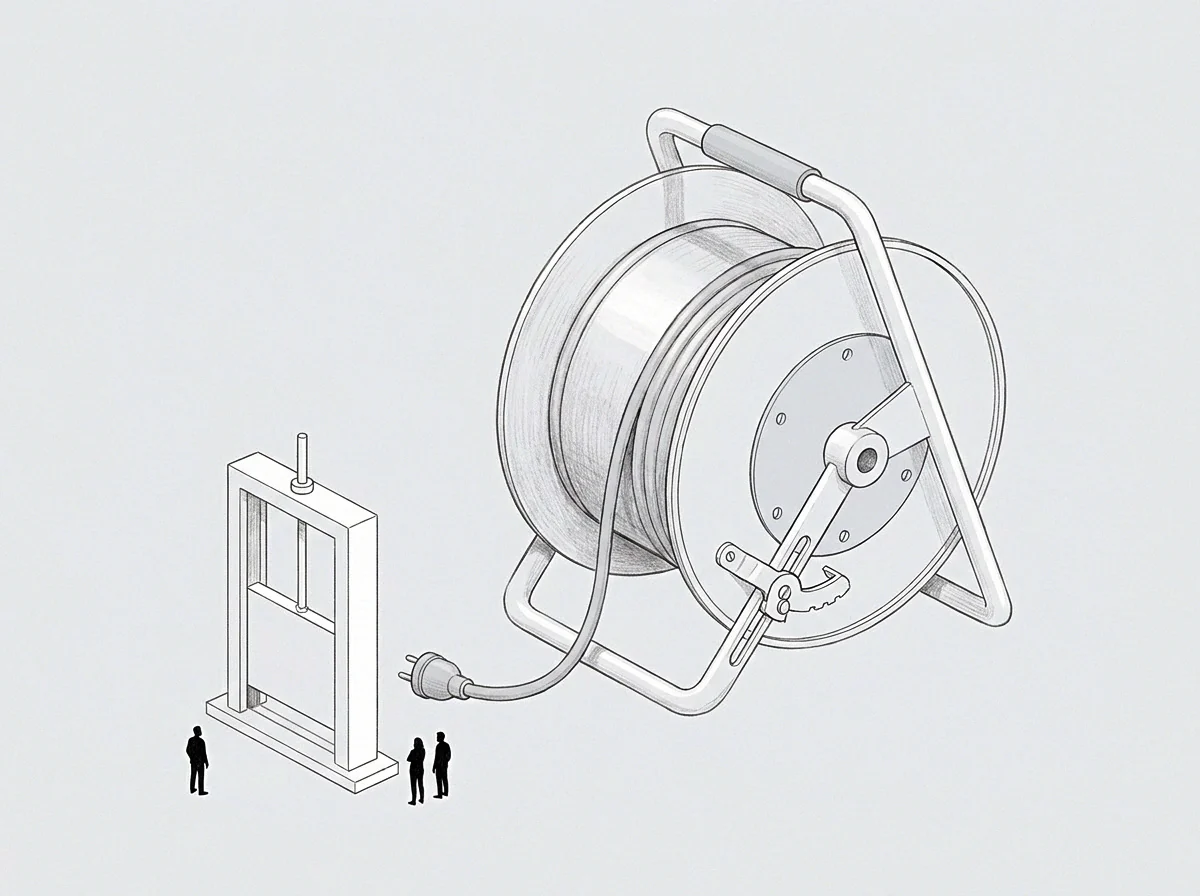
Desk
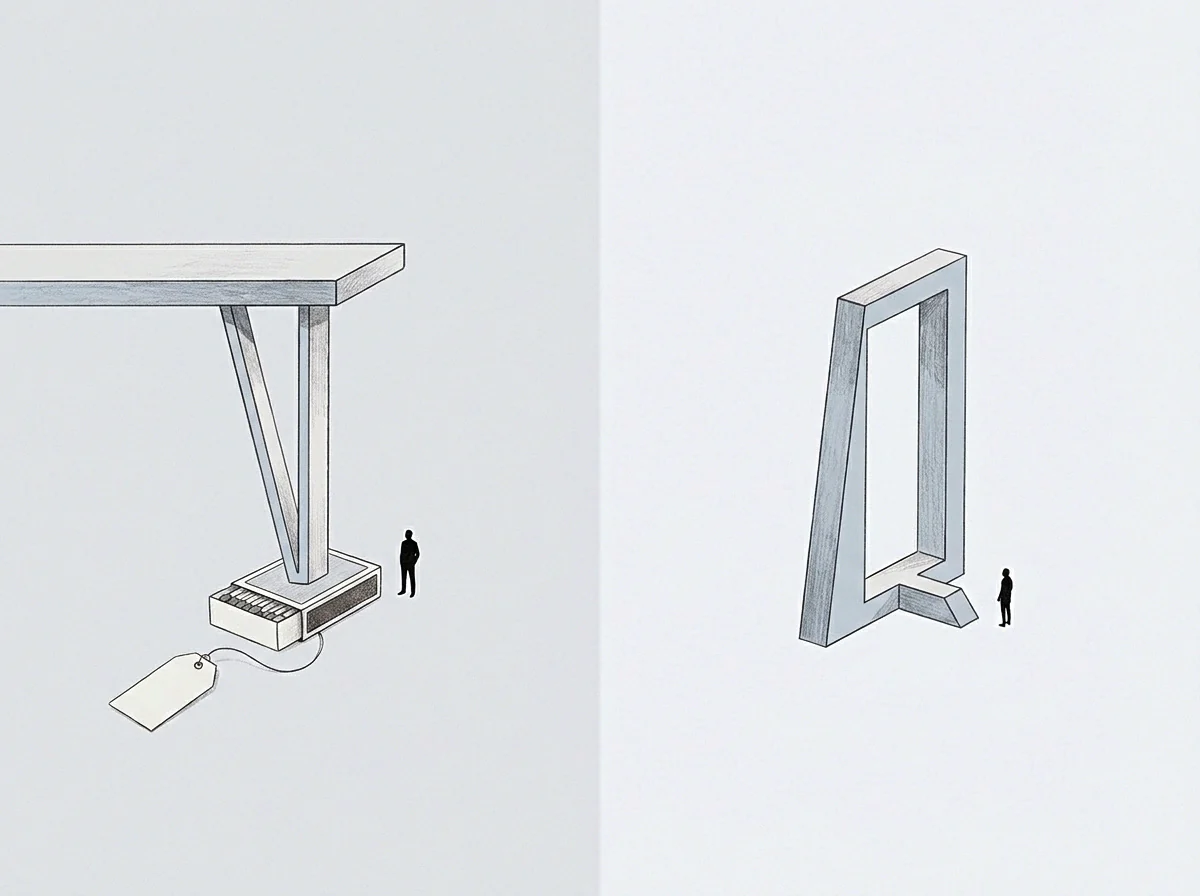
Quantifying Workstation Decoupling Vectors
Every operational workstation functions through inflows, internal conversions, and outbound handoffs. Measuring the friction of dismantling a desk requires cataloging its cross-station coupling degree before executing the shutdown. A workstation possessing high incoming coupling and low outbound coupling presents a sink node; eliminating it creates backpressure on earlier stages of work.
Conversely, eliminating a source node starves downstream stations of required work in progress, idling capital assets and salaried personnel who have no substitute inputs.
Operational analysts measure these connections using a formal dependency index. The index registers the daily volume of manual handoffs, proprietary system permissions held exclusively by that seat, and synchronous verification steps executed between that station and adjacent team units. When capital contracts terminally, management rarely inventories these couplings.
The operator assumes surviving workers will absorb the orphaned tasks through unspecified discretionary effort.
Discretionary effort is a finite reserve that depletes rapidly. The hours required to locate undocumented API keys, reconstruct intake validation scripts, or field customer tickets previously handled by a severed desk accumulate on surviving staff. That reallocation degrades performance across core survival functions.
The firm saves forty thousand dollars in monthly compensation while losing eighty thousand dollars in pipeline output due to operational confusion.
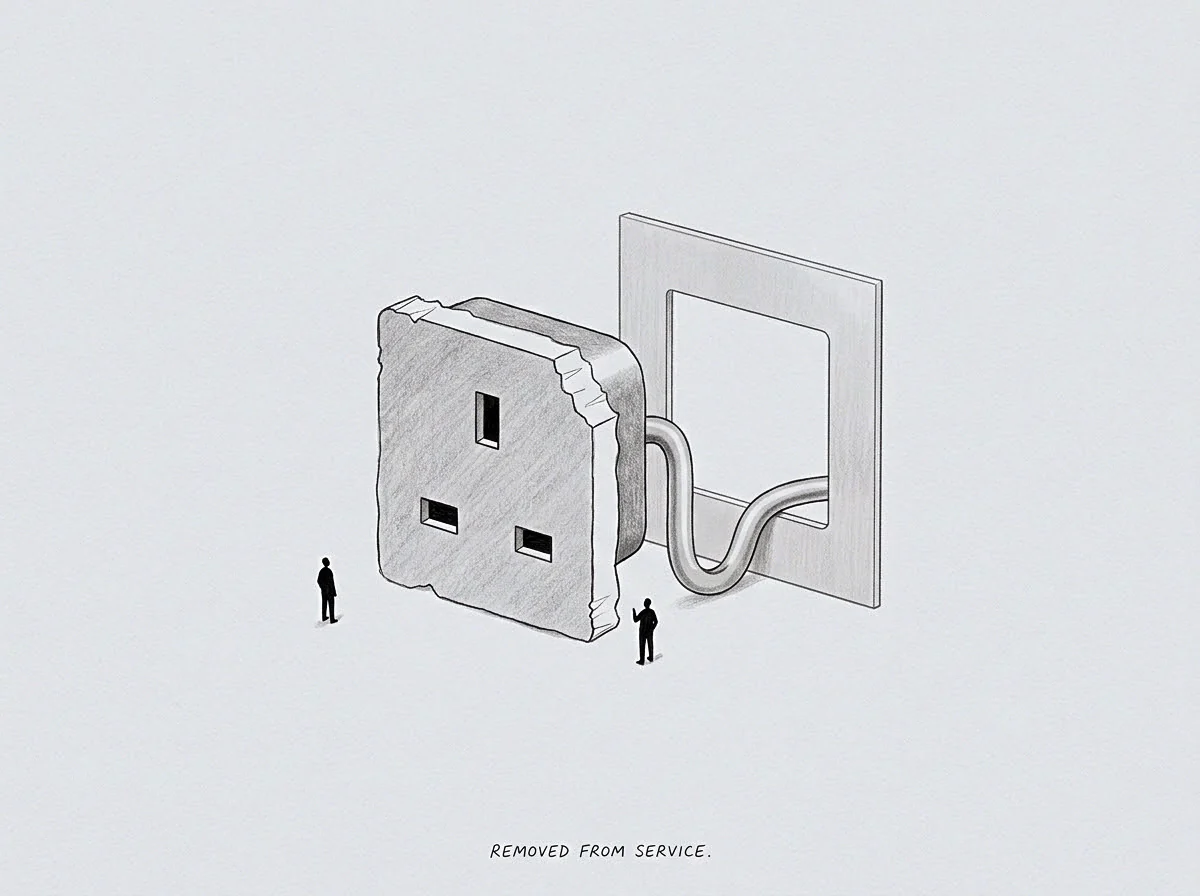
Will Surviving Stations Absorb The Orphaned Queues?
Surviving operators face an instantaneous doubling of context switching. A customer implementation desk severed during an emergency reduction leaves twelve enterprise clients midway through technical provisioning. Surviving site reliability engineers must abandon software stability work to decode incomplete field configurations and patch half-built client integrations.
The work cannot simply vanish. It accumulates as operational inventory in surviving queues, creating massive lead time spikes.
| Workstation Node | Direct Severance Outflow | Downstream Queue Latency Multiplier | Surviving Operator Hours Redirected | Monthly Throughput Loss |
|---|---|---|---|---|
| Client Integration Desk | Fourteen Thousand Dollars | 3.4x Baseline | 120 Monthly Hours | Forty-Five Thousand Dollars |
| Compliance Audit Station | Nine Thousand Dollars | 4.8x Baseline | 180 Monthly Hours | Sixty-Two Thousand Dollars |
| Data Pipeline Maintenance | Sixteen Thousand Dollars | 2.1x Baseline | 95 Monthly Hours | Thirty Thousand Dollars |
| Tier Three Technical Support | Eleven Thousand Dollars | 5.2x Baseline | 210 Monthly Hours | Seventy-Eight Thousand Dollars |
Measuring the true friction requires mapping the data in the table against surviving capacity. The nominal balance sheet shows fifty thousand dollars in net payroll reduction across these four desks. The operational balance sheet reveals six hundred and five redirected survivor hours alongside two hundred and fifteen thousand dollars in lost monthly throughput.
Liquid cash reserves increase marginally while structural productive output collapses entirely.
The standard termination agreement releases the worker from employment while leaving the enterprise stripped of critical operating authorization.

Coupling
Systemic interdependence dictates how failure propagates through an operational architecture. In tightly coupled production systems, the termination of an intermediary workstation produces non-linear shockwaves. An organization operating under capital contraction cannot afford the structural isolation barriers common in well-capitalized enterprises.
Workstations share tooling, cross-sign administrative functions, and maintain informal institutional workflows that bypass formal documentation.
Tight coupling turns an orderly reduction in force into systemic operational paralysis. When a dedicated database administrator station is dismantled to reduce monthly payroll, the routine schema migration tasks fall to application engineers. The application engineers lack credentialed production access, script libraries, and historical performance context.
An operation that previously consumed twenty minutes now consumes three days of trial, error, and administrative escalation.
A contract clause that mandates immediate seat evacuation guarantees the destruction of undocumented procedural context.
Decoupling friction scales directly with system integration density. When management reduces operational headcount during severe liquidity drawdowns, the decoupling steps follow an established sequence:
- Permission Revocation halts all active administrative credentials and disconnects critical operational endpoints before pipeline handoffs are formally mapped.
- Dependency Mapping occurs reactively after surviving stations encounter hard blockages in production pipelines during normal business hours.
- Queue Redistribution pushes orphaned input volumes onto adjacent roles without adjusting performance thresholds or delivery expectations.
- Knowledge Extraction fails because the outgoing operator has already vacated the physical facility and ceased digital communication.
We expected the surviving engineering team to run the deployment scripts without additional guidance.
Toll
Accounting practices record severance pay, accrued vacation payouts, and equipment reclamation costs as cardinal cash figures. These explicit figures represent a minor fraction of the actual structural toll. The dominant penalty consists of an unpriced ordinal vector that extracts value from organizational stability, systemic throughput, and operational attention.
When leadership measures only the dollar payouts recorded on general ledgers, the enterprise conceals its true rate of operational decay.
Operational attention represents the rarest organizational commodity during a capital contraction. Every executive hour redirected from emergency fundraising or debt restructuring toward arbitrating broken internal workflows burns through the enterprise runway. The founder who spends twenty hours per week troubleshooting customer support queues because the lead support workstation was eliminated operates at an immense opportunity penalty.
The nominal cash balance shows payroll savings, but the existential survival activities of the firm stall completely.
Attention consumed by broken operational plumbing cannot be deployed toward recapitalizing a dying enterprise.
Surviving staff experience continuous operational friction as emotional and cognitive fatigue. Cognitive overhead expands whenever an employee must decipher unfamiliar tasks without standard operating procedures. Output quality drops.
Error rates in production deployments increase by orders of magnitude. The company begins violating service level agreements with its remaining commercial clients, triggering contractual clawbacks that rapidly consume the remaining capital buffer.
The physical world reflects this imbalance with absolute indifference. Consider an industrial machining shop where cash flow collapses by half within thirty days. Eliminating the maintenance workstation frees immediate capital to service real estate rent.
Two weeks later, unserviced lathes drift out of calibration, producing scrap parts that fail quality verification and forfeit delivery contracts. The cash saved on maintenance wages reappears immediately as destroyed inventory and lost client receivables.
When systemic dependencies remain unmapped, the least expensive workstation to eliminate on paper generates the most catastrophic operational stoppage in practice.

Remnant
What remains of an enterprise after a contraction event determines whether the business survives to reach cash-flow stabilization. If structural termination friction is miscalculated, the firm enters a terminal spiral: operational capacity declines faster than capital burn, requiring another wave of terminations, which induces further structural friction. Breaking this destructive feedback cycle requires identifying surviving operational boundaries before cutting payroll.
A calculated wind-down isolates critical operational paths and terminates entire peripheral branches cleanly. The executive team deliberately avoids shaving partial headcount across interdependent workstations. Eliminating one person from a three-person interdependent triangle creates maximum friction; eliminating an entire autonomous product line alongside its dedicated workstations preserves the structural integrity of remaining units.
The surviving core continues functioning without context fragmentation or orphaned input queues.
Uncertainty persists around how long surviving staff can sustain double-queue processing before voluntary turnover begins dismantling the firm from within. A business can survive an abrupt liquidity contraction if its remaining operating geometry matches its incoming cash reality. The friction of termination must be accounted for as an upfront physical toll rather than an invisible overhead absorbed by uncompensated survivor labor.
How much operational capacity can be extracted from an interdependent workstation lattice before the remaining structural connections sever under their own weight?