
Measuring Capital Transmission Constraints When Technical Debt Acceleration Reaches Physical System Limits
Capital transmission fails when technical debt drives hardware to physical limits, converting marginal financial allocations into unharvested thermal dissipation.

Ceiling
Thermal dissipation rates in copper heat pipes operate independently of capital availability. When an engineering cohort doubles deployed treasury into compute clusters to overcome latency accumulation, the speed of heat transfer remains bound by the thermal conductivity of the material and the ambient airflow inside the chassis. The financial ledger records increased asset deployment, yet the service latency curve flattens into an asymptote.
Capital transmission ceases to produce throughput.
Technical debt in digital systems is routinely modeled as financial interest paid through developer hours and degraded code velocity. This convention holds until operational throughput drives hardware past its designed thermal, memory bus, or power distribution boundaries. At that junction, software workarounds convert into physical degradation.
Operating temperatures rise, clock speeds throttle automatically to protect silicon, and additional cash injected into server capacity yields diminishing processing returns.
A thermal saturation point converts every marginal dollar of software expenditure into unharvested heat.
The boundary appears without warning in high-frequency environments. An operator observes that queuing delays inside the messaging bus degrade transaction settlement times. The standard response deploys parallel compute instances.
If the central database lock contention has already hit the physical write limits of the non-volatile storage controllers, serial serialization queues lengthen. The financial expenditure creates idle hardware spinning on lock acquisition.

Thermodynamic Conversion of Software Liability
Silicon degradation under elevated thermal states follows Arrhenius rate equations. An application layer carrying unoptimized polling loops forces processor cores to maintain sustained power draw, bypassing low-power idle states. When this software pattern scales across ten thousand nodes, the cooling infrastructure in the physical facility reaches its peak extraction capacity.
Adding more servers increases intake air temperatures, which prompts thermal throttling across the adjacent racks.
The capital transmission coefficient measures the ratio of effective operational output gained per unit of financial expenditure deployed. Under ordinary conditions, the coefficient tracks close to unity minus standard administrative overhead. As technical liabilities consume the hardware operating margins, this coefficient drops exponentially toward zero.
Treasury deployed to purchase capacity merely funds the energy overhead of thermal mitigation.
When this boundary condition is misdiagnosed as an organizational velocity problem, additional engineering teams are hired into the code base, expanding communication pathways while the physical silicon remains throttled by basic thermodynamics.

Pipe
Capital flow requires an unoccluded conduit through which financial resources translate into operational throughput. In computational systems operating near thermodynamic limits, that conduit narrows through physical choke points. A treasury injection intended to expand transaction processing capacity must traverse the purchasing pipeline, data center power provisioning, hardware installation, and low-level kernel interconnects before affecting latency.
When software architecture accumulates unindexed relational queries or fragmented memory allocations, it forces excessiveInput-Output operations per second on the storage controller. The controller bus possesses finite throughput. Capital expended on high-tier cloud instances fails to resolve this restriction because virtual machine hypervisors cannot bypass the physical PCIe bus saturation of the underlying bare metal.
A transmission pipeline collapses when administrative capital moves faster than physical hardware can dissipate energy.
A distinction separates nominal resource allocation from effective systemic absorption. Cardinal dollar investments represent an explicit allocation decision. Ordinal system capacity, by contrast, ranks operational states based on physical tolerance limits.
Injecting twenty million dollars into compute provisioning does not alter the fact that the underlying network interface cards drop packets during queue overflow events.
The transmission failure propagates downstream to the operational budget. Infrastructure teams request higher tier hardware to compensate for runtime inefficiency. The finance desk approves the capital expenditure under the expectation of linear scaling.
Once deployed, the physical interconnect latency between server racks introduces a synchronization delay that swallows the anticipated performance gains entirely.
We see the divergence in quarterly reviews where infrastructure expenditures climb forty percent while completed business transactions grow by single digits. The engineering leadership attributes the discrepancy to external vendor delays. The vendor points to contractual delivery milestones that were fulfilled precisely as specified.
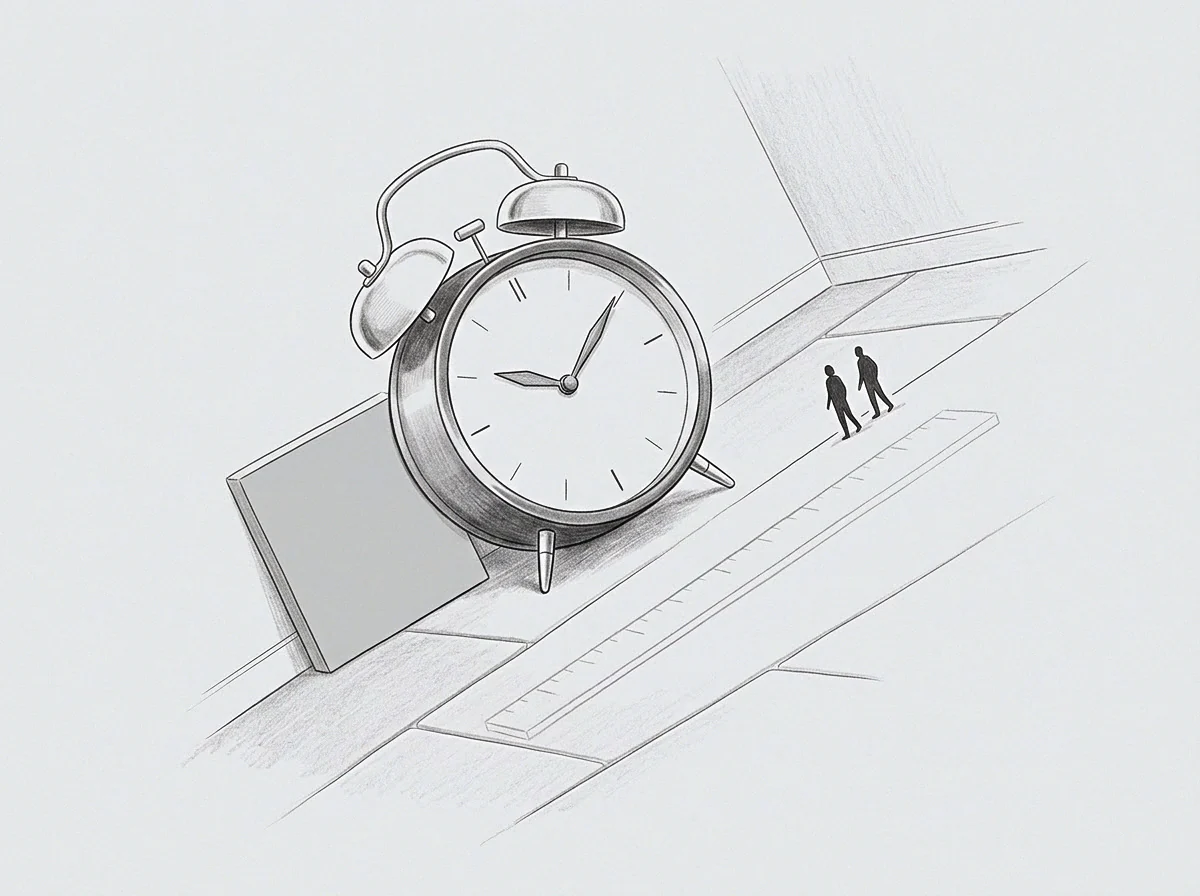
Floor
Physical boundaries establish an uncompromising baseline for software execution. Every operational system rests upon concrete physical realities: transmission line propagation delays, dielectric constants in printed circuit boards, and the mechanical endurance of power relays. Software abstractions hide these factors during early expansion phases, but systemic debt accumulation eventually forces execution down to the metal.
Consider the difference between logical latency and physical signal propagation. An application architecture can optimize database indices and strip redundant network calls, yet the speed of light in optical fiber imposes a fixed delay of approximately five microseconds per kilometer. When an enterprise attempts to mask architectural fragmentation by scattering distributed database nodes across distant regions, the speed of light becomes the active systemic constraint.
| Constraint Domain | Software Accumulation State | Physical Limiting Boundary | Capital Transmission Impact |
|---|---|---|---|
| Memory Subsystem | Object allocation bloat and garbage collection pauses | DRAM row cycle time and bus bandwidth saturation | Compute investments yield zero throughput during memory stall cycles |
| Thermal Envelope | Unbounded background threads and continuous polling loops | Chassis wattage dissipation and junction temperature limits | Expenditure on additional cores results in automatic silicon throttling |
| Storage Bus | Unindexed write amplification across microservices | PCIe lane bandwidth and flash memory endurance degradation | Storage spending accelerates disk replacement without reducing latency |
| Network Routing | Distributed consensus roundtrips masking bad domain models | Speed of light in optical media and switch buffer capacity | High-bandwidth transceivers sit idle waiting on packet acknowledgment |
The table isolates the conversion points where software inefficiencies collide with physical laws. When memory bloat triggers sustained cache misses, the CPU execution pipeline stalls waiting for data retrieval from physical DRAM. No amount of financial capital deployed into application-layer licenses or engineering management reorganizations alters the nanosecond timing of the DRAM capacitor refresh cycle.
Physical limits assert priority over capital allocations every time an enterprise attempts to purchase speed instead of rebuilding damaged foundations.
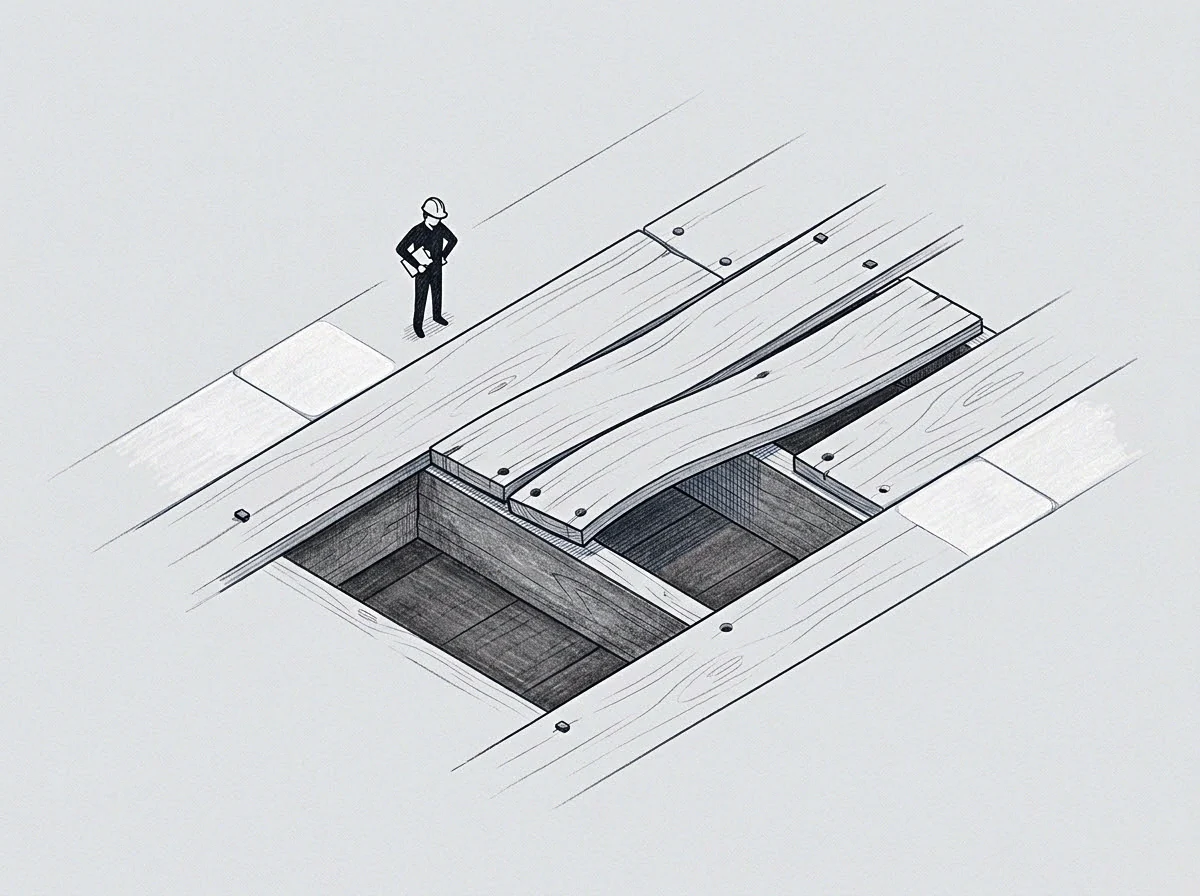
Gauge
Accurate instrumentation reveals where capital transmission degrades before system failure occurs. Most operational dashboards monitor aggregate metrics such as average CPU utilization, coarse transaction volume, and total operational spend. These cardinal indicators provide reassurance while obscuring localized physical saturation.
Effective measurement demands metrics that register queue depth variance and hardware stall cycles.

How Does Liquidity Decay at the Physical Perimeter?
Liquidity transforms into locked operational overhead through three discrete phases as debt loads mount against hardware limits.
- Hardware Stall States consume execution cycles while processor arithmetic units wait on physical bus transfers, reducing nominal computational yield per kilowatt hour of consumed facility power.
- Buffer Queue Bloat increases packet residency times within switch memory, creating artificial latency spikes that cascade across distributed microservice boundaries regardless of available network bandwidth.
- Thermal Cycling Wear accelerates physical component replacement schedules as servers alternate between intense computational thrashing and emergency throttle regimes, exhausting infrastructure depreciation reserves prematurely.
The mathematical representation of capital transmission efficiency relies on the gradient of system latency with respect to deployed capital. When this derivative approaches zero while system variance escalates, the organization has entered the saturation zone. Continuing to allocate funds along the same operational vector compounds the structural lock-in.
Operational velocity drops to zero whenever capital allocation ignores the physical resistance of the deployment substrate.
Intervention requires auditing physical metrics: instructions per cycle, memory bus saturation percentages, and rack power densities. An operator who measures these quantities early identifies the exact boundary where software restructuring must take precedence over capital expansion.
A procurement contract that specifies throughput increases without benchmarking physical bus constraints guarantees stranded capital allocations.
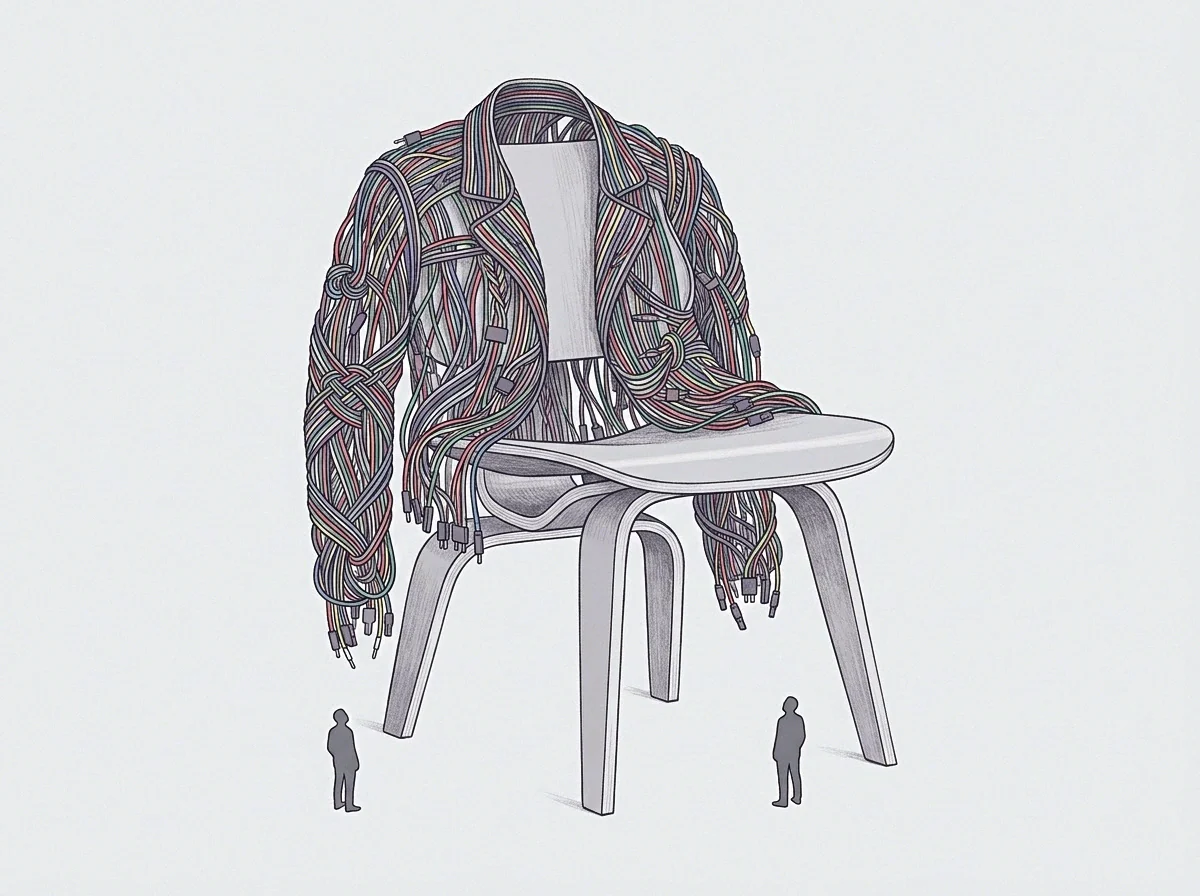
Valve
Regulating the flow of capital toward saturated physical systems requires an intentional operational halt. When technical liabilities have driven hardware to its limits, opening the treasury valve wider accelerates thermal dissipation problems and hardware failure rates. Management must restrict capital injection into capacity expansion until the underlying software inefficiencies are extracted.
This throttling process demands reallocating engineering attention away from feature delivery and toward foundational refactoring. Removing redundant serialization protocols, pruning bloated database schemas, and redesigning distributed networks to respect geographic distance restore operational headroom. The physical hardware resumes operating within its optimal efficiency window, restoring the capital transmission conduit.
Halting capacity procurement creates friction with executive stakeholders accustomed to solving throughput shortfalls with capital acquisitions. A board of directors prefers approving an invoice for hardware over accepting a six-month moratorium on functional feature delivery. The invoice offers the illusion of direct action, whereas architectural remediation requires patient, non-linear structural work.
The decision to restrict capital inflow protects the enterprise from building permanent infrastructure around fundamentally broken code. When the operational valve restricts funding to realistic absorption thresholds, the engineering team confronts the reality of the physical substrate. Systems operate within physical bounds, and durable longevity belongs to architectures engineered to respect them.
Whether institutional governance structures possess the patience to endure the latency of physical remediation before capital reserves run dry remains an open consideration for enterprise operators.